Air Traffic Controllers
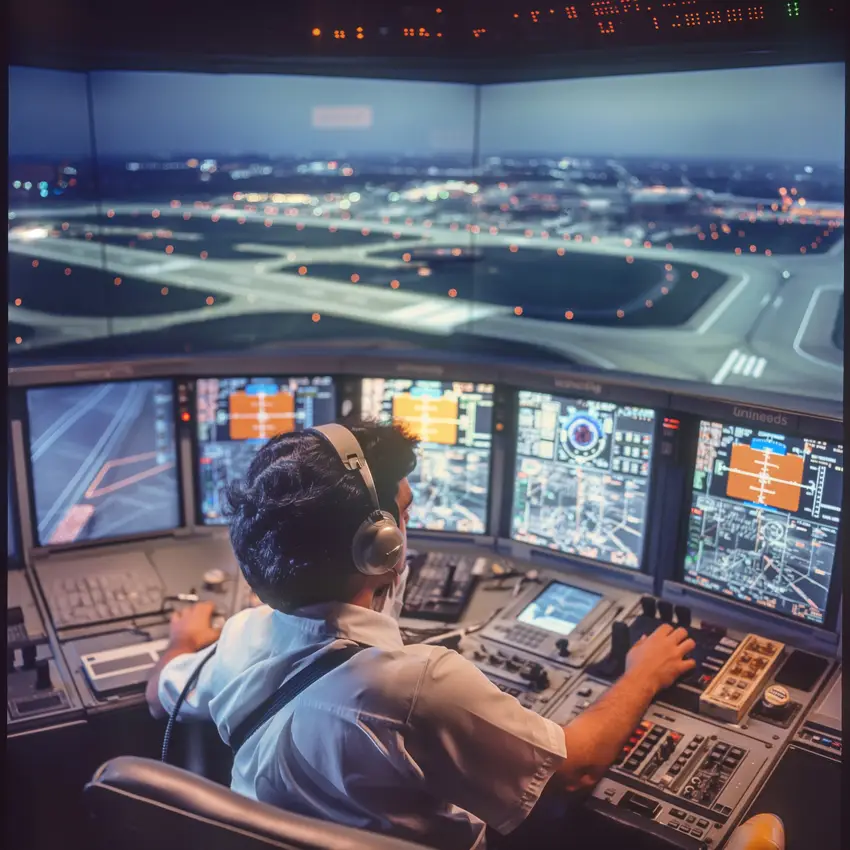
Air Traffic Controllers are responsible for safely managing aircraft movements in and around airports and through different airspace sectors. They use advanced radar systems and communication technology to guide pilots during takeoff, landing, and flight, ensuring aircraft maintain safe distances from each other. This high-responsibility role requires excellent communication skills, quick decision-making abilities, and the capacity to work under pressure. Career entry typically requires specialised training through aviation authorities and offers stable employment in a critical safety profession.
Did you know?
To become an Air Traffic Controller in Australia, you must complete training through Airservices Australia or approved training organisations. This includes both theoretical study and practical simulation training, with ongoing assessments to maintain certification.
At a glance
Typical average pay
$150,000 Avg/yr
Growth
Stable
Top skill
Active Listening
Things to consider
Essential Skills and Personal Qualities
Strong spatial awareness, excellent communication skills, and the ability to remain calm under pressure are crucial. Good mathematical skills and attention to detail are also important for calculating aircraft positions and maintaining safety standards.
Career Stability and Work Environment
Air Traffic Controllers work in control towers and radar facilities, often in shift work including nights and weekends. The profession offers good job security and competitive salaries, with opportunities to work at different airports or air traffic control centres.
Key responsibilities
Controls aircraft movements, and directs aircraft taxiing, take-offs and landings by radio
Provides pre-flight briefings and aeronautical information services