Air Traffic Controllers
Overview
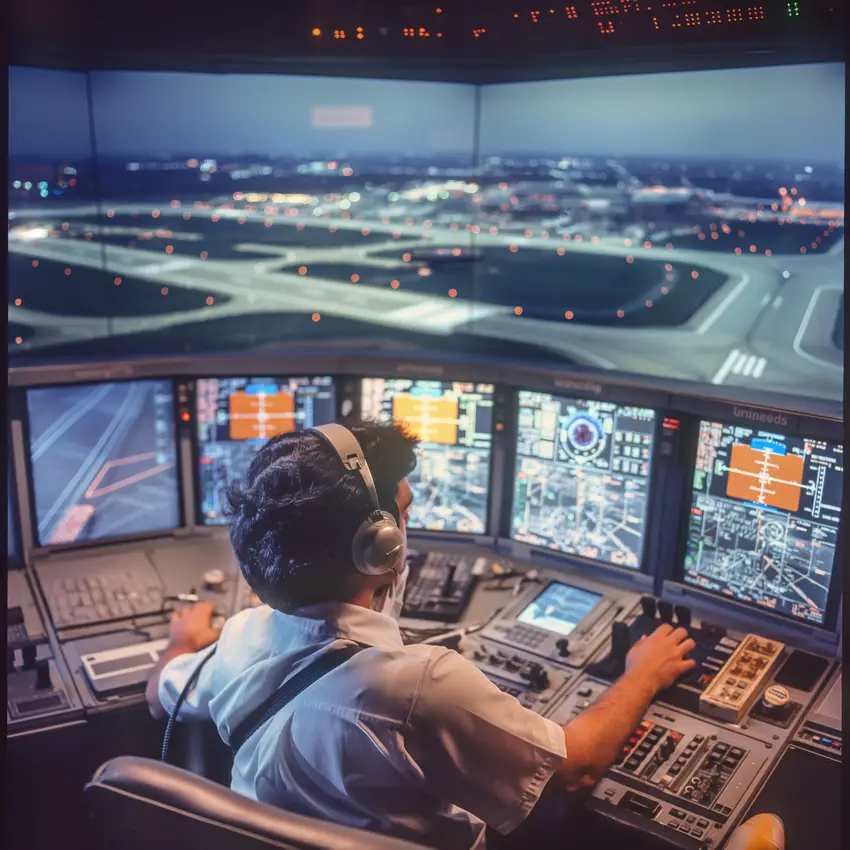
Air traffic controllers are like the conductors of the sky, coordinating the safe movement of aircraft around airports and through different airspace zones. They use advanced radar systems and computer equipment to monitor planes, communicate with pilots about weather conditions and flight paths, and direct takeoffs and landings to prevent accidents. These professionals work in control towers and centers, collaborating with pilots and emergency services to ensure millions of passengers travel safely every day. The job requires quick thinking, clear communication skills, and the ability to stay calm under pressure while managing multiple aircraft simultaneously.
Did you know?
Air Traffic Controllers must work for the FAA, complete rigorous academy training, and meet strict age requirements including starting before age 31 and mandatory retirement at 56.
At a Glance
Median Wage
$128,287.33 Avg/yr
Growth
Stable
Top Skill
Equipment Selection
Key Responsibilities
- Conduct pre-flight briefings on weather conditions, suggested routes, altitudes, indications of turbulence, or other flight safety information.
- Direct ground traffic, including taxiing aircraft, maintenance or baggage vehicles, or airport workers.
- Contact pilots by radio to provide meteorological, navigational, or other information.
- Inspect, adjust, or control radio equipment or airport lights.
- Review records or reports for clarity and completeness and maintain records or reports, as required under federal law.
- Direct pilots to runways when space is available or direct them to maintain a traffic pattern until there is space for them to land.
- Monitor aircraft within a specific airspace, using radar, computer equipment, or visual references.
- Maintain radio or telephone contact with adjacent control towers, terminal control units, or other area control centers to coordinate aircraft movement.
- Relay air traffic information, such as courses, altitudes, or expected arrival times, to control centers.
- Compile information about flights from flight plans, pilot reports, radar, or observations.
- Check conditions and traffic at different altitudes in response to pilots' requests for altitude changes.
- Complete daily activity reports and keep records of messages from aircraft.
- Analyze factors such as weather reports, fuel requirements, or maps to determine air routes.
- Determine the timing or procedures for flight vector changes.
- Inform pilots about nearby planes or potentially hazardous conditions, such as weather, speed and direction of wind, or visibility problems.
- Organize flight plans or traffic management plans to prepare for planes about to enter assigned airspace.
- Issue landing and take-off authorizations or instructions.
- Provide on-the-job training to new air traffic controllers.
- Initiate or coordinate searches for missing aircraft.
- Alert airport emergency services in cases of emergency or when aircraft are experiencing difficulties.
- Transfer control of departing flights to traffic control centers and accept control of arriving flights.
- Provide flight path changes or directions to emergency landing fields for pilots traveling in bad weather or in emergency situations.
- Monitor or direct the movement of aircraft within an assigned air space or on the ground at airports to minimize delays and maximize safety.
Career Considerations
Federal Employment Requirements
Air Traffic Controllers must work for the FAA, complete rigorous academy training, and meet strict age requirements including starting before age 31 and mandatory retirement at 56.
High-Stress Work Environment
The role involves life-and-death decision making with zero tolerance for errors, requiring intense focus during shift work that includes nights, weekends, and holidays.
Federal Benefits and Job Security
Controllers receive competitive federal salaries, comprehensive benefits, and strong job security, but have limited geographic flexibility due to specific facility assignments.