
Aircraft Assemblers

Overview

Aircraft assemblers build airplanes, spacecraft, and missiles by fitting together thousands of precise parts and components. You'll read detailed blueprints, use both hand tools and advanced machinery to assemble parts, and conduct quality checks to ensure everything meets strict safety standards. This hands-on career combines technical skills with teamwork, as you'll collaborate with engineers and other specialists in modern manufacturing facilities. The work requires attention to detail, problem-solving abilities, and often involves learning cutting-edge aerospace technologies.
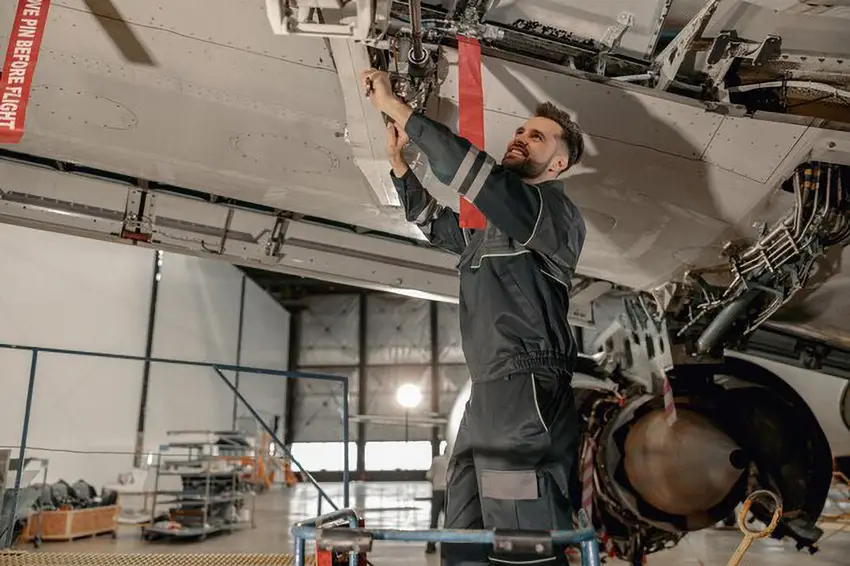
Aircraft Assemblers

Did you know?

Aircraft assemblers must be prepared for physically demanding work involving heavy lifting, precise manual dexterity, and strict adherence to safety protocols in potentially hazardous environments.

At a Glance

Median Wage

$60,979.17 Avg/yr

Growth

Stable

Top Skill

Complex Problem Solving

Key Responsibilities

  • Capture or segregate waste material, such as aluminum swarf, machine cutting fluid, or solvents, for recycling or environmentally responsible disposal.
  • Set up or operate machines or systems to crimp, cut, bend, form, swage, flare, bead, burr, or straighten tubing, according to specifications.
  • Assemble prototypes or integrated-technology demonstrators of new or emerging environmental technologies for aircraft.
  • Assemble parts, fittings, or subassemblies on aircraft, using layout tools, hand tools, power tools, or fasteners, such as bolts, screws, rivets, or clamps.
  • Clean aircraft structures, parts, or components, using aqueous, semi-aqueous, aliphatic hydrocarbon, or organic solvent cleaning products or techniques to reduce carbon or other harmful emissions.
  • Join structural assemblies, such as wings, tails, or fuselage.
  • Fit and fasten sheet metal coverings to surface areas or other sections of aircraft prior to welding or riveting.
  • Clean, oil, or coat system components, as necessary, before assembly or attachment.
  • Place and connect control cables to electronically controlled units, using hand tools, ring locks, cotter keys, threaded connectors, turnbuckles, or related devices.
  • Weld tubing and fittings or solder cable ends, using tack welders, induction brazing chambers, or other equipment.
  • Layout and mark reference points and locations for installation of parts or components, using jigs, templates, or measuring and marking instruments.
  • Align, fit, assemble, connect, or install system components, using jigs, fixtures, measuring instruments, hand tools, or power tools.
  • Attach brackets, hinges, or clips to secure or support components or subassemblies, using bolts, screws, rivets, chemical bonding, or welding.
  • Set, align, adjust, or synchronize aircraft armament or rigging or control system components to established tolerances or requirements, using sighting devices and hand tools.
  • Adjust, repair, rework, or replace parts or assemblies to ensure proper operation.
  • Verify dimensions of cable assemblies or positions of fittings, using measuring instruments.
  • Mark identifying information on tubing or cable assemblies, using etching devices, labels, rubber stamps, or other methods.
  • Cut, trim, file, bend, or smooth parts to ensure proper fit and clearance.
  • Position and align subassemblies in jigs or fixtures, using measuring instruments and following blueprint lines and index points.
  • Assemble prefabricated parts to form subassemblies.
  • Cut cables and tubing, using master templates, measuring instruments, and cable cutters or saws.
  • Install mechanical linkages and actuators, using tensiometers to verify tension of cables.
  • Install accessories in swaging machines, using hand tools.
  • Fabricate parts needed for assembly or installation, using shop machinery or equipment.
  • Inspect or test installed units, parts, systems, or assemblies for fit, alignment, performance, defects, or compliance with standards, using measuring instruments or test equipment.
  • Manually install structural assemblies or signal crane operators to position assemblies for joining.
  • Read blueprints, illustrations, or specifications to determine layouts, sequences of operations, or identities or relationships of parts.

Career Considerations

Physical Demands and Safety Requirements

Aircraft assemblers must be prepared for physically demanding work involving heavy lifting, precise manual dexterity, and strict adherence to safety protocols in potentially hazardous environments.

Specialized Training and Certification

The role requires completion of specialized training programs or apprenticeships, often including FAA-regulated certifications for working on aircraft systems.

Industry Cyclicality and Location Constraints

Employment opportunities are heavily concentrated in specific regions with aerospace hubs and can fluctuate based on defense spending and commercial aviation market conditions.

Want to dig deeper?

Talk to blinky to learn more.

Start chatting
BETA
New York

25 Kent Ave, Suite 401
Brooklyn, NY
11249


North Carolina

204 N Person
Street. Raleigh, NC
27601

Australia

Level 4/80
Wentworth Ave,
Surry Hills,
Sydney, 2010