
Aircraft Mechanics and Service Technicians

Overview

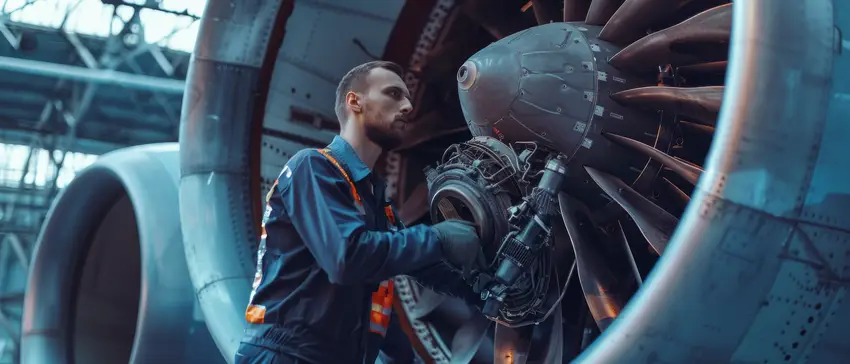
Aircraft mechanics keep planes safe and airworthy by diagnosing problems, repairing critical components like wings and electrical systems, and performing scheduled maintenance. They use advanced diagnostic equipment, hand tools, and power tools to replace defective parts and ensure everything meets strict safety standards. This hands-on career requires technical training and attention to detail, as mechanics work in teams at airports, maintenance facilities, and aircraft manufacturers. The job combines problem-solving skills with cutting-edge aviation technology in a collaborative environment where safety is the top priority.
Aircraft Mechanics and Service Technicians

Did you know?

Aircraft technicians in the US must obtain an FAA Airframe and Powerplant (A&P) license, which requires completing an FAA-approved training program and passing written and practical exams.

At a Glance

Median Wage

$76,298.20 Avg/yr

Growth

Fast Growing

Top Skill

Troubleshooting

Key Responsibilities

  • Install and align repaired or replacement parts for subsequent riveting or welding, using clamps and wrenches.
  • Prepare and paint aircraft surfaces.
  • Inventory and requisition or order supplies, parts, materials, and equipment.
  • Inspect completed work to certify that maintenance meets standards and that aircraft are ready for operation.
  • Remove or cut out defective parts or drill holes to gain access to internal defects or damage, using drills and punches.
  • Maintain repair logs, documenting all preventive and corrective aircraft maintenance.
  • Communicate with other workers to coordinate fitting and alignment of heavy parts, or to facilitate processing of repair parts.
  • Cure bonded structures, using portable or stationary curing equipment.
  • Determine repair limits for engine hot section parts.
  • Listen to operating engines to detect and diagnose malfunctions, such as sticking or burned valves.
  • Replace or repair worn, defective, or damaged components, using hand tools, gauges, and testing equipment.
  • Check for corrosion, distortion, and invisible cracks in the fuselage, wings, and tail, using x-ray and magnetic inspection equipment.
  • Assemble and install electrical, plumbing, mechanical, hydraulic, and structural components and accessories, using hand or power tools.
  • Examine and inspect aircraft components, including landing gear, hydraulic systems, and deicers to locate cracks, breaks, leaks, or other problems.
  • Measure the tension of control cables.
  • Obtain fuel and oil samples and check them for contamination.
  • Fabricate defective sections or parts, using metal fabricating machines, saws, brakes, shears, and grinders.
  • Locate and mark dimensions and reference lines on defective or replacement parts, using templates, scribes, compasses, and steel rules.
  • Service and maintain aircraft and related apparatus by performing activities such as flushing crankcases, cleaning screens, and or moving parts.
  • Modify aircraft structures, space vehicles, systems, or components, following drawings, schematics, charts, engineering orders, and technical publications.
  • Clean, strip, prime, and sand structural surfaces and materials to prepare them for bonding.
  • Read and interpret maintenance manuals, service bulletins, and other specifications to determine the feasibility and method of repairing or replacing malfunctioning or damaged components.
  • Remove or install aircraft engines, using hoists or forklift trucks.
  • Remove, inspect, repair, and install in-flight refueling stores and external fuel tanks.
  • Clean, refuel, and change oil in line service aircraft.
  • Trim and shape replacement body sections to specified sizes and fits and secure sections in place, using adhesives, hand tools, and power tools.
  • Inspect airframes for wear or other defects.
  • Measure parts for wear, using precision instruments.
  • Examine engines through specially designed openings while working from ladders or scaffolds, or use hoists or lifts to remove the entire engine from an aircraft.
  • Test operation of engines and other systems, using test equipment, such as ignition analyzers, compression checkers, distributor timers, or ammeters.
  • Accompany aircraft on flights to make in-flight adjustments and corrections.
  • Reassemble engines following repair or inspection and reinstall engines in aircraft.
  • Spread plastic film over areas to be repaired to prevent damage to surrounding areas.
  • Conduct routine and special inspections as required by regulations.
  • Maintain, repair, and rebuild aircraft structures, functional components, and parts, such as wings and fuselage, rigging, hydraulic units, oxygen systems, fuel systems, electrical systems, gaskets, or seals.
  • Disassemble engines and inspect parts, such as turbine blades or cylinders, for corrosion, wear, warping, cracks, and leaks, using precision measuring instruments, x-rays, and magnetic inspection equipment.
  • Clean engines, sediment bulk and screens, and carburetors, adjusting carburetor float levels.
  • Read and interpret pilots' descriptions of problems to diagnose causes.

Career Considerations

FAA Certification Requirements

Aircraft technicians in the US must obtain an FAA Airframe and Powerplant (A&P) license, which requires completing an FAA-approved training program and passing written and practical exams.

Job Market Stability

The aviation industry offers steady employment opportunities with projected growth due to increasing air travel demand and the need to maintain aging aircraft fleets.

Safety-Critical Work Environment

Aircraft technicians work in highly regulated environments where attention to detail and adherence to strict safety protocols are essential, as errors can have life-threatening consequences.

Want to dig deeper?

Talk to blinky to learn more.

Start chatting
BETA
New York

25 Kent Ave, Suite 401
Brooklyn, NY
11249


North Carolina

204 N Person
Street. Raleigh, NC
27601

Australia

Level 4/80
Wentworth Ave,
Surry Hills,
Sydney, 2010