Airline Flight Crew
Overview
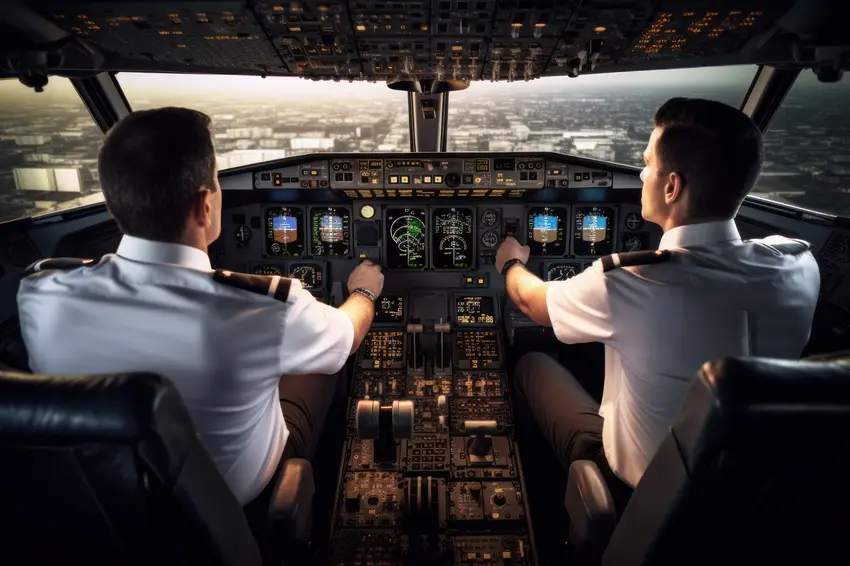
Airline flight crew members include pilots, copilots, and flight engineers who operate large passenger or cargo aircraft on scheduled routes. They plan and monitor flights, check instruments and weather reports, communicate with air traffic control, and ensure safety and comfort for everyone on board. Pilots handle takeoffs, landings, and navigation, while copilots assist with flight operations and system checks. Flight engineers oversee mechanical systems and fuel management. The role requires extensive flight training, FAA or equivalent licensing, and the ability to stay calm under pressure during long and complex flights.
Did you know?
Becoming a commercial airline pilot in the US requires obtaining an Airline Transport Pilot License (ATPL) with a minimum of 1,500 flight hours, representing a significant time and financial investment.
At a Glance
Median Wage
$151,018.28 Avg/yr
Growth
Fast Growing
Top Skill
Management of Financial Resources
Key Responsibilities
- Coordinate flight activities with ground crews and air traffic control and inform crew members of flight and test procedures.
- Inspect aircraft for defects and malfunctions, according to pre-flight checklists.
- Start engines, operate controls, and pilot airplanes to transport passengers, mail, or freight, adhering to flight plans, regulations, and procedures.
- Use instrumentation to guide flights when visibility is poor.
- Monitor gauges, warning devices, and control panels to verify aircraft performance and to regulate engine speed.
- Order changes in fuel supplies, loads, routes, or schedules to ensure safety of flights.
- Make announcements regarding flights, using public address systems.
- Contact control towers for takeoff clearances, arrival instructions, and other information, using radio equipment.
- File instrument flight plans with air traffic control to ensure that flights are coordinated with other air traffic.
- Conduct in-flight tests and evaluations at specified altitudes and in all types of weather to determine the receptivity and other characteristics of equipment and systems.
- Work as part of a flight team with other crew members, especially during takeoffs and landings.
- Steer aircraft along planned routes, using autopilot and flight management computers.
- Check passenger and cargo distributions and fuel amounts to ensure that weight and balance specifications are met.
- Direct activities of aircraft crews during flights.
- Brief crews about flight details, such as destinations, duties, and responsibilities.
- Respond to and report in-flight emergencies and malfunctions.
- Perform minor maintenance work, or arrange for major maintenance.
- Confer with flight dispatchers and weather forecasters to keep abreast of flight conditions.
- Record in log books information, such as flight times, distances flown, and fuel consumption.
- Instruct other pilots and student pilots in aircraft operations and the principles of flight.
- Monitor engine operation, fuel consumption, and functioning of aircraft systems during flights.
- Plan and formulate flight activities and test schedules and prepare flight evaluation reports.
- Choose routes, altitudes, and speeds that will provide the fastest, safest, and smoothest flights.
- Evaluate other pilots or pilot-license applicants for proficiency.
Career Considerations
Extensive FAA Licensing Requirements
Becoming a commercial airline pilot in the US requires obtaining an Airline Transport Pilot License (ATPL) with a minimum of 1,500 flight hours, representing a significant time and financial investment.
Seniority-Based Career Progression
US airlines operate on strict seniority systems that determine pay scales, route assignments, and scheduling preferences, meaning career advancement is largely based on years of service rather than performance alone.
Demanding Lifestyle and Schedule
The profession involves irregular work schedules, extended time away from home, and frequent travel across multiple time zones, which can significantly impact work-life balance and personal relationships.