
Atmospheric and Space Scientists

Overview

Atmospheric and Space Scientists study weather patterns and climate by measuring conditions like temperature, humidity, and wind speed using advanced technology like satellites and radar. They use computer programming and mathematical models to analyze data and create weather forecasts that help protect people from dangerous storms like hurricanes and tornadoes. These scientists also develop new instruments for data collection and work with the public to educate communities about weather safety. Many work for government agencies like the National Weather Service or private companies, often collaborating with teams of researchers and meteorologists.
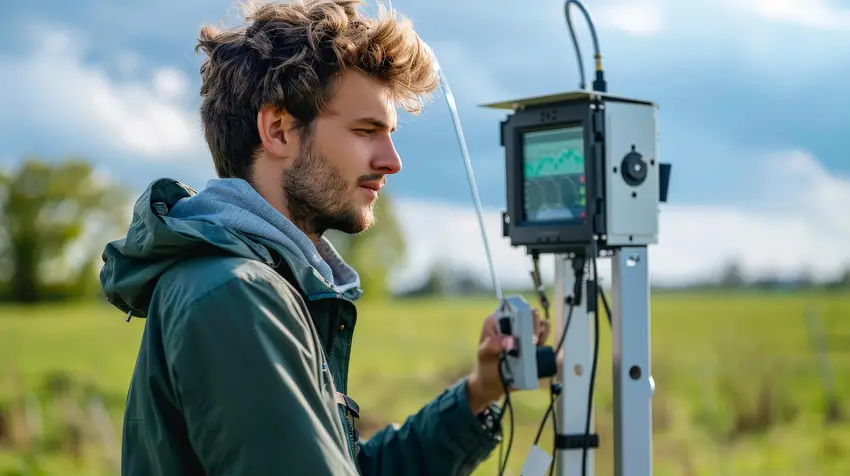
Atmospheric and Space Scientists

Did you know?

Most positions require at least a master's degree in atmospheric science, meteorology, or related field, with many research roles preferring a PhD.

At a Glance

Median Wage

$93,598.86 Avg/yr

Growth

Stable

Top Skill

Speaking

Key Responsibilities

  • Develop computer programs to collect meteorological data or to present meteorological information.
  • Develop and deliver training on weather topics.
  • Direct forecasting services at weather stations or at radio or television broadcasting facilities.
  • Prepare forecasts or briefings to meet the needs of industry, business, government, or other groups.
  • Perform managerial duties, such as creating work schedules, creating or implementing staff training, matching staff expertise to situations, or analyzing performance of offices.
  • Analyze historical climate information, such as precipitation or temperature records, to help predict future weather or climate trends.
  • Consult with other offices, agencies, professionals, or researchers regarding the use and interpretation of climatological information for weather predictions and warnings.
  • Gather data from sources such as surface or upper air stations, satellites, weather bureaus, or radar for use in meteorological reports or forecasts.
  • Collect air samples from planes or ships over land or sea to study atmospheric composition.
  • Interpret data, reports, maps, photographs, or charts to predict long- or short-range weather conditions, using computer models and knowledge of climate theory, physics, and mathematics.
  • Apply meteorological knowledge to issues such as global warming, pollution control, or ozone depletion.
  • Design or develop new equipment or methods for meteorological data collection, remote sensing, or related applications.
  • Broadcast weather conditions, forecasts, or severe weather warnings to the public via television, radio, or the Internet or provide this information to the news media.
  • Create visualizations to illustrate historical or future changes in the Earth's climate, using paleoclimate or climate geographic information systems (GIS) databases.
  • Conduct wind assessment, integration, or validation studies.
  • Formulate predictions by interpreting environmental data, such as meteorological, atmospheric, oceanic, paleoclimate, climate, or related information.
  • Teach college-level courses on topics such as atmospheric and space science, meteorology, or global climate change.
  • Measure wind, temperature, and humidity in the upper atmosphere, using weather balloons.
  • Analyze climate data sets, using techniques such as geophysical fluid dynamics, data assimilation, or numerical modeling.
  • Prepare scientific atmospheric or climate reports, articles, or texts.
  • Research the impact of industrial projects or pollution on climate, air quality, or weather phenomena.
  • Conduct meteorological research into the processes or determinants of atmospheric phenomena, weather, or climate.
  • Estimate or predict the effects of global warming over time for specific geographic regions.
  • Develop or use mathematical or computer models for weather forecasting.
  • Prepare weather reports or maps for analysis, distribution, or use in weather broadcasts, using computer graphics.
  • Conduct numerical simulations of climate conditions to understand and predict global or regional weather patterns.
  • Speak to the public to discuss weather topics or answer questions.

Career Considerations

Advanced Education Requirements

Most positions require at least a master's degree in atmospheric science, meteorology, or related field, with many research roles preferring a PhD.

Geographic Mobility

Career advancement often requires willingness to relocate to areas with major weather centers, research institutions, or government facilities like NOAA offices.

Interdisciplinary Skills Demand

Growing emphasis on climate change research requires expertise in data analysis, computer modeling, and communication skills to translate complex findings for policymakers and the public.

Want to dig deeper?

Talk to blinky to learn more.

Start chatting
BETA
New York

25 Kent Ave, Suite 401
Brooklyn, NY
11249


North Carolina

204 N Person
Street. Raleigh, NC
27601

Australia

Level 4/80
Wentworth Ave,
Surry Hills,
Sydney, 2010