Automotive Electronics Technicians
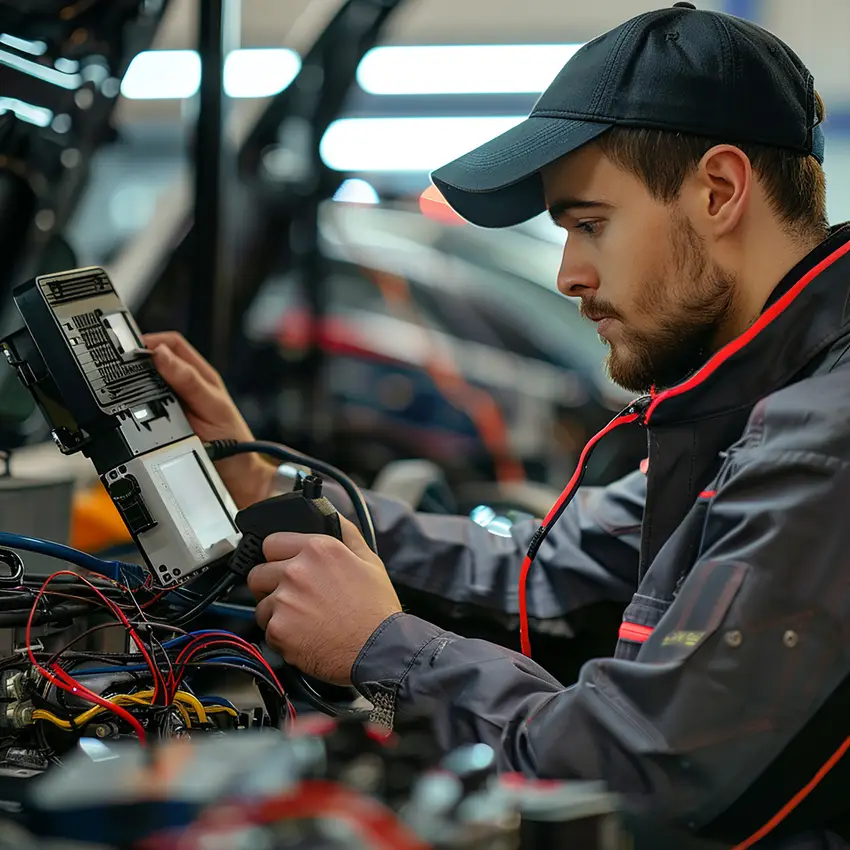
Automotive electronics technicians install and repair high-tech equipment in cars, trucks, and other vehicles. You'll work with cutting-edge systems like GPS navigation, Bluetooth connectivity, backup cameras, security alarms, and premium sound systems. Using diagnostic tools and soldering equipment, you'll troubleshoot electronic problems, run new wiring, and customize vehicles with the latest technology. This hands-on career combines technical skills with customer service, and you can start with a high school diploma plus specialized training in automotive electronics.
Did you know?
The automotive electronics field requires continuous learning to keep up with advancing technologies like electric vehicles, autonomous systems, and connected car features.
At a glance
Typical average pay
$47,200 Avg/yr
Growth
Stable
Top skill
Repairing
Things to consider
Industry Certification Requirements
Many employers prefer or require ASE (Automotive Service Excellence) certification and manufacturer-specific training to work on modern vehicle electronic systems.
Regional Job Market Variation
Employment opportunities are typically concentrated in areas with strong automotive industries, such as the Midwest and Southeast regions of the United States.
Key responsibilities
Confer with customers to determine the nature of malfunctions.
Install equipment and accessories, such as stereos, navigation equipment, communication equipment, and security systems.
Replace and clean electrical or electronic components.
Inspect and test electrical or electronic systems to locate and diagnose malfunctions, using visual inspections and testing instruments, such as oscilloscopes and voltmeters.
Estimate costs of repairs, based on parts and labor charges.