
Biochemists and Biophysicists

Overview

Biochemists and biophysicists are scientists who study how life works at the molecular level, exploring everything from DNA and proteins to how drugs affect our bodies. They spend their time conducting experiments in high-tech laboratories, using advanced equipment and computer modeling to analyze biological processes like cell growth and disease development. These professionals collaborate with research teams, present their discoveries at conferences, and often write grant proposals to fund their groundbreaking research. A strong background in chemistry, biology, and physics is essential, typically requiring a bachelor's degree in science and often advanced degrees for research positions.
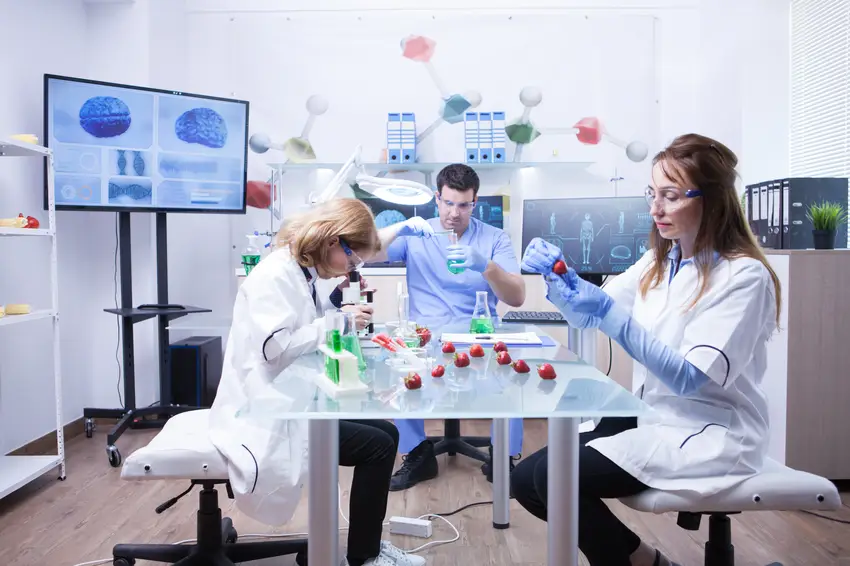
Biochemists and Biophysicists

Did you know?

Most research positions in biochemistry require a PhD, with postdoctoral experience often necessary for competitive academic and industry roles.

At a Glance

Median Wage

$94,074.52 Avg/yr

Growth

Fast Growing

Top Skill

Quality Control Analysis

Key Responsibilities

  • Investigate the nature, composition, or expression of genes or research how genetic engineering can impact these processes.
  • Develop methods to process, store, or use foods, drugs, or chemical compounds.
  • Research the chemical effects of substances, such as drugs, serums, hormones, or food, on tissues or vital processes.
  • Study physical principles of living cells or organisms and their electrical or mechanical energy, applying methods and knowledge of mathematics, physics, chemistry, or biology.
  • Determine the three-dimensional structure of biological macromolecules.
  • Design or perform experiments with equipment, such as lasers, accelerators, or mass spectrometers.
  • Prepare reports or recommendations, based upon research outcomes.
  • Teach or advise undergraduate or graduate students or supervise their research.
  • Research transformations of substances in cells, using atomic isotopes.
  • Design or build laboratory equipment needed for special research projects.
  • Develop or execute tests to detect diseases, genetic disorders, or other abnormalities.
  • Study the chemistry of living processes, such as cell development, breathing and digestion, or living energy changes, such as growth, aging, or death.
  • Manage laboratory teams or monitor the quality of a team's work.
  • Develop or test new drugs or medications intended for commercial distribution.
  • Produce pharmaceutically or industrially useful proteins, using recombinant DNA technology.
  • Research how characteristics of plants or animals are carried through successive generations.
  • Prepare pharmaceutical compounds for commercial distribution.
  • Examine the molecular or chemical aspects of immune system functioning.
  • Develop new methods to study the mechanisms of biological processes.
  • Isolate, analyze, or synthesize vitamins, hormones, allergens, minerals, or enzymes and determine their effects on body functions.
  • Share research findings by writing scientific articles or by making presentations at scientific conferences.
  • Study the mutations in organisms that lead to cancer or other diseases.
  • Write grant proposals to obtain funding for research.
  • Study spatial configurations of submicroscopic molecules, such as proteins, using x-rays or electron microscopes.

Career Considerations

Advanced Degree Requirements

Most research positions in biochemistry require a PhD, with postdoctoral experience often necessary for competitive academic and industry roles.

Competitive Grant Funding

Success in academic biochemistry heavily depends on securing federal research funding from agencies like NIH and NSF, which has become increasingly competitive.

Industry vs. Academic Career Paths

Biochemists can pursue either pharmaceutical/biotechnology industry careers with higher salaries or academic research positions with greater intellectual freedom but lower pay.

Want to dig deeper?

Talk to blinky to learn more.

Start chatting
BETA
New York

25 Kent Ave, Suite 401
Brooklyn, NY
11249


North Carolina

204 N Person
Street. Raleigh, NC
27601

Australia

Level 4/80
Wentworth Ave,
Surry Hills,
Sydney, 2010