Cabinetmakers and Bench Carpenters
Overview
Cabinetmakers and bench carpenters create custom furniture, cabinets, and wooden fixtures by cutting, shaping, and assembling wood using both traditional hand tools and modern power equipment. They work with blueprints to measure and mark materials precisely, then use machines like power saws, jointers, and mortisers to craft high-quality pieces. This skilled trade combines creativity with technical precision, and many professionals work in custom shops, furniture companies, or as independent contractors. The field offers opportunities for those who enjoy working with their hands and can lead to careers through vocational training, apprenticeships, or community college programs.
Did you know?
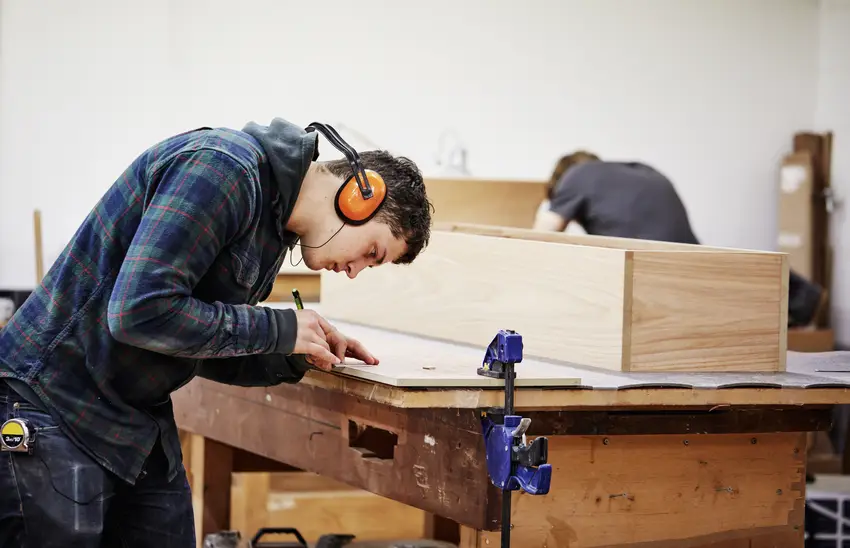
This occupation requires significant physical stamina, manual dexterity, and access to a well-equipped workshop with expensive tools and adequate ventilation for dust and fumes.
At a Glance
Median Wage
$46,036.73 Avg/yr
Growth
Stable
Top Skill
Negotiation
Key Responsibilities
- Design furniture, using computer-aided drawing programs.
- Reinforce joints with nails or other fasteners to prepare articles for finishing.
- Trim, sand, or scrape surfaces or joints to prepare articles for finishing.
- Repair or alter wooden furniture, cabinetry, fixtures, paneling, or other pieces.
- Match materials for color, grain, or texture, giving attention to knots or other features of the wood.
- Establish the specifications of articles to be constructed or repaired, or plan the methods or operations for shaping or assembling parts, based on blueprints, drawings, diagrams, or oral or written instructions.
- Verify dimensions or check the quality or fit of pieces to ensure adherence to specifications.
- Measure and mark dimensions of parts on paper or lumber stock prior to cutting, following blueprints, to ensure a tight fit and quality product.
- Dip, brush, or spray assembled articles with protective or decorative finishes, such as stain, varnish, paint, or lacquer.
- Install hardware, such as hinges, handles, catches, or drawer pulls, using hand tools.
- Set up or operate machines, including power saws, jointers, mortisers, tenoners, molders, or shapers, to cut, mold, or shape woodstock or wood substitutes.
- Attach parts or subassemblies together to form completed units, using glue, dowels, nails, screws, or clamps.
- Cut timber to the right size, and shape and trim parts of joints to ensure a snug fit, using hand tools, such as planes, chisels, or wood files.
- Apply Masonite, formica, or vinyl surfacing materials.
- Bore holes for insertion of screws or dowels, by hand or using boring machines.
- Estimate the amounts, types, or costs of needed materials.
- Perform final touch-ups with sandpaper or steel wool.
- Draw up detailed specifications and discuss projects with customers.
- Program computers to operate machinery.
- Produce or assemble components of articles, such as store fixtures, office equipment, cabinets, or high-grade furniture.
Career Considerations
Physical Demands and Workspace Requirements
This occupation requires significant physical stamina, manual dexterity, and access to a well-equipped workshop with expensive tools and adequate ventilation for dust and fumes.
Entrepreneurial Business Skills
Most wood furniture craftspeople in America work as independent contractors or small business owners, requiring skills in marketing, client relations, pricing, and business management.
Income Variability and Market Competition
Earnings can be inconsistent due to project-based work and competition from mass-produced furniture, making financial planning and diverse income streams essential.