
Cement Masons and Concrete Finishers

Overview

Cement masons and concrete finishers create the concrete surfaces you walk and drive on every day, from sidewalks to roads to building floors. They use specialized tools like trowels, floats, and power grinders to pour, shape, and polish concrete into smooth, durable surfaces. This hands-on job involves teamwork with truck drivers and other construction workers, plus learning to use modern equipment and techniques. Many professionals in this field start with on-the-job training or vocational programs and can advance to supervisory roles or start their own contracting businesses.
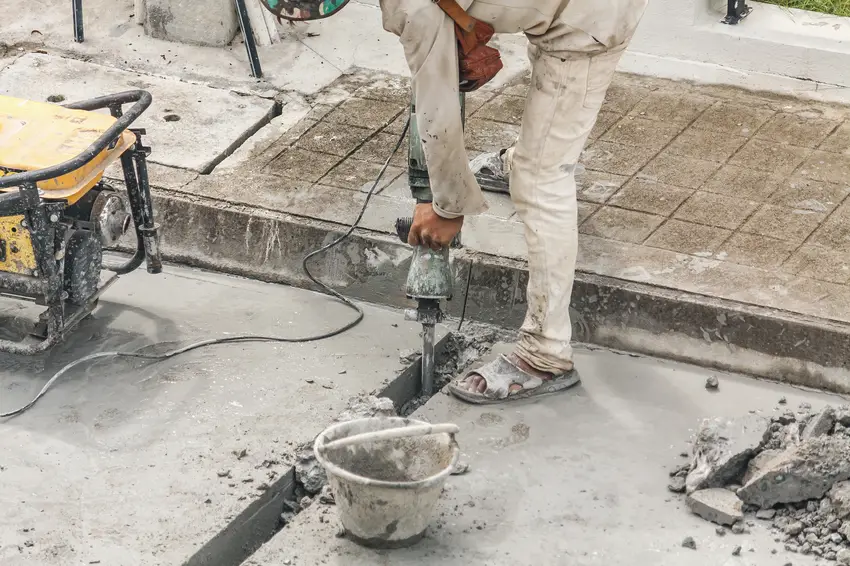
Cement Masons and Concrete Finishers

Did you know?

The job requires significant physical stamina and adherence to strict safety protocols due to heavy lifting, prolonged kneeling, and exposure to concrete chemicals.

At a Glance

Median Wage

$56,467.06 Avg/yr

Growth

Stable

Top Skill

Operation and Control

Key Responsibilities

  • Waterproof or restore concrete surfaces, using appropriate compounds.
  • Cut out damaged areas, drill holes for reinforcing rods, and position reinforcing rods to repair concrete, using power saw and drill.
  • Spread, level, and smooth concrete, using rake, shovel, hand or power trowel, hand or power screed, and float.
  • Fabricate concrete beams, columns, and panels.
  • Push roller over surface to embed chips in surface.
  • Spread roofing paper on surface of foundation, and spread concrete onto roofing paper with trowel to form terrazzo base.
  • Produce rough concrete surface, using broom.
  • Mix cement, sand, and water to produce concrete, grout, or slurry, using hoe, trowel, tamper, scraper, or concrete-mixing machine.
  • Monitor how the wind, heat, or cold affect the curing of the concrete throughout the entire process.
  • Apply muriatic acid to clean surface, and rinse with water.
  • Operate power vibrator to compact concrete.
  • Direct the casting of the concrete and supervise laborers who use shovels or special tools to spread it.
  • Cut metal division strips, and press them into terrazzo base so that top edges form desired design or pattern.
  • Wet surface to prepare for bonding, fill holes and cracks with grout or slurry, and smooth, using trowel.
  • Clean chipped area, using wire brush, and feel and observe surface to determine if it is rough or uneven.
  • Chip, scrape, and grind high spots, ridges, and rough projections to finish concrete, using pneumatic chisels, power grinders, or hand tools.
  • Polish surface, using polishing or surfacing machine.
  • Set the forms that hold concrete to the desired pitch and depth, and align them.
  • Signal truck driver to position truck to facilitate pouring concrete, and move chute to direct concrete on forms.
  • Wet concrete surface, and rub with stone to smooth surface and obtain specified finish.
  • Check the forms that hold the concrete to see that they are properly constructed.
  • Mold expansion joints and edges, using edging tools, jointers, and straightedge.
  • Install anchor bolts, steel plates, door sills and other fixtures in freshly poured concrete or pattern or stamp the surface to provide a decorative finish.
  • Sprinkle colored marble or stone chips, powdered steel, or coloring powder over surface to produce prescribed finish.
  • Apply hardening and sealing compounds to cure surface of concrete, and waterproof or restore surface.
  • Build wooden molds, and clamp molds around area to be repaired, using hand tools.

Career Considerations

Physical Demands and Safety Requirements

The job requires significant physical stamina and adherence to strict safety protocols due to heavy lifting, prolonged kneeling, and exposure to concrete chemicals.

Seasonal Employment Patterns

Work availability often fluctuates with weather conditions and construction seasons, potentially leading to periods of unemployment during harsh winter months in many regions.

Apprenticeship and Union Opportunities

Many concrete finishers advance their careers through formal apprenticeship programs and union membership, which provide structured training and better wages.

Want to dig deeper?

Talk to blinky to learn more.

Start chatting
BETA
New York

25 Kent Ave, Suite 401
Brooklyn, NY
11249


North Carolina

204 N Person
Street. Raleigh, NC
27601

Australia

Level 4/80
Wentworth Ave,
Surry Hills,
Sydney, 2010