
Coaches and Scouts

Overview

Coaches and scouts work in the exciting world of sports, helping athletes reach their full potential and discovering new talent. As a coach, you'll teach techniques, plan practice sessions, analyze game footage using video technology, and develop winning strategies while motivating your team. Scouts travel to games and tournaments to evaluate players, using data analytics and performance metrics to identify future stars for college or professional teams. This career combines sports knowledge with leadership skills and often involves collaboration with athletes, other coaches, and sports organizations in both traditional and hybrid work environments.
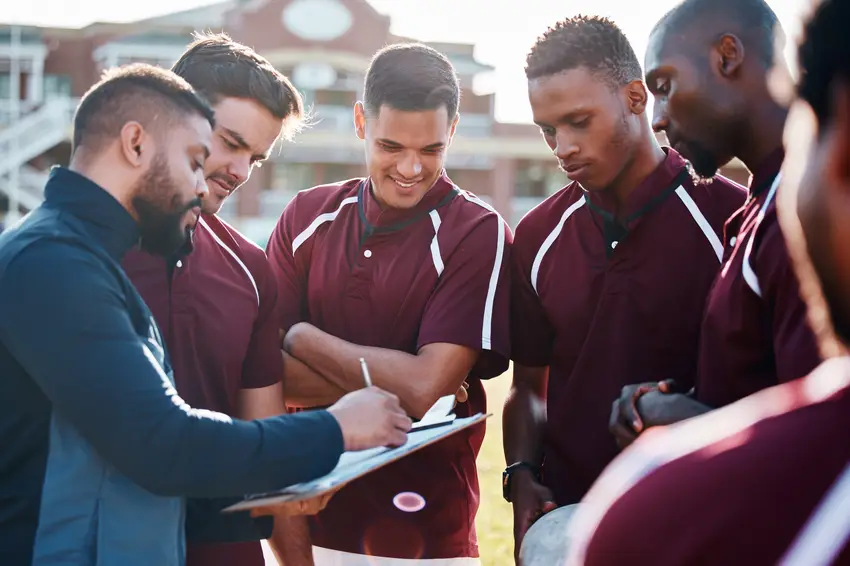
Coaches and Scouts

Did you know?

Most coaching positions require sport-specific certifications and many prefer candidates with degrees in kinesiology, sports management, or related fields.

At a Glance

Median Wage

$45,373.73 Avg/yr

Growth

Fast Growing

Top Skill

Operation and Control

Key Responsibilities

  • Plan and direct physical conditioning programs that will enable athletes to achieve maximum performance.
  • Develop and arrange competition schedules and programs.
  • File scouting reports that detail player assessments, provide recommendations on athlete recruitment, and identify locations and individuals to be targeted for future recruitment efforts.
  • Perform activities that support a team or a specific sport, such as participating in community outreach activities, meeting with media representatives, and appearing at fundraising events.
  • Monitor the academic eligibility of student athletes.
  • Coordinate travel arrangements and travel with team to away contests.
  • Keep abreast of changing rules, techniques, technologies, and philosophies relevant to their sport.
  • Serve as organizer, leader, instructor, or referee for outdoor and indoor games, such as volleyball, football, and soccer.
  • Identify and recruit potential athletes by sending recruitment letters, meeting with recruits, and arranging and offering incentives, such as athletic scholarships.
  • Oversee the development and management of the sports program budget and fundraising activities.
  • Plan strategies and choose team members for individual games or sports seasons.
  • Arrange and conduct sports-related activities, such as training camps, skill-improvement courses, clinics, and pre-season try-outs.
  • Contact the parents of players to provide information and answer questions.
  • Adjust coaching techniques, based on the strengths and weaknesses of athletes.
  • Teach instructional courses and advise students.
  • Analyze the strengths and weaknesses of opposing teams to develop game strategies.
  • Plan, organize, and conduct practice sessions.
  • Explain and enforce safety rules and regulations.
  • Provide training direction, encouragement, motivation, and nutritional advice to prepare athletes for games, competitive events, or tours.
  • Counsel student athletes on academic, athletic, and personal issues.
  • Monitor athletes' use of equipment to ensure safe and proper use.
  • Instruct individuals or groups in sports rules, game strategies, and performance principles, such as specific ways of moving the body, hands, or feet, to achieve desired results.
  • Select, acquire, store, and issue equipment and other materials as necessary.
  • Hire, supervise, and work with extended coaching staff.
  • Explain and demonstrate the use of sports and training equipment, such as trampolines or weights.
  • Evaluate athletes' skills and review performance records to determine their fitness and potential in a particular area of athletics.
  • Keep and review paper, computerized, and video records of athlete, team, and opposing team performance.

Career Considerations

Certification and Education Requirements

Most coaching positions require sport-specific certifications and many prefer candidates with degrees in kinesiology, sports management, or related fields.

Networking and Relationship Building

Success heavily depends on building strong relationships with athletes, parents, athletic directors, and other professionals in the sports industry.

Income Variability and Job Security

Compensation can vary significantly based on level (youth, high school, college, professional) and many positions are seasonal or part-time.

Want to dig deeper?

Talk to blinky to learn more.

Start chatting
BETA
New York

25 Kent Ave, Suite 401
Brooklyn, NY
11249


North Carolina

204 N Person
Street. Raleigh, NC
27601

Australia

Level 4/80
Wentworth Ave,
Surry Hills,
Sydney, 2010