
Commercial Divers

Overview

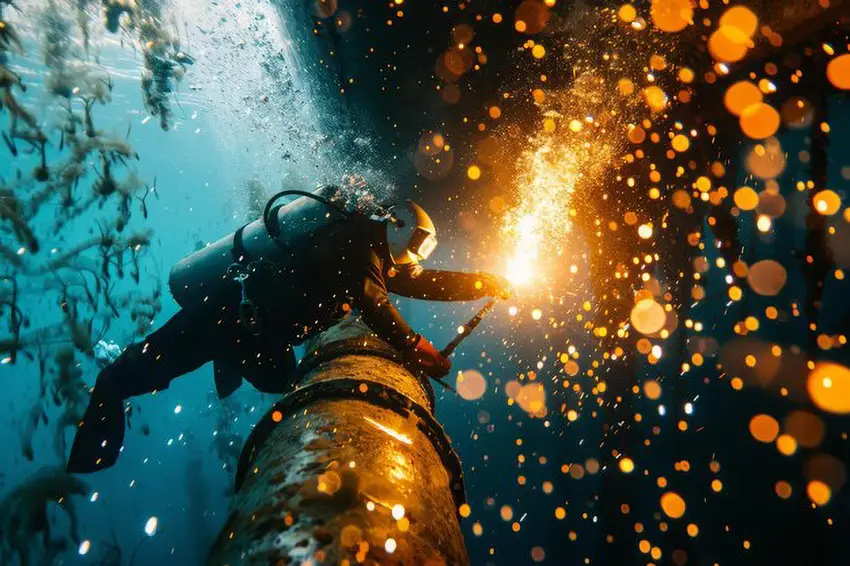
Commercial divers work underwater using specialized scuba equipment to inspect, repair, and install structures like ships, bridges, and underwater pipelines. They use advanced tools including underwater welding equipment, sonar systems, and video cameras to complete complex tasks while communicating with surface teams through specialized communication systems. This career combines physical skills with technical expertise, requiring training in diving safety, equipment maintenance, and various underwater construction techniques. Many commercial divers work in teams and travel to different locations, from offshore oil rigs to harbor maintenance projects.
Commercial Divers

Did you know?

Commercial divers in the US must obtain OSHA-compliant certifications and complete rigorous training programs to meet federal safety standards for underwater work.

At a Glance

Median Wage

$76,085 Avg/yr

Growth

Fast Growing

Top Skill

Quality Control Analysis

Key Responsibilities

  • Install, inspect, clean, or repair piping or valves.
  • Recover objects by placing rigging around sunken objects, hooking rigging to crane lines, and operating winches, derricks, or cranes to raise objects.
  • Perform offshore oil or gas exploration or extraction duties, such as conducting underwater surveys or repairing and maintaining drilling rigs or platforms.
  • Perform activities related to underwater search and rescue, salvage, recovery, or cleanup operations.
  • Supervise or train other divers, including hobby divers.
  • Salvage wrecked ships or their cargo, using pneumatic power velocity and hydraulic tools and explosive charges, when necessary.
  • Carry out non-destructive testing, such as tests for cracks on the legs of oil rigs at sea.
  • Descend into water with the aid of diver helpers, using scuba gear or diving suits.
  • Inspect and test docks, ships, buoyage systems, plant intakes or outflows, or underwater pipelines, cables, or sewers, using closed circuit television, still photography, and testing equipment.
  • Install pilings or footings for piers or bridges.
  • Remove rubbish or pollution from the sea.
  • Drill holes in rock and rig explosives for underwater demolitions.
  • Check and maintain diving equipment, such as helmets, masks, air tanks, harnesses, or gauges.
  • Obtain information about diving tasks and environmental conditions.
  • Communicate with workers on the surface while underwater, using signal lines or telephones.
  • Cut and weld steel, using underwater welding equipment, jigs, and supports.
  • Operate underwater video, sonar, recording, or related equipment to investigate underwater structures or marine life.
  • Set or guide placement of pilings or sandbags to provide support for structures, such as docks, bridges, cofferdams, or platforms.
  • Repair ships, bridge foundations, or other structures below the water line, using caulk, bolts, and hand tools.
  • Take test samples or photographs to assess the condition of vessels or structures.
  • Inspect the condition of underwater steel or wood structures.
  • Remove obstructions from strainers or marine railway or launching ways, using pneumatic or power hand tools.
  • Take appropriate safety precautions, such as monitoring dive lengths and depths and registering with authorities before diving expeditions begin.

Career Considerations

Safety Certification Requirements

Commercial divers in the US must obtain OSHA-compliant certifications and complete rigorous training programs to meet federal safety standards for underwater work.

High Physical Risk and Health Demands

The occupation involves significant health risks including decompression sickness, hypothermia, and equipment failures, requiring excellent physical condition and comprehensive insurance coverage.

Geographic and Industry Limitations

Job opportunities are concentrated in coastal regions and areas with offshore oil operations, making career mobility dependent on willingness to relocate to specific geographic markets.

Want to dig deeper?

Talk to blinky to learn more.

Start chatting
BETA
New York

25 Kent Ave, Suite 401
Brooklyn, NY
11249


North Carolina

204 N Person
Street. Raleigh, NC
27601

Australia

Level 4/80
Wentworth Ave,
Surry Hills,
Sydney, 2010