
Commercial Pilots

Overview

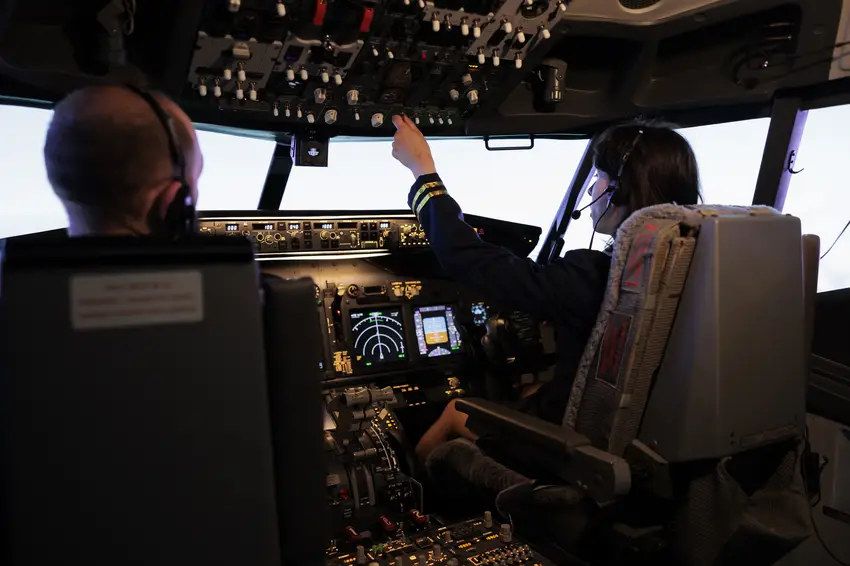
Commercial pilots fly airplanes and helicopters, safely transporting passengers and cargo to destinations around the world. They use advanced cockpit technology and GPS systems to navigate planned routes, communicate with air traffic control, and monitor aircraft systems during flight. Before every flight, pilots perform detailed safety checks, calculate takeoff speeds based on weather and aircraft weight, and ensure proper fuel levels. This career requires strong problem-solving skills, excellent communication abilities, and typically involves flight training through aviation schools or military programs, with opportunities to work for airlines, cargo companies, or charter services.
Commercial Pilots

Did you know?

Commercial pilots must obtain and maintain strict Federal Aviation Administration licenses, medical certificates, and recurrent training certifications throughout their careers.

At a Glance

Median Wage

$116,669.39 Avg/yr

Growth

Fast Growing

Top Skill

Mathematics

Key Responsibilities

  • Fly with other pilots or pilot-license applicants to evaluate their proficiency.
  • Co-pilot aircraft or perform captain's duties, as required.
  • Contact control towers for takeoff clearances, arrival instructions, and other information, using radio equipment.
  • Perform minor aircraft maintenance and repair work, or arrange for major maintenance.
  • Use instrumentation to pilot aircraft when visibility is poor.
  • Consider airport altitudes, outside temperatures, plane weights, and wind speeds and directions to calculate the speed needed to become airborne.
  • Conduct in-flight tests and evaluations at specified altitudes and in all types of weather to determine the receptivity and other characteristics of equipment and systems.
  • Rescue and evacuate injured persons.
  • Teach company regulations and procedures to other pilots.
  • Obtain and review data such as load weights, fuel supplies, weather conditions, and flight schedules to determine flight plans and identify needed changes.
  • Supervise other crew members.
  • Check aircraft prior to flights to ensure that the engines, controls, instruments, and other systems are functioning properly.
  • Check baggage or cargo to ensure that it has been loaded correctly.
  • Request changes in altitudes or routes as circumstances dictate.
  • Monitor engine operation, fuel consumption, and functioning of aircraft systems during flights.
  • File instrument flight plans with air traffic control so that flights can be coordinated with other air traffic.
  • Instruct other pilots and student pilots in aircraft operations.
  • Start engines, operate controls, and pilot airplanes to transport passengers, mail, or freight according to flight plans, regulations, and procedures.
  • Plan and formulate flight activities and test schedules and prepare flight evaluation reports.
  • Plan flights according to government and company regulations, using aeronautical charts and navigation instruments.
  • Coordinate flight activities with ground crews and air traffic control, and inform crew members of flight and test procedures.
  • Choose routes, altitudes, and speeds that will provide the fastest, safest, and smoothest flights.
  • Write specified information in flight records, such as flight times, altitudes flown, and fuel consumption.
  • Order changes in fuel supplies, loads, routes, or schedules to ensure safety of flights.

Career Considerations

FAA Certification Requirements

Commercial pilots must obtain and maintain strict Federal Aviation Administration licenses, medical certificates, and recurrent training certifications throughout their careers.

Substantial Training Investment

Flight training costs can exceed $200,000 and require 1,500+ flight hours for airline transport pilot certification, representing a significant financial and time commitment.

Seniority-Based Career Progression

American airlines operate on strict seniority systems that determine schedules, routes, and advancement opportunities, often requiring years to reach major carrier positions.

Want to dig deeper?

Talk to blinky to learn more.

Start chatting
BETA
New York

25 Kent Ave, Suite 401
Brooklyn, NY
11249


North Carolina

204 N Person
Street. Raleigh, NC
27601

Australia

Level 4/80
Wentworth Ave,
Surry Hills,
Sydney, 2010