
Computer Hardware Engineers

Overview

Computer Hardware Engineers design and build the physical components that make computers work, like processors, circuit boards, and memory devices. They create detailed blueprints, test their designs using advanced software and lab equipment, and work with manufacturing teams to bring new technology to life. This field requires strong problem-solving skills, knowledge of engineering principles, and typically a bachelor's degree in computer or electrical engineering. Many engineers collaborate in teams and use cutting-edge design software while working in modern tech companies or research facilities.
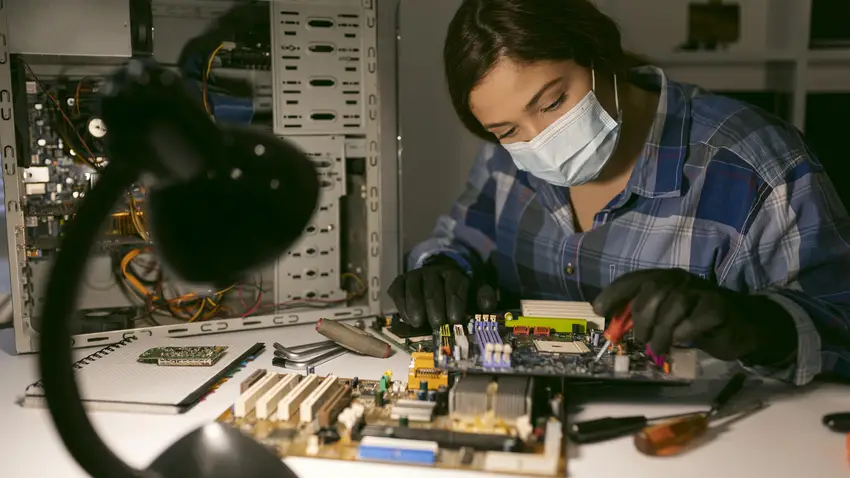
Computer Hardware Engineers

Did you know?

A bachelor's degree in computer engineering, electrical engineering, or computer science is typically required, with many employers preferring candidates from ABET-accredited programs.

At a Glance

Median Wage

$126,815 Avg/yr

Growth

Fast Growing

Top Skill

Operation and Control

Key Responsibilities

  • Test and verify hardware and support peripherals to ensure that they meet specifications and requirements, by recording and analyzing test data.
  • Build, test, and modify product prototypes, using working models or theoretical models constructed with computer simulation.
  • Direct technicians, engineering designers or other technical support personnel as needed.
  • Assemble and modify existing pieces of equipment to meet special needs.
  • Monitor functioning of equipment and make necessary modifications to ensure system operates in conformance with specifications.
  • Analyze information to determine, recommend, and plan layout, including type of computers and peripheral equipment modifications.
  • Evaluate factors such as reporting formats required, cost constraints, and need for security restrictions to determine hardware configuration.
  • Write detailed functional specifications that document the hardware development process and support hardware introduction.
  • Recommend purchase of equipment to control dust, temperature, and humidity in area of system installation.
  • Provide technical support to designers, marketing and sales departments, suppliers, engineers and other team members throughout the product development and implementation process.
  • Update knowledge and skills to keep up with rapid advancements in computer technology.
  • Confer with engineering staff and consult specifications to evaluate interface between hardware and software and operational and performance requirements of overall system.
  • Provide training and support to system designers and users.
  • Select hardware and material, assuring compliance with specifications and product requirements.
  • Design and develop computer hardware and support peripherals, including central processing units (CPUs), support logic, microprocessors, custom integrated circuits, and printers and disk drives.
  • Store, retrieve, and manipulate data for analysis of system capabilities and requirements.
  • Specify power supply requirements and configuration, drawing on system performance expectations and design specifications.
  • Analyze user needs and recommend appropriate hardware.

Career Considerations

Strong Educational Foundation Required

A bachelor's degree in computer engineering, electrical engineering, or computer science is typically required, with many employers preferring candidates from ABET-accredited programs.

Highly Competitive Job Market

The field is extremely competitive in major tech hubs like Silicon Valley and Seattle, requiring exceptional technical skills and often advanced degrees or specialized certifications to stand out.

Continuous Learning Necessity

Rapid technological advancement in areas like AI chips, quantum computing, and IoT devices requires ongoing professional development to remain relevant in the field.

Want to dig deeper?

Talk to blinky to learn more.

Start chatting
BETA
New York

25 Kent Ave, Suite 401
Brooklyn, NY
11249


North Carolina

204 N Person
Street. Raleigh, NC
27601

Australia

Level 4/80
Wentworth Ave,
Surry Hills,
Sydney, 2010