
Conservation Scientists

Overview

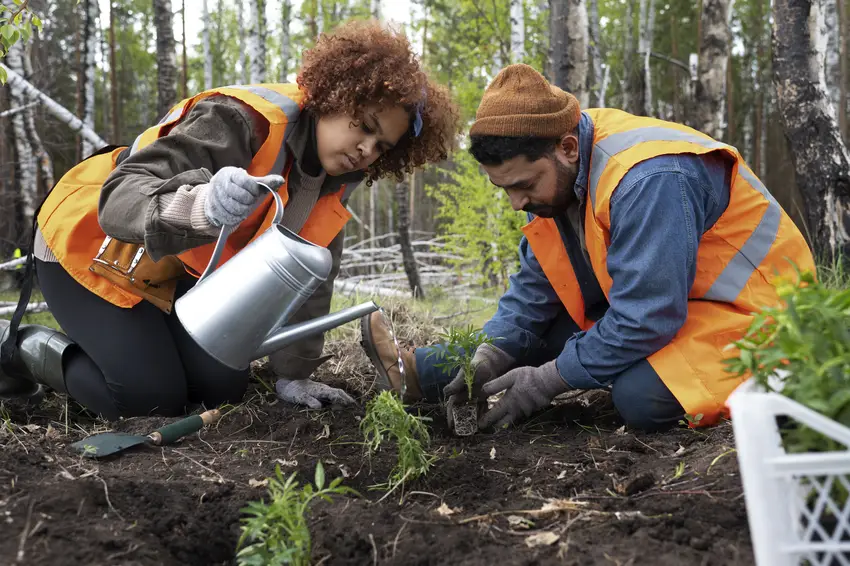
Conservation Scientists protect and manage natural areas like forests and parks by creating management plans, monitoring land health, and ensuring environmental regulations are followed. They negotiate contracts with landowners, prepare sites for new tree growth, and even help fight forest fires when needed. Using modern technology like GPS mapping, drones, and environmental monitoring equipment, they work with government agencies, private landowners, and communities to balance human needs with environmental protection. This career combines outdoor fieldwork with office planning and requires strong science skills, often starting with a degree in forestry, environmental science, or biology.
Conservation Scientists

Did you know?

Most wildlife defender positions in the US require a bachelor's degree in wildlife biology, environmental science, or related field, plus specialized certifications from agencies like the US Fish and Wildlife Service.

At a Glance

Median Wage

$68,385.10 Avg/yr

Growth

Stable

Top Skill

Management of Material Resources

Key Responsibilities

  • Apply principles of specialized fields of science, such as agronomy, soil science, forestry, or agriculture, to achieve conservation objectives.
  • Revisit land users to view implemented land use practices or plans.
  • Enter local soil, water, or other environmental data into adaptive or Web-based decision tools to identify appropriate analyses or techniques.
  • Participate on work teams to plan, develop, or implement programs or policies for improving environmental habitats, wetlands, or groundwater or soil resources.
  • Initiate, schedule, or conduct annual audits or compliance checks of program implementation by local government.
  • Gather information from geographic information systems (GIS) databases or applications to formulate land use recommendations.
  • Conduct fact-finding or mediation sessions among government units, landowners, or other agencies to resolve disputes.
  • Review annual reports of counties, conservation districts, or watershed management organizations, certifying compliance with mandated reporting requirements.
  • Manage field offices or involve staff in cooperative ventures.
  • Review proposed wetland restoration easements or provide technical recommendations.
  • Advise land users, such as farmers or ranchers, on plans, problems, or alternative conservation solutions.
  • Review or approve amendments to comprehensive local water plans or conservation district plans.
  • Develop or conduct environmental studies, such as plant material field trials or wildlife habitat impact studies.
  • Visit areas affected by erosion problems to identify causes or determine solutions.
  • Develop water conservation or harvest plans, using weather information systems, irrigation information management systems, or other sources of daily evapotranspiration (ET) data.
  • Plan soil management or conservation practices, such as crop rotation, reforestation, permanent vegetation, contour plowing, or terracing, to maintain soil or conserve water.
  • Coordinate or implement technical, financial, or administrative assistance programs for local government units to ensure efficient program implementation or timely responses to requests for assistance.
  • Provide information, knowledge, expertise, or training to government agencies at all levels to solve water or soil management problems or to assure coordination of resource protection activities.
  • Compute cost estimates of different conservation practices, based on needs of land users, maintenance requirements, or life expectancy of practices.
  • Develop soil maps.
  • Monitor projects during or after construction to ensure projects conform to design specifications.
  • Compile or interpret biodata to determine extent or type of wetlands or to aid in program formulation.
  • Implement soil or water management techniques, such as nutrient management, erosion control, buffers, or filter strips, in accordance with conservation plans.
  • Respond to complaints or questions on wetland jurisdiction, providing information or clarification.
  • Develop, conduct, or participate in surveys, studies, or investigations of various land uses to inform corrective action plans.
  • Identify or recommend integrated weed and pest management (IPM) strategies, such as resistant plants, cultural or behavioral controls, soil amendments, insects, natural enemies, barriers, or pesticides.
  • Develop or maintain working relationships with local government staff or board members.
  • Compute design specifications for implementation of conservation practices, using survey or field information, technical guides or engineering manuals.
  • Analyze results of investigations to determine measures needed to maintain or restore proper soil management.
  • Review grant applications or make funding recommendations.

Career Considerations

Educational Requirements and Certifications

Most wildlife defender positions in the US require a bachelor's degree in wildlife biology, environmental science, or related field, plus specialized certifications from agencies like the US Fish and Wildlife Service.

Physical and Emotional Demands

The role involves challenging outdoor work in various weather conditions and can be emotionally taxing when dealing with wildlife crimes, poaching, and habitat destruction.

Career Advancement and Compensation

Wildlife defender careers in America typically start at entry-level positions with federal or state agencies, with advancement opportunities limited and salaries generally lower than private sector alternatives.

Want to dig deeper?

Talk to blinky to learn more.

Start chatting
BETA
New York

25 Kent Ave, Suite 401
Brooklyn, NY
11249


North Carolina

204 N Person
Street. Raleigh, NC
27601

Australia

Level 4/80
Wentworth Ave,
Surry Hills,
Sydney, 2010