Conveyor Operators and Tenders
Overview
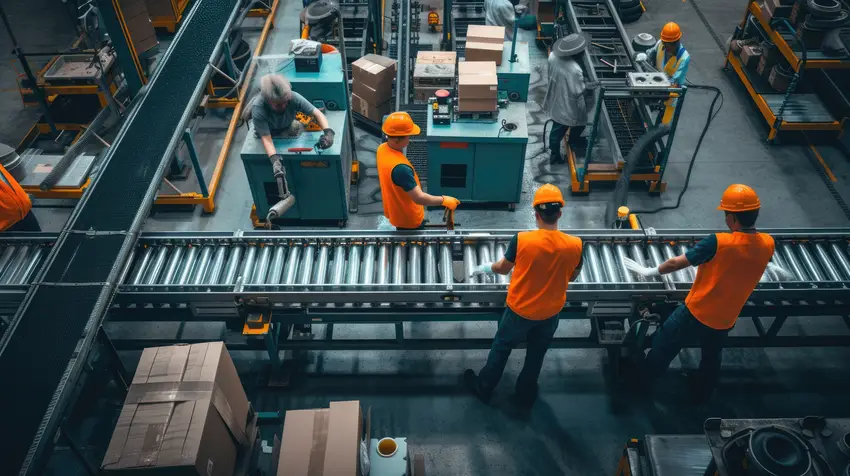
Conveyor operators run the moving belt systems that transport materials and products throughout factories, warehouses, and processing plants. You'll monitor computer screens and gauges to ensure everything runs smoothly, record important data about production, and perform maintenance to keep the systems working properly. This job combines hands-on mechanical work with technology, as you'll use digital controls and work as part of a team to keep production flowing efficiently.
Did you know?
This role requires significant physical stamina and adherence to strict OSHA safety protocols due to working with heavy industrial machinery and potentially hazardous environments.
At a Glance
Median Wage
$42,527.62 Avg/yr
Growth
Stable
Top Skill
Complex Problem Solving
Key Responsibilities
- Load, unload, or adjust materials or products on conveyors by hand, by using lifts, hoists, and scoops, or by opening gates, chutes, or hoppers.
- Join sections of conveyor frames at temporary working areas, and connect power units.
- Record production data such as weights, types, quantities, and storage locations of materials, as well as equipment performance problems and downtime.
- Observe packages moving along conveyors to identify packages, detect defective packaging, and perform quality control.
- Thread strapping through strapping tools and secure battens with strapping to form protective pallets around extrusions.
- Manipulate controls, levers, and valves to start pumps, auxiliary equipment, or conveyors, and to adjust equipment positions, speeds, timing, and material flows.
- Inform supervisors of equipment malfunctions that need to be addressed.
- Press console buttons to deflect packages to predetermined accumulators or reject lines.
- Observe conveyor operations and monitor lights, dials, and gauges to maintain specified operating levels and to detect equipment malfunctions.
- Affix identifying information to materials or products, using hand tools.
- Contact workers in work stations or other departments to request movement of materials, products, or machinery, or to notify them of incoming shipments and their estimated delivery times.
- Clean, sterilize, and maintain equipment, machinery, and work stations, using hand tools, shovels, brooms, chemicals, hoses, and lubricants.
- Repair or replace equipment components or parts such as blades, rolls, and pumps.
- Weigh or measure materials and products, using scales or other measuring instruments, or read scales on conveyors that continually weigh products, to verify specified tonnages and prevent overloads.
- Collect samples of materials or products, checking them to ensure conformance to specifications or sending them to laboratories for analysis.
- Distribute materials, supplies, and equipment to work stations, using lifts and trucks.
- Read production and delivery schedules, and confer with supervisors, to determine sorting and transfer procedures, arrangement of packages on pallets, and destinations of loaded pallets.
- Stop equipment or machinery and clear jams, using poles, bars, and hand tools, or remove damaged materials from conveyors.
- Move, assemble, and connect hoses or nozzles to material hoppers, storage tanks, conveyor sections or chutes, and pumps.
- Position deflector bars, gates, chutes, or spouts to divert flow of materials from one conveyor onto another conveyor.
Career Considerations
Physical Demands and Safety Training
This role requires significant physical stamina and adherence to strict OSHA safety protocols due to working with heavy industrial machinery and potentially hazardous environments.
Technical Skill Development
Staying current with evolving automation technologies and obtaining relevant certifications (such as PLC programming or electrical systems) is essential for career advancement in America's increasingly automated industrial sector.
Growing Job Market Opportunities
The expansion of e-commerce fulfillment centers and manufacturing automation across the United States creates strong demand for skilled conveyor technicians, particularly in logistics hubs and industrial regions.