
Custom Tailors

Overview

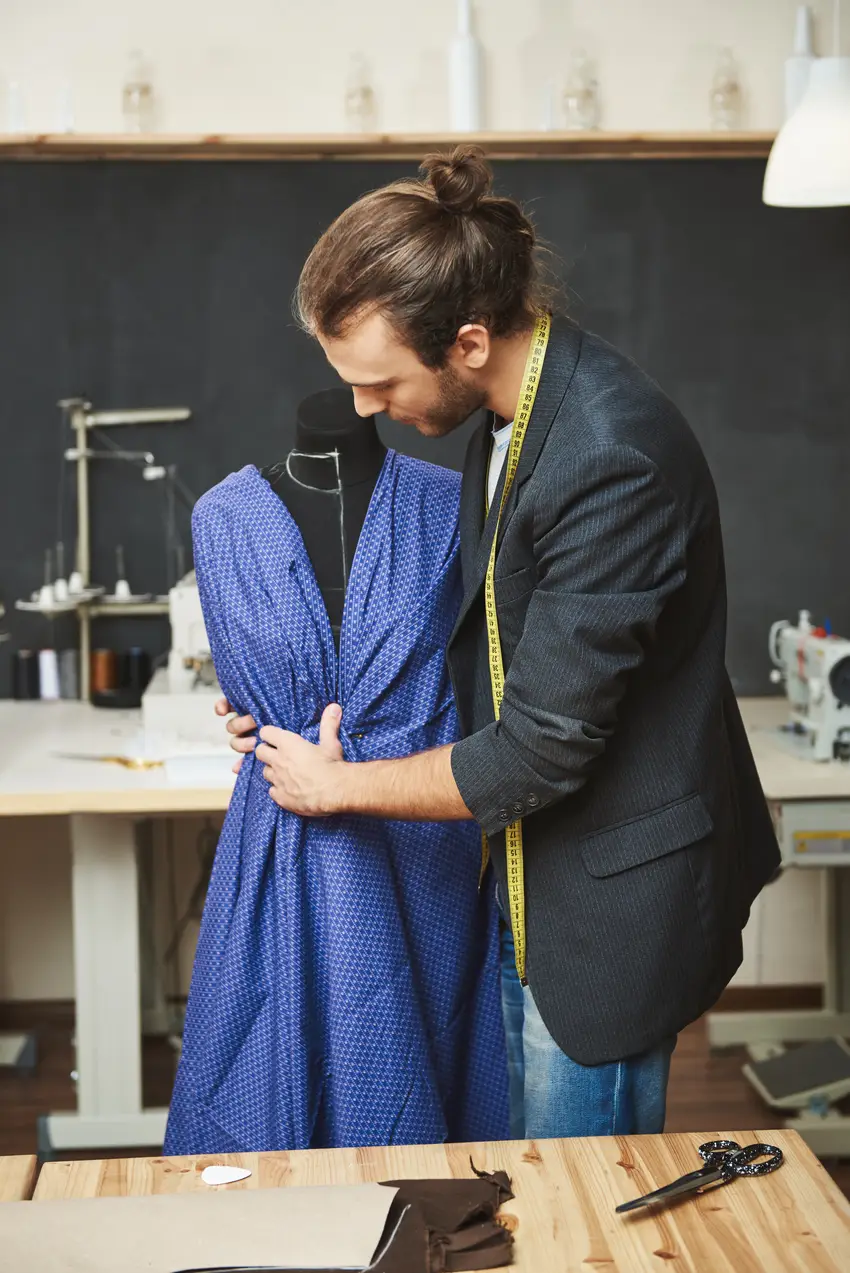
Custom tailors are skilled artisans who create, alter, and repair clothing to fit people perfectly. They take precise measurements, adjust seams and hems, and use both traditional hand-sewing techniques and modern sewing machines to transform fabric into perfectly fitted garments. This creative profession combines artistic design skills with technical precision, and many tailors today work in boutique shops, fashion houses, or even run their own businesses. The job requires attention to detail, problem-solving abilities, and often involves collaborating closely with clients to bring their vision to life.
Custom Tailors

Did you know?

Tailors face significant competition from fast fashion retailers and mass-produced clothing, requiring them to focus on high-quality custom work and specialized services to differentiate themselves.

At a Glance

Median Wage

$40,297.83 Avg/yr

Growth

Stable

Top Skill

Negotiation

Key Responsibilities

  • Assemble garment parts and join parts with basting stitches, using needles and thread or sewing machines.
  • Maintain garment drape and proportions as alterations are performed.
  • Develop, copy, or adapt designs for garments, and design patterns to fit measurements, applying knowledge of garment design, construction, styling, and fabric.
  • Take up or let down hems to shorten or lengthen garment parts, such as sleeves.
  • Make garment style changes, such as tapering pant legs, narrowing lapels, and adding or removing padding.
  • Measure customers, using tape measures, and record measurements.
  • Trim excess material, using scissors.
  • Record required alterations and instructions on tags, and attach them to garments.
  • Remove stitches from garments to be altered, using rippers or razor blades.
  • Confer with customers to determine types of material and garment styles desired.
  • Examine tags on garments to determine alterations that are needed.
  • Fit, alter, repair, and make made-to-measure clothing, according to customers' and clothing manufacturers' specifications and fit, and applying principles of garment design, construction, and styling.
  • Measure parts, such as sleeves or pant legs, and mark or pin-fold alteration lines.
  • Sew buttonholes and attach buttons to finish garments.
  • Press garments, using hand irons or pressing machines.
  • Sew garments, using needles and thread or sewing machines.
  • Repair or replace defective garment parts, such as pockets, zippers, snaps, buttons, and linings.
  • Estimate how much a garment will cost to make, based on factors such as time and material requirements.
  • Put in padding and shaping materials.
  • Let out or take in seams in suits and other garments to improve fit.
  • Position patterns of garment parts on fabric, and cut fabric along outlines, using scissors.
  • Fit and study garments on customers to determine required alterations.

Career Considerations

Competition from Mass Production

Tailors face significant competition from fast fashion retailers and mass-produced clothing, requiring them to focus on high-quality custom work and specialized services to differentiate themselves.

Skill Development and Training

Success as a tailor requires mastering traditional sewing techniques, pattern-making, and fitting skills, often through formal training programs or apprenticeships that can take years to complete.

Business Model Considerations

Many tailors must decide between working as employees in alterations shops or establishing independent businesses, with the latter requiring additional skills in marketing, customer service, and business management.

Want to dig deeper?

Talk to blinky to learn more.

Start chatting
BETA
New York

25 Kent Ave, Suite 401
Brooklyn, NY
11249


North Carolina

204 N Person
Street. Raleigh, NC
27601

Australia

Level 4/80
Wentworth Ave,
Surry Hills,
Sydney, 2010