
Drywall and Ceiling Tile Installers

Overview

Drywall and ceiling tile installers transform empty building frames into finished interior spaces by measuring, cutting, and installing wallboard and ceiling tiles. You'll use precision tools to fasten panels to support structures, then apply tape and compound to create seamless walls and ceilings. This hands-on career requires attention to detail as you patch, sand, and smooth surfaces to perfection. Many installers work on construction teams, collaborating with other trades to bring architectural designs to life in homes, offices, and commercial buildings.
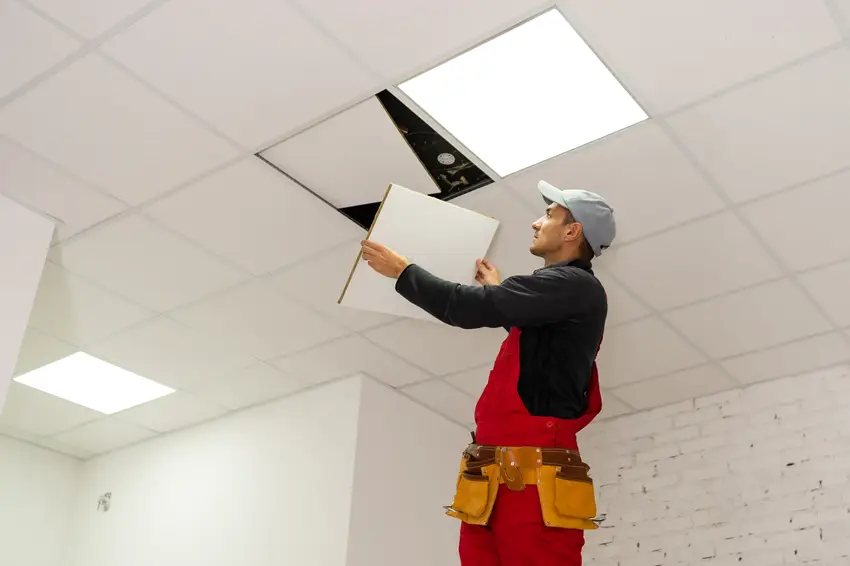
Drywall and Ceiling Tile Installers

Did you know?

Drywall installation involves heavy lifting, prolonged standing, and exposure to dust, requiring good physical condition and strict adherence to safety protocols to prevent injury.

At a Glance

Median Wage

$55,328.96 Avg/yr

Growth

Fast Growing

Top Skill

Installation

Key Responsibilities

  • Wash concrete surfaces before mounting tile to increase adhesive qualities of surfaces, using washing soda and zinc sulfate solution.
  • Suspend angle iron grids or channel irons from ceilings, using wire.
  • Scribe and cut edges of tile to fit walls where wall molding is not specified.
  • Install metal lath where plaster applications will be exposed to weather or water, or for curved or irregular surfaces.
  • Coordinate work with drywall finishers who cover the seams between drywall panels.
  • Install horizontal and vertical metal or wooden studs to frames so that wallboard can be attached to interior walls.
  • Fit and fasten wallboard or drywall into position on wood or metal frameworks, using glue, nails, or screws.
  • Seal joints between ceiling tiles and walls.
  • Remove existing plaster, drywall, or paneling, using crowbars and hammers.
  • Mount tile, using adhesives, or by nailing, screwing, stapling, or wire-tying lath directly to structural frameworks.
  • Cut metal or wood framing and trim to size, using cutting tools.
  • Inspect furrings, mechanical mountings, or masonry surfaces for plumbness and level, using spirit or water levels.
  • Fasten metal or rockboard lath to the structural framework of walls, ceilings, or partitions of buildings, using nails, screws, staples, or wire-ties.
  • Apply cement to backs of tiles and press tiles into place, aligning them with layout marks or joints of previously laid tile.
  • Cut fixture or border tiles to size, using keyhole saws, and insert them into surrounding frameworks.
  • Hang dry lines to wall moldings to guide positioning of main runners.
  • Apply or mount acoustical tile or blocks, strips, or sheets of shock-absorbing materials to ceilings or walls of buildings to reduce reflection of sound or to decorate rooms.
  • Measure and cut openings in panels or tiles for electrical outlets, windows, vents, plumbing, or other fixtures, using keyhole saws or other cutting tools.
  • Measure and mark surfaces to lay out work, according to blueprints or drawings, using tape measures, straightedges or squares, and marking devices.
  • Install blanket insulation between studs and tack plastic moisture barriers over insulation.
  • Assemble or install metal framing or decorative trim for windows, doorways, or vents.
  • Nail channels or wood furring strips to surfaces to provide mounting for tile.
  • Trim rough edges from wallboard to maintain even joints, using knives.
  • Read blueprints or other specifications to determine methods of installation, work procedures, or material or tool requirements.
  • Hang drywall panels on metal frameworks of walls and ceilings in offices, schools, or other large buildings, using lifts or hoists to adjust panel heights, when necessary.
  • Cut and screw together metal channels to make floor or ceiling frames, according to plans for the location of rooms or hallways.

Career Considerations

Physical Demands and Safety Requirements

Drywall installation involves heavy lifting, prolonged standing, and exposure to dust, requiring good physical condition and strict adherence to safety protocols to prevent injury.

Economic Cyclicality

Employment opportunities for drywall installers fluctuate with the construction industry cycles, housing market conditions, and overall economic health in America.

Skill Development for Career Advancement

Mastering advanced finishing techniques and expanding into related trades can significantly improve earning potential and job security in the competitive American construction market.

Want to dig deeper?

Talk to blinky to learn more.

Start chatting
BETA
New York

25 Kent Ave, Suite 401
Brooklyn, NY
11249


North Carolina

204 N Person
Street. Raleigh, NC
27601

Australia

Level 4/80
Wentworth Ave,
Surry Hills,
Sydney, 2010