
Electric Motor Technicians

Overview

Electric motor technicians repair and maintain electric motors, power tools, and electrical equipment that keep everything from household appliances to industrial machinery running smoothly. You'll use diagnostic tools like voltmeters and ammeters to troubleshoot problems, then fix or rebuild mechanical and electrical components using both hand tools and specialized equipment. This hands-on career combines problem-solving skills with technical knowledge of electrical systems, and many technicians work in repair shops, manufacturing facilities, or as mobile service providers. You can enter this field through vocational training, apprenticeships, or community college programs in electrical technology.
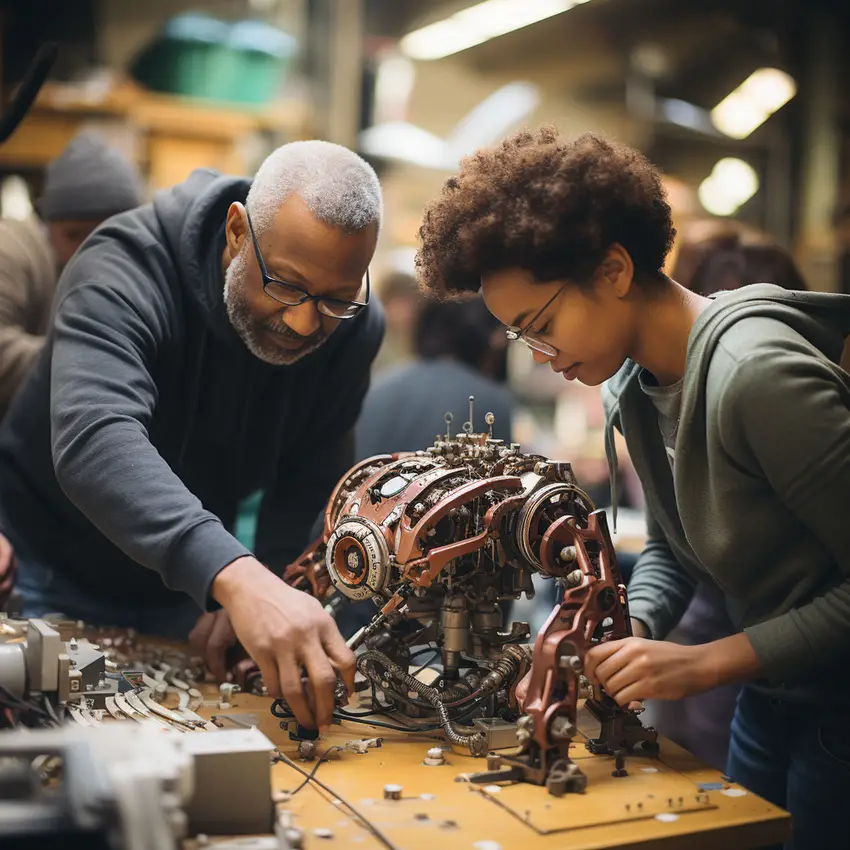
Electric Motor Technicians

Did you know?

Most employers prefer technicians with formal training from trade schools or manufacturer certifications, as power tool technology becomes increasingly sophisticated with digital components and battery systems.

At a Glance

Median Wage

$52,923.33 Avg/yr

Growth

Stable

Top Skill

Social Perceptiveness

Key Responsibilities

  • Reface, ream, and polish commutators and machine parts to specified tolerances, using machine tools.
  • Seal joints with putty, mortar, and asbestos, using putty extruders and knives.
  • Record repairs required, parts used, and labor time.
  • Sharpen tools such as saws, picks, shovels, screwdrivers, and scoops, either manually or by using bench grinders and emery wheels.
  • Verify and adjust alignments and dimensions of parts, using gauges and tracing lathes.
  • Inspect electrical connections, wiring, relays, charging resistance boxes, and storage batteries, following wiring diagrams.
  • Cut and form insulation, and insert insulation into armature, rotor, or stator slots.
  • Inspect and test equipment to locate damage or worn parts and diagnose malfunctions, or read work orders or schematic drawings to determine required repairs.
  • Clean cells, cell assemblies, glassware, leads, electrical connections, and battery poles, using scrapers, steam, water, emery cloths, power grinders, or acid.
  • Steam-clean polishing and buffing wheels to remove abrasives and bonding materials, and spray, brush, or recoat surfaces as necessary.
  • Disassemble defective equipment so that repairs can be made, using hand tools.
  • Rewire electrical systems, and repair or replace electrical accessories.
  • Rewind coils on cores in slots, or make replacement coils, using coil-winding machines.
  • Adjust working parts, such as fan belts, contacts, and springs, using hand tools and gauges.
  • Reassemble repaired electric motors to specified requirements and ratings, using hand tools and electrical meters.
  • Assemble electrical parts such as alternators, generators, starting devices, and switches, following schematic drawings and using hand, machine, and power tools.
  • Hammer out dents and twists in tools and equipment.
  • Solder, wrap, and coat wires to ensure proper insulation.
  • Test battery charges, and replace or recharge batteries as necessary.
  • Test equipment for overheating, using speed gauges and thermometers.
  • Weld, braze, or solder electrical connections.
  • Repair and operate battery-charging equipment.
  • Set machinery for proper performance, using computers.
  • Remove and replace defective parts such as coil leads, carbon brushes, and wires, using soldering equipment.
  • Scrape and clean units or parts, using cleaning solvents and equipment such as buffing wheels.
  • Read service guides to find information needed to perform repairs.
  • Lift units or parts such as motors or generators, using cranes or chain hoists, or signal crane operators to lift heavy parts or subassemblies.
  • Maintain stocks of parts.
  • Lubricate moving parts.
  • Measure velocity, horsepower, revolutions per minute (rpm), amperage, circuitry, and voltage of units or parts to diagnose problems, using ammeters, voltmeters, wattmeters, and other testing devices.
  • Repair and rebuild defective mechanical parts in electric motors, generators, and related equipment, using hand tools and power tools.

Career Considerations

Technical Certification Requirements

Most employers prefer technicians with formal training from trade schools or manufacturer certifications, as power tool technology becomes increasingly sophisticated with digital components and battery systems.

Safety and Physical Demands

The role requires adherence to OSHA safety standards while working with electrical components and involves physical tasks like lifting heavy equipment and standing for extended periods.

Stable Job Market with Growth Potential

The American construction and manufacturing industries' continued reliance on power tools creates steady demand for skilled technicians, with opportunities to advance to supervisory roles or start independent repair businesses.

Want to dig deeper?

Talk to blinky to learn more.

Start chatting
BETA
New York

25 Kent Ave, Suite 401
Brooklyn, NY
11249


North Carolina

204 N Person
Street. Raleigh, NC
27601

Australia

Level 4/80
Wentworth Ave,
Surry Hills,
Sydney, 2010