
Electrical and Electronic Equipment Assemblers

Overview

Electrical and Electronic Equipment Assemblers build and put together the inside parts of devices such as computers, control panels, test instruments, and electric motors. They read technical drawings and wiring diagrams, use tools like soldering irons, drills, calipers, and multimeters, and carefully install and connect components so circuits work safely and match exact specifications. They also inspect and test their work, record measurements and results, and sometimes help coworkers or customers understand how to install, use, or maintain the finished products.
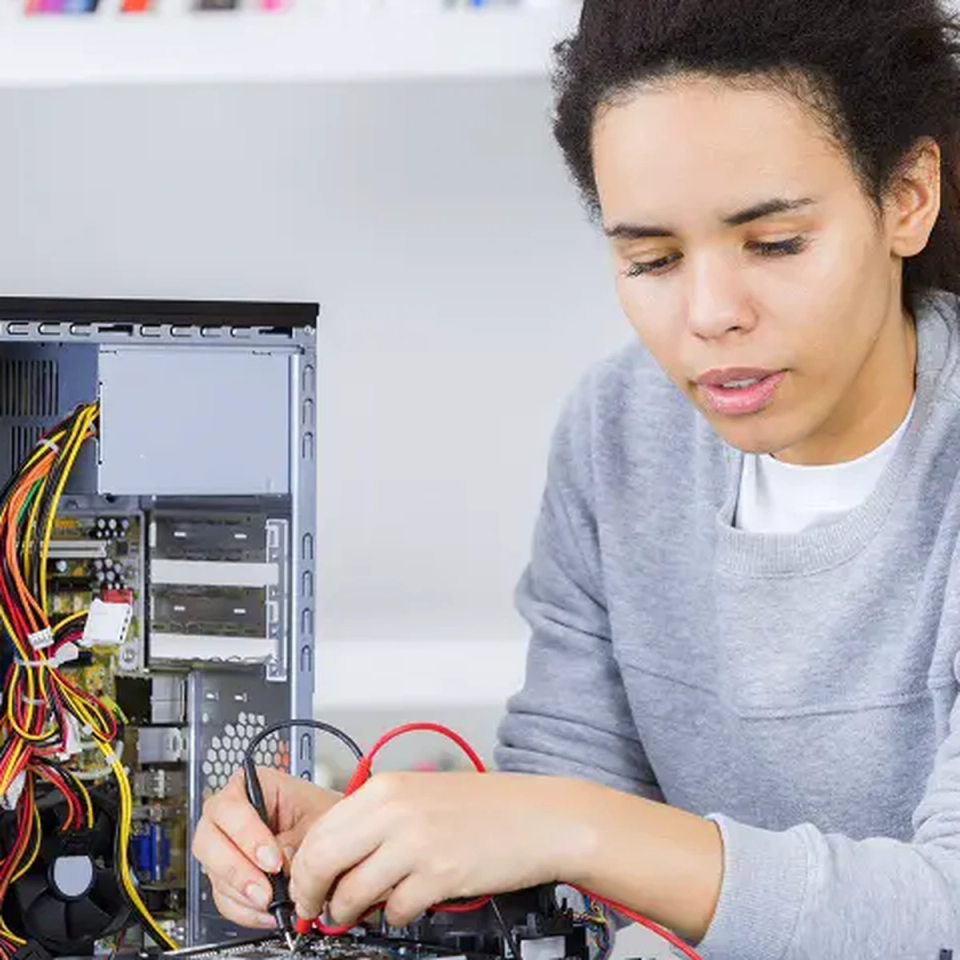
Electrical and Electronic Equipment Assemblers

Did you know?

Most positions require a high school diploma with on-the-job training or completion of vocational programs in electronics or electrical technology.

At a Glance

Growth

Stable

Top Skill

Management of Financial Resources

Key Responsibilities

  • Read and interpret schematic drawings, diagrams, blueprints, specifications, work orders, or reports to determine materials requirements or assembly instructions.
  • Adjust, repair, or replace electrical or electronic components to correct defects and to ensure conformance to specifications.
  • Mark and tag components so that stock inventory can be tracked and identified.
  • Complete, review, or maintain production, time, or component waste reports.
  • Pack finished assemblies for shipment, and transport them to storage areas, using hoists or handtrucks.
  • Inspect or test wiring installations, assemblies, or circuits for resistance factors or for operation, and record results.
  • Measure and adjust voltages to specified values to determine operational accuracy of instruments.
  • Clean parts, using cleaning solutions, air hoses, and cloths.
  • Assemble electrical or electronic systems or support structures and install components, units, subassemblies, wiring, or assembly casings, using rivets, bolts, soldering or micro-welding equipment.
  • Explain assembly procedures or techniques to other workers.
  • Fabricate or form parts, coils, or structures according to specifications, using drills, calipers, cutters, or saws.
  • Position, align, or adjust workpieces or electrical parts to facilitate wiring or assembly.
  • Distribute materials, supplies, or subassemblies to work areas.
  • Instruct customers in the installation, repair, or maintenance of products.
  • Confer with supervisors or engineers to plan or review work activities or to resolve production problems.
  • Drill or tap holes in specified equipment locations to mount control units or to provide openings for elements, wiring, or instruments.

Career Considerations

Education and Training Requirements

Most positions require a high school diploma with on-the-job training or completion of vocational programs in electronics or electrical technology.

Automation Impact on Job Market

The field faces increasing automation in American manufacturing, requiring workers to adapt to more complex assembly tasks and quality control responsibilities.

Physical Demands and Safety Standards

The role involves prolonged standing, precise hand-eye coordination, and adherence to strict electrical safety regulations mandated by OSHA.

Want to dig deeper?

Talk to blinky to learn more.

Start chatting
BETA
New York

25 Kent Ave, Suite 401
Brooklyn, NY
11249


North Carolina

204 N Person
Street. Raleigh, NC
27601

Australia

Level 4/80
Wentworth Ave,
Surry Hills,
Sydney, 2010