Electrician Helper
Overview
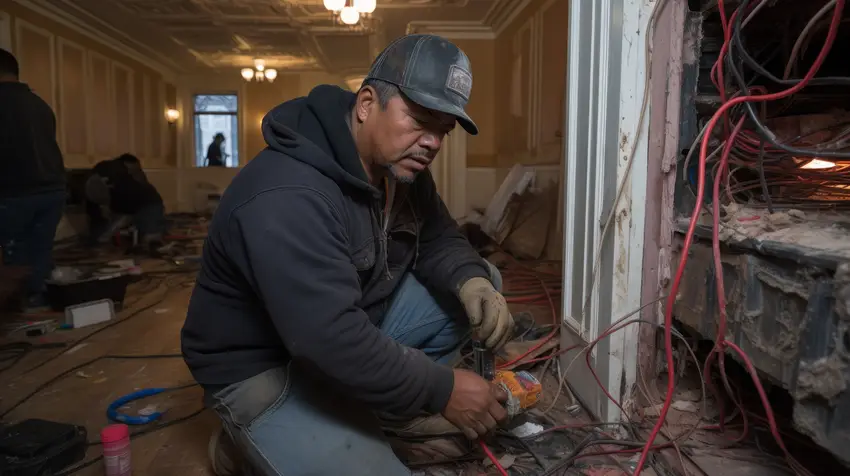
Electrician helpers work alongside licensed electricians to support electrical installations and repairs in homes, businesses, and construction sites. You'll use power tools to drill holes, pull wiring through walls, measure and cut electrical materials, and transport equipment to job sites. This hands-on role involves troubleshooting electrical problems using digital test meters and helping build electrical panels and control systems. It's a great entry point into the electrical trade, offering opportunities to learn from experienced professionals while developing technical skills that can lead to an electrician apprenticeship.
Did you know?
Most electrician helpers must complete a formal apprenticeship program combining classroom instruction with on-the-job training to advance to journeyman status.
At a Glance
Median Wage
$41,852.08 Avg/yr
Growth
Stable
Top Skill
Persuasion
Key Responsibilities
- Maintain tools, vehicles, and equipment and keep parts and supplies in order.
- Thread conduit ends, connect couplings, and fabricate and secure conduit support brackets, using hand tools.
- String transmission lines or cables through ducts or conduits, under the ground, through equipment, or to towers.
- Measure, cut, and bend wire and conduit, using measuring instruments and hand tools.
- Operate heavy equipment, such as backhoes.
- Trace out short circuits in wiring, using test meter.
- Perform semi-skilled and unskilled laboring duties related to the installation, maintenance and repair of a wide variety of electrical systems and equipment.
- Raise, lower, or position equipment, tools, and materials, using hoist, hand line, or block and tackle.
- Construct controllers and panels, using power drills, drill presses, taps, saws, and punches.
- Paint a variety of objects related to electrical functions.
- Disassemble defective electrical equipment, replace defective or worn parts, and reassemble equipment, using hand tools.
- Examine electrical units for loose connections and broken insulation and tighten connections, using hand tools.
- Trim trees and clear undergrowth along right-of-way.
- Operate cutting torches and welding equipment, while working with conduit and metal components to construct devices associated with electrical functions.
- Requisition materials, using warehouse requisition or release forms.
- Transport tools, materials, equipment, and supplies to work site by hand, handtruck, or heavy, motorized truck.
- Strip insulation from wire ends, using wire stripping pliers, and attach wires to terminals for subsequent soldering.
- Bolt component parts together to form tower assemblies, using hand tools.
- Break up concrete, using airhammer, to facilitate installation, construction, or repair of equipment.
- Drill holes and pull or push wiring through openings, using hand and power tools.
- Dig trenches or holes for installation of conduit or supports.
- Solder electrical connections, using soldering iron.
- Clean work area and wash parts.
- Erect electrical system components and barricades, and rig scaffolds, hoists, and shoring.
- Install copper-clad ground rods, using a manual post driver.
Career Considerations
Apprenticeship Requirements
Most electrician helpers must complete a formal apprenticeship program combining classroom instruction with on-the-job training to advance to journeyman status.
Safety Compliance
Strict adherence to OSHA safety standards and National Electrical Code regulations is mandatory due to the high-risk nature of electrical work.
State Licensing Variations
Licensing requirements and reciprocity agreements vary significantly between states, affecting career mobility and advancement opportunities.