Emergency Medical Technicians
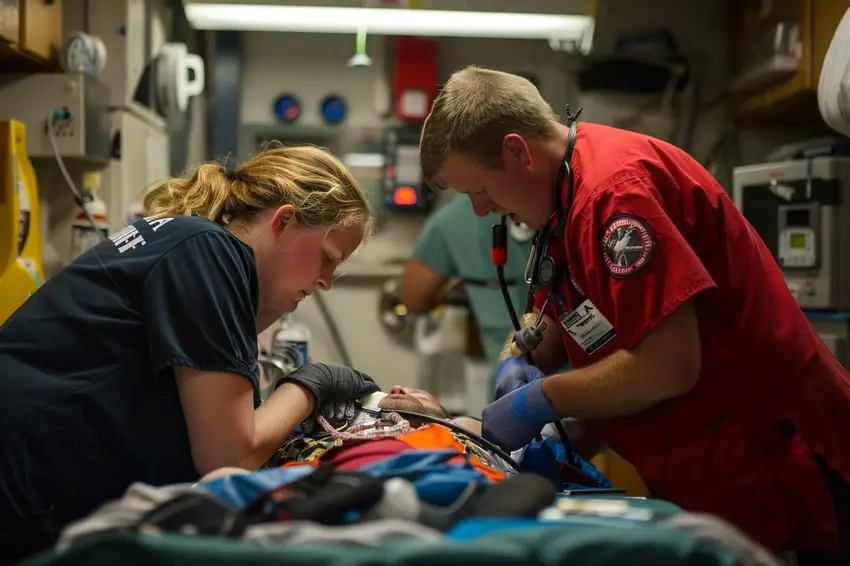
Emergency Medical Technicians (EMTs) are first responders who provide life-saving medical care to people in emergency situations. They respond to 911 calls, assess patients' conditions, perform CPR and first aid, and safely transport patients to hospitals using specialized ambulances equipped with advanced medical equipment. EMTs work closely with paramedics, police officers, and firefighters as part of emergency response teams. This career requires completing EMT certification programs and offers the opportunity to make a real difference in people's lives every day.
Did you know?
EMTs must complete state-approved training programs and pass the National Registry of Emergency Medical Technicians (NREMT) exam, with ongoing continuing education requirements to maintain certification.
At a glance
Typical average pay
$41,400 Avg/yr
Growth
Fast growing
Things to consider
Physical and Emotional Demands
The role requires physical strength for patient lifting and transport, as well as emotional resilience to handle traumatic situations and high-stress emergency scenarios.
Irregular Work Schedules
EMTs typically work in shifts including nights, weekends, and holidays, often with long hours and potential overtime due to the 24/7 nature of emergency medical services.
Key responsibilities
Decontaminate ambulance interior following treatment of patient with infectious disease, and report case to proper authorities.
Perform emergency diagnostic and treatment procedures, such as stomach suction, airway management, or heart monitoring, during ambulance ride.
Coordinate work with other emergency medical team members or police or fire department personnel.
Assess nature and extent of illness or injury to establish and prioritize medical procedures.
Maintain vehicles and medical and communication equipment, and replenish first aid equipment and supplies.