
Environmental Science and Protection Technicians

Overview

Environmental Science and Protection Technicians are like environmental detectives who protect public health by monitoring pollution and contamination. They inspect businesses and public places for safety hazards, set up high-tech equipment like remote sensors to track emissions, and collect samples of air, soil, and water for laboratory analysis using tools like microscopes. These professionals prepare detailed reports on their findings and work closely with clients to ensure everyone follows environmental regulations, often collaborating in teams and using cutting-edge technology to solve real-world problems.
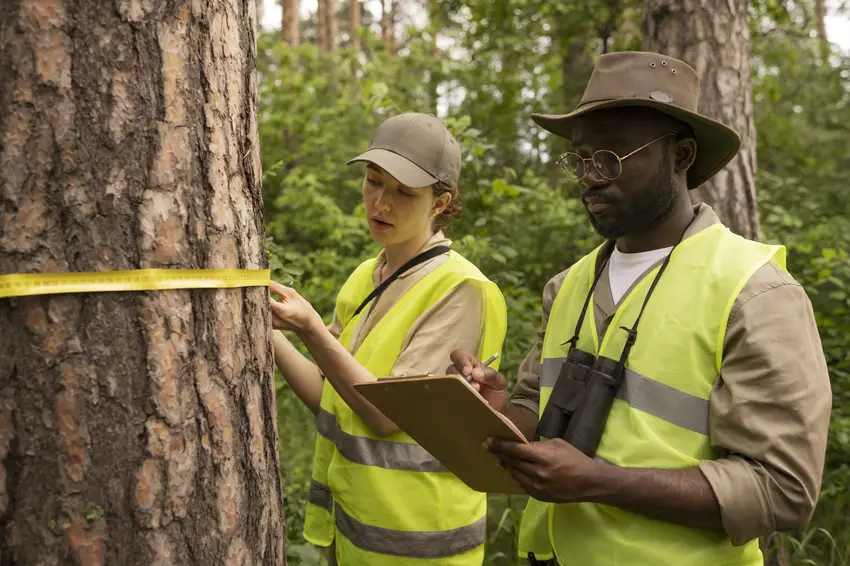
Environmental Science and Protection Technicians

Did you know?

Most positions require an associate's degree in environmental science or related field, with additional certifications from organizations like the National Environmental Health Association enhancing job prospects.

At a Glance

Median Wage

$52,236.53 Avg/yr

Growth

Fast Growing

Top Skill

Operation and Control

Key Responsibilities

  • Maintain files, such as hazardous waste databases, chemical usage data, personnel exposure information, or diagrams showing equipment locations.
  • Make recommendations to control or eliminate unsafe conditions at workplaces or public facilities.
  • Perform statistical analysis of environmental data.
  • Develop testing procedures.
  • Investigate hazardous conditions or spills or outbreaks of disease or food poisoning, collecting samples for analysis.
  • Direct activities of workers in laboratory.
  • Prepare samples or photomicrographs for testing and analysis.
  • Inspect workplaces to ensure the absence of health and safety hazards, such as high noise levels, radiation, or potential lighting hazards.
  • Collect samples of gases, soils, water, industrial wastewater, or asbestos products to conduct tests on pollutant levels or identify sources of pollution.
  • Develop or implement site recycling or hazardous waste stream programs.
  • Calibrate microscopes or test instruments.
  • Weigh, analyze, or measure collected sample particles, such as lead, coal dust, or rock, to determine concentration of pollutants.
  • Record test data and prepare reports, summaries, or charts that interpret test results.
  • Set up equipment or stations to monitor and collect pollutants from sites, such as smoke stacks, manufacturing plants, or mechanical equipment.
  • Initiate procedures to close down or fine establishments violating environmental or health regulations.
  • Discuss test results and analyses with customers.
  • Analyze potential environmental impacts of production process changes, and recommend steps to mitigate negative impacts.
  • Calculate amount of pollutant in samples or compute air pollution or gas flow in industrial processes, using chemical and mathematical formulas.
  • Examine and analyze material for presence and concentration of contaminants, such as asbestos, using variety of microscopes.
  • Provide information or technical or program assistance to government representatives, employers, or the general public on the issues of public health, environmental protection, or workplace safety.
  • Inspect sanitary conditions at public facilities.
  • Develop or implement programs for monitoring of environmental pollution or radiation.
  • Distribute permits, closure plans, or cleanup plans.
  • Monitor emission control devices to ensure they are operating properly and comply with state and federal regulations.
  • Determine amounts and kinds of chemicals to use in destroying harmful organisms or removing impurities from purification systems.

Career Considerations

Educational Requirements and Certifications

Most positions require an associate's degree in environmental science or related field, with additional certifications from organizations like the National Environmental Health Association enhancing job prospects.

Growing Job Market Demand

Employment is projected to grow faster than average due to increased environmental regulations, climate change initiatives, and heightened public awareness of environmental health issues in the United States.

Diverse Work Environments and Safety Considerations

Technicians work in various settings from laboratories to outdoor field sites, requiring adherence to strict safety protocols when handling potentially hazardous materials and working in challenging environmental conditions.

Want to dig deeper?

Talk to blinky to learn more.

Start chatting
BETA
New York

25 Kent Ave, Suite 401
Brooklyn, NY
11249


North Carolina

204 N Person
Street. Raleigh, NC
27601

Australia

Level 4/80
Wentworth Ave,
Surry Hills,
Sydney, 2010