
Fire Inspectors and Investigators

Overview

Fire inspectors and investigators work to keep communities safe by checking buildings for fire hazards and making sure they follow safety codes. They investigate the causes of fires and explosions using scientific methods and modern technology like thermal imaging cameras and evidence collection tools. These professionals often collaborate with law enforcement, architects, and emergency responders, and may work in offices, at fire scenes, or in the field examining buildings. The job requires strong analytical skills, attention to detail, and often involves specialized training in fire science or criminal justice.
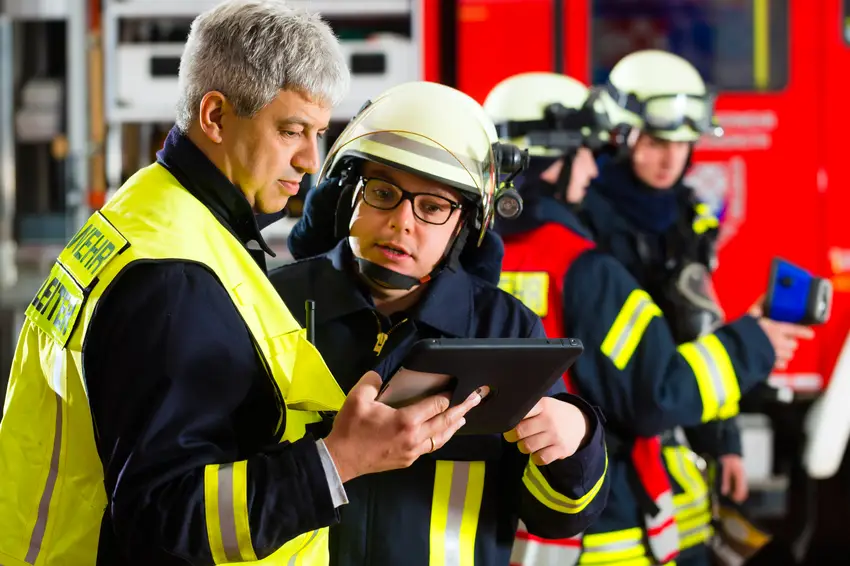
Fire Inspectors and Investigators

Did you know?

Fire Safety Specialists in the US must obtain state-specific certifications and maintain continuing education credits to comply with varying local and federal fire safety regulations.

At a Glance

Median Wage

$72,595.78 Avg/yr

Growth

Fast Growing

Top Skill

Complex Problem Solving

Key Responsibilities

  • Photograph damage and evidence related to causes of fires or explosions to document investigation findings.
  • Arrange for the replacement of defective fire fighting equipment and for repair of fire alarm and sprinkler systems, making minor repairs such as servicing fire extinguishers when feasible.
  • Prepare and maintain reports of investigation results, and records of convicted arsonists and arson suspects.
  • Inspect properties that store, handle, and use hazardous materials to ensure compliance with laws, codes, and regulations, and issue hazardous materials permits to facilities found in compliance.
  • Inspect buildings to locate hazardous conditions and fire code violations, such as accumulations of combustible material, electrical wiring problems, and inadequate or non-functional fire exits.
  • Subpoena and interview witnesses, property owners, and building occupants to obtain information and sworn testimony.
  • Issue permits for public assemblies.
  • Testify in court cases involving fires, suspected arson, and false alarms.
  • Teach public education programs on fire safety and prevention.
  • Attend training classes to maintain current knowledge of fire prevention, safety, and firefighting procedures.
  • Examine fire sites and collect evidence such as glass, metal fragments, charred wood, and accelerant residue for use in determining the cause of a fire.
  • Identify corrective actions necessary to bring properties into compliance with applicable fire codes, laws, regulations, and standards, and explain these measures to property owners or their representatives.
  • Test sites and materials to establish facts, such as burn patterns and flash points of materials, using test equipment.
  • Recommend changes to fire prevention, inspection, and fire code endorsement procedures.
  • Supervise staff, training them, planning their work, and evaluating their performance.
  • Conduct fire code compliance follow-ups to ensure that corrective actions have been taken in cases where violations were found.
  • Teach fire investigation techniques to other firefighter personnel.
  • Write detailed reports of fire inspections performed, fire code violations observed, and corrective recommendations offered.
  • Coordinate efforts with other organizations, such as law enforcement agencies.
  • Develop and coordinate fire prevention programs, such as false alarm billing, fire inspection reporting, and hazardous materials management.
  • Develop or review fire exit plans.
  • Review blueprints and plans for new or remodeled buildings to ensure the structures meet fire safety codes.
  • Conduct inspections and acceptance testing of newly installed fire protection systems.
  • Package collected pieces of evidence in securely closed containers, such as bags, crates, or boxes, to protect them.
  • Dust evidence or portions of fire scenes for latent fingerprints.
  • Conduct fire exit drills to monitor and evaluate evacuation procedures.
  • Conduct internal investigation to determine negligence and violation of laws and regulations by fire department employees.
  • Inspect and test fire protection or fire detection systems to verify that such systems are installed in accordance with appropriate laws, codes, ordinances, regulations, and standards.
  • Instruct children about the dangers of fire.
  • Analyze evidence and other information to determine probable cause of fire or explosion.

Career Considerations

Certification and Licensing Requirements

Fire Safety Specialists in the US must obtain state-specific certifications and maintain continuing education credits to comply with varying local and federal fire safety regulations.

Career Advancement Opportunities

Professionals can advance to senior inspector roles, fire marshal positions, or specialize in areas like industrial fire safety, with many opportunities in both public and private sectors.

Growing Industry Demand

The field shows steady growth due to increased focus on workplace safety regulations, building code compliance, and the need for fire prevention in expanding urban areas.

Want to dig deeper?

Talk to blinky to learn more.

Start chatting
BETA
New York

25 Kent Ave, Suite 401
Brooklyn, NY
11249


North Carolina

204 N Person
Street. Raleigh, NC
27601

Australia

Level 4/80
Wentworth Ave,
Surry Hills,
Sydney, 2010