
Firefighters

Overview

Firefighters are first responders who rush to emergencies to save lives and protect property from fires, accidents, and other dangerous situations. They use advanced equipment like thermal imaging cameras, hydraulic rescue tools, and specialized fire suppression systems to put out fires, rescue people from burning buildings, and provide emergency medical care. The job requires teamwork, physical fitness, and continuous training on new rescue techniques and safety protocols. Many firefighters work in shifts at fire stations where they maintain equipment, participate in community education programs, and stay ready to respond to 911 calls at any moment.
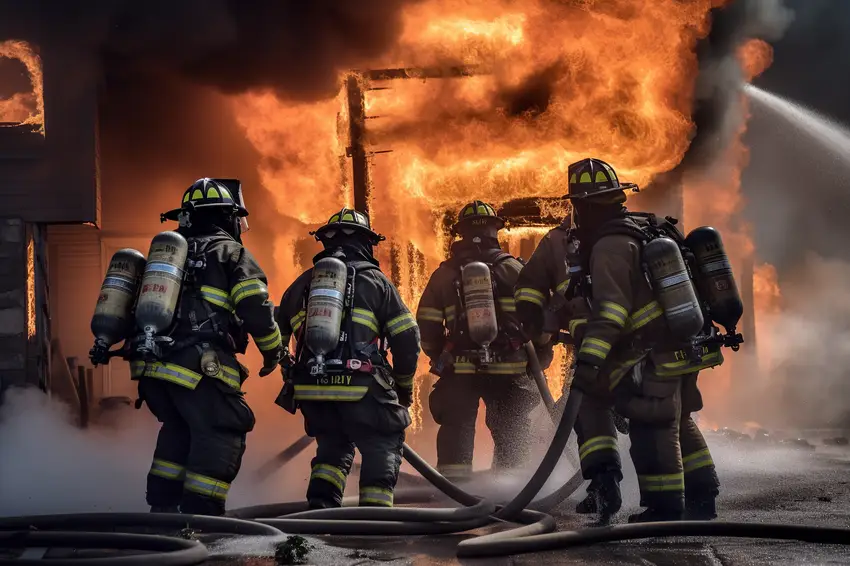
Firefighters

Did you know?

Firefighting demands exceptional physical conditioning to handle strenuous rescue operations, carry heavy equipment, and work in hazardous environments.

At a Glance

Median Wage

$57,803.60 Avg/yr

Growth

Stable

Top Skill

Time Management

Key Responsibilities

  • Respond to fire alarms and other calls for assistance, such as automobile and industrial accidents.
  • Orient self in relation to fire, using compass and map, and collect supplies and equipment dropped by parachute.
  • Inform and educate the public on fire prevention.
  • Drive and operate fire fighting vehicles and equipment.
  • Rescue survivors from burning buildings, accident sites, and water hazards.
  • Move toward the source of a fire, using knowledge of types of fires, construction design, building materials, and physical layout of properties.
  • Dress with equipment such as fire-resistant clothing and breathing apparatus.
  • Clean and maintain fire stations and fire fighting equipment and apparatus.
  • Position and climb ladders to gain access to upper levels of buildings, or to rescue individuals from burning structures.
  • Take action to contain any hazardous chemicals that could catch fire, leak, or spill.
  • Collaborate with other firefighters as a member of a firefighting crew.
  • Inspect buildings for fire hazards and compliance with fire prevention ordinances, testing and checking smoke alarms and fire suppression equipment as necessary.
  • Extinguish flames and embers to suppress fires, using shovels or engine- or hand-driven water or chemical pumps.
  • Protect property from water and smoke, using waterproof salvage covers, smoke ejectors, and deodorants.
  • Operate pumps connected to high-pressure hoses.
  • Administer first aid and cardiopulmonary resuscitation to injured persons or provide emergency medical care such as basic or advanced life support.
  • Train new employees to control and suppress fires.
  • Maintain contact with fire dispatchers at all times to notify them of the need for additional firefighters and supplies, or to detail any difficulties encountered.
  • Assess fires and situations and report conditions to superiors to receive instructions, using two-way radios.
  • Participate in fire drills and demonstrations of fire fighting techniques.
  • Select and attach hose nozzles, depending on fire type, and direct streams of water or chemicals onto fires.
  • Inspect fire sites after flames have been extinguished to ensure that there is no further danger.
  • Search to locate fire survivors.
  • Participate in physical training activities to maintain a high level of physical fitness.
  • Patrol burned areas after fires to locate and eliminate hot spots that may restart fires.
  • Create openings in buildings for ventilation or entrance, using axes, chisels, crowbars, electric saws, or core cutters.
  • Maintain knowledge of current firefighting practices by participating in drills and by attending seminars, conventions, and conferences.
  • Collaborate with police to respond to accidents, disasters, and arson investigation calls.
  • Prepare written reports that detail specifics of fire incidents.
  • Salvage property by removing broken glass, pumping out water, and ventilating buildings to remove smoke.

Career Considerations

Physical Fitness Requirements

Firefighting demands exceptional physical conditioning to handle strenuous rescue operations, carry heavy equipment, and work in hazardous environments.

Job Security and Benefits

Fire departments typically offer strong job security, comprehensive health benefits, and robust pension plans that provide long-term financial stability.

Training and Certification

Most positions require completion of fire academy training and ongoing education, with opportunities to specialize in emergency medical services or hazardous materials response.

Want to dig deeper?

Talk to blinky to learn more.

Start chatting
BETA
New York

25 Kent Ave, Suite 401
Brooklyn, NY
11249


North Carolina

204 N Person
Street. Raleigh, NC
27601

Australia

Level 4/80
Wentworth Ave,
Surry Hills,
Sydney, 2010