Food Batchmakers
Overview
Food Batchmakers operate specialized equipment to mix and blend ingredients that create the food products you see in stores. They follow precise recipes and use computer systems to measure ingredients, control mixing temperatures, and record production data to ensure every batch meets quality standards. This role combines hands-on technical skills with attention to detail, as workers operate everything from large industrial mixers to automated processing systems. Many food manufacturers offer hybrid schedules and emphasize teamwork between production, quality control, and engineering departments.
Did you know?
Food Production Technicians must stay current with FDA and USDA regulations, as American food safety standards are strictly enforced with significant penalties for violations.
At a Glance
Median Wage
$39,729.20 Avg/yr
Growth
Fast Growing
Top Skill
Instructing
Key Responsibilities
- Select and measure or weigh ingredients, using English or metric measures and balance scales.
- Formulate or modify recipes for specific kinds of food products.
- Homogenize or pasteurize material to prevent separation or to obtain prescribed butterfat content, using a homogenizing device.
- Press switches and turn knobs to start, adjust, and regulate equipment, such as beaters, extruders, discharge pipes, and salt pumps.
- Determine mixing sequences, based on knowledge of temperature effects and of the solubility of specific ingredients.
- Operate refining machines to reduce the particle size of cooked batches.
- Examine, feel, and taste product samples during production to evaluate quality, color, texture, flavor, and bouquet, and document the results.
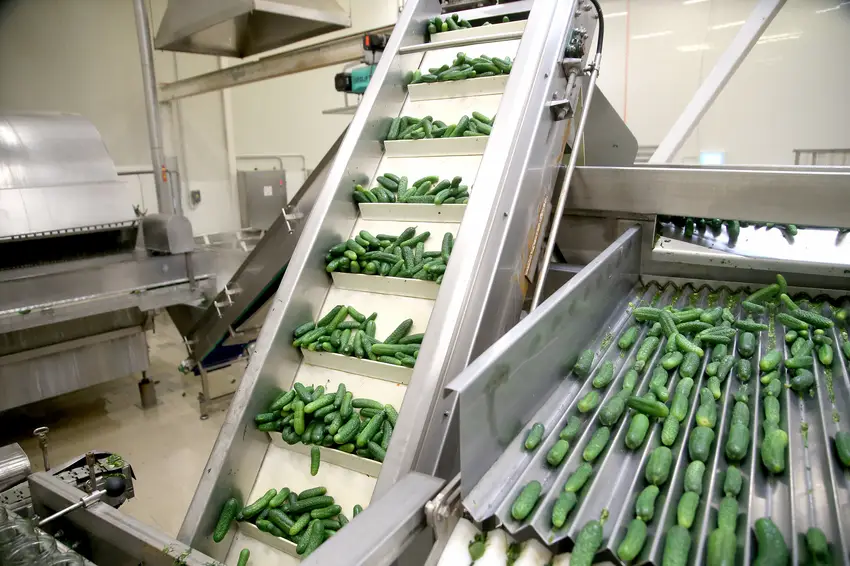
- Place products on carts or conveyors to transfer them to the next stage of processing.
- Mix or blend ingredients, according to recipes, using a paddle or an agitator, or by controlling vats that heat and mix ingredients.
- Follow recipes to produce food products of specified flavor, texture, clarity, bouquet, or color.
- Inspect and pack the final product.
- Observe and listen to equipment to detect possible malfunctions, such as leaks or plugging, and report malfunctions or undesirable tastes to supervisors.
- Grade food products according to government regulations or according to type, color, bouquet, and moisture content.
- Cool food product batches on slabs or in water-cooled kettles.
- Observe gauges and thermometers to determine if the mixing chamber temperature is within specified limits, and turn valves to control the temperature.
- Record production and test data for each food product batch, such as the ingredients used, temperature, test results, and time cycle.
- Give directions to other workers who are assisting in the batchmaking process.
- Test food product samples for moisture content, acidity level, specific gravity, or butter-fat content, and continue processing until desired levels are reached.
- Clean and sterilize vats and factory processing areas.
- Turn valve controls to start equipment and to adjust operation to maintain product quality.
- Fill processing or cooking containers, such as kettles, rotating cookers, pressure cookers, or vats, with ingredients, by opening valves, by starting pumps or injectors, or by hand.
- Inspect vats after cleaning to ensure that fermentable residue has been removed.
- Set up, operate, and tend equipment that cooks, mixes, blends, or processes ingredients in the manufacturing of food products, according to formulas or recipes.
- Modify cooking and forming operations based on the results of sampling processes, adjusting time cycles and ingredients to achieve desired qualities, such as firmness or texture.
- Manipulate products, by hand or using machines, to separate, spread, knead, spin, cast, cut, pull, or roll products.
Career Considerations
Regulatory Compliance Knowledge
Food Production Technicians must stay current with FDA and USDA regulations, as American food safety standards are strictly enforced with significant penalties for violations.
Physical Work Environment
The role typically involves standing for long periods, working in temperature-controlled environments, and potentially handling shift work including nights and weekends.
Career Advancement Opportunities
With experience and additional certifications, technicians can advance to supervisory roles, quality assurance management, or specialized positions in food science and engineering.