
Food Cooking Machine Operators

Overview

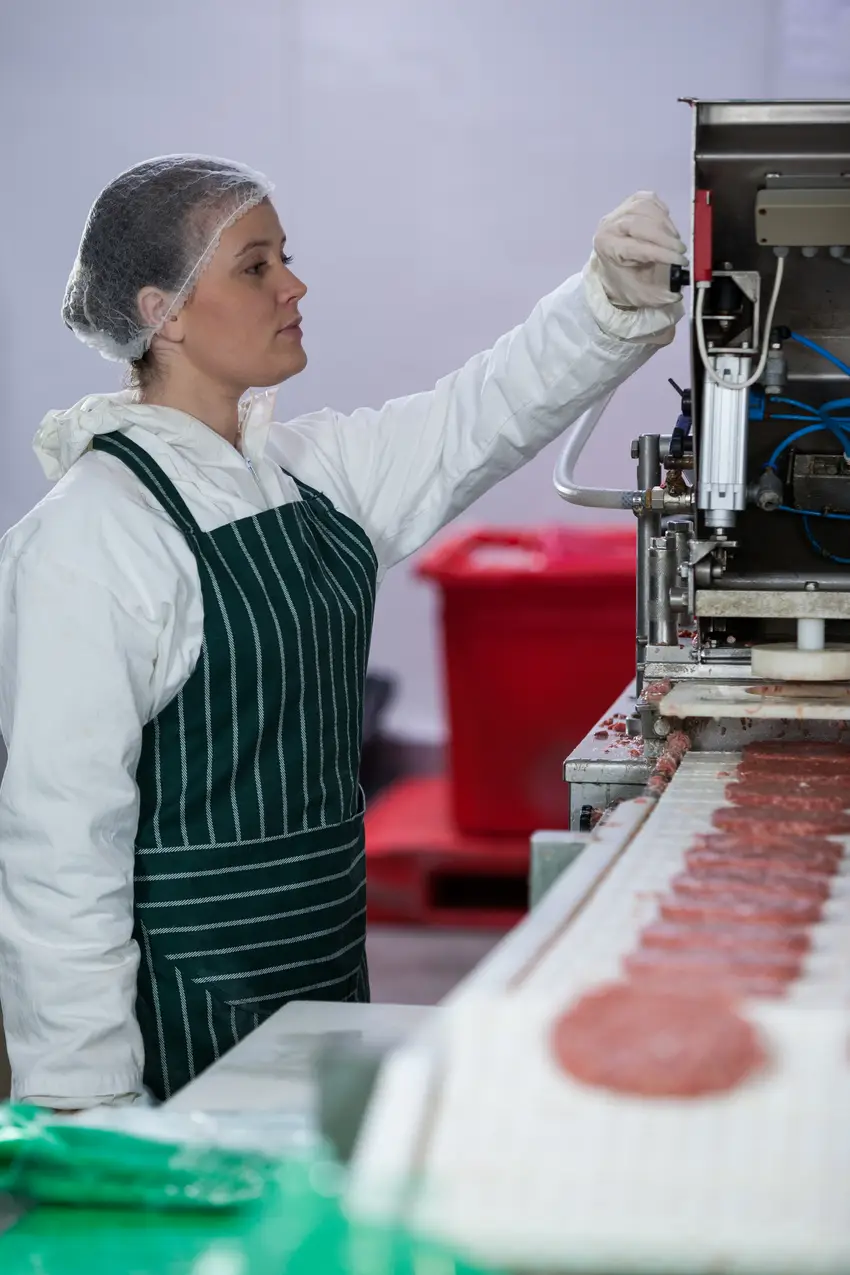
Food cooking machine operators run large-scale cooking equipment like industrial kettles, pressure cookers, and fryers to prepare food products for companies and restaurants. You'll monitor digital controls and gauges, measure ingredients precisely, and work with your team to ensure food safety standards are met. This role combines hands-on technical skills with attention to detail, and many operators advance to supervisory positions or specialize in specific food production areas. Modern facilities often use automated systems and computer controls that make the work more efficient and safer.
Food Cooking Machine Operators

Did you know?

Mastering complex food automation equipment requires ongoing technical training as machinery and software systems rapidly evolve in the American food service industry.

At a Glance

Median Wage

$40,412.56 Avg/yr

Growth

Stable

Top Skill

Judgment and Decision Making

Key Responsibilities

  • Operate auxiliary machines and equipment, such as grinders, canners, and molding presses, to prepare or further process products.
  • Observe gauges, dials, and product characteristics, and adjust controls to maintain appropriate temperature, pressure, and flow of ingredients.
  • Place products on conveyors or carts, and monitor product flow.
  • Listen for malfunction alarms, and shut down equipment and notify supervisors when necessary.
  • Measure or weigh ingredients, using scales or measuring containers.
  • Notify or signal other workers to operate equipment or when processing is complete.
  • Collect and examine product samples during production to test them for quality, color, content, consistency, viscosity, acidity, or specific gravity.
  • Tend or operate and control equipment, such as kettles, cookers, vats and tanks, and boilers, to cook ingredients or prepare products for further processing.
  • Clean, wash, and sterilize equipment and cooking area, using water hoses, cleaning or sterilizing solutions, or rinses.
  • Set temperature, pressure, and time controls, and start conveyers, machines, or pumps.
  • Remove cooked material or products from equipment.
  • Turn valves or start pumps to add ingredients or drain products from equipment and to transfer products for storage, cooling, or further processing.
  • Record production and test data, such as processing steps, temperature and steam readings, cooking time, batches processed, and test results.
  • Pour, dump, or load prescribed quantities of ingredients or products into cooking equipment, manually or using a hoist.
  • Admit required amounts of water, steam, cooking oils, or compressed air into equipment, such as by opening water valves to cool mixtures to the desired consistency.
  • Read work orders, recipes, or formulas to determine cooking times and temperatures, and ingredient specifications.
  • Activate agitators and paddles to mix or stir ingredients, stopping machines when ingredients are thoroughly mixed.

Career Considerations

Technical Proficiency and Continuous Learning

Mastering complex food automation equipment requires ongoing technical training as machinery and software systems rapidly evolve in the American food service industry.

Food Safety and Regulatory Compliance

Understanding FDA regulations, HACCP protocols, and state health department requirements is essential for operating food machinery safely and legally in the US market.

Career Growth in Automation Sector

The expanding role of automation in American food service creates opportunities for advancement into supervisory, maintenance, or food technology development positions.

Want to dig deeper?

Talk to blinky to learn more.

Start chatting
BETA
New York

25 Kent Ave, Suite 401
Brooklyn, NY
11249


North Carolina

204 N Person
Street. Raleigh, NC
27601

Australia

Level 4/80
Wentworth Ave,
Surry Hills,
Sydney, 2010