Food Service Supervisors
Overview
Food service supervisors coordinate daily operations in restaurants, cafeterias, and catering settings to make sure food is prepared, presented, and served properly. They schedule and direct staff, monitor food quality and portion sizes, and ensure the kitchen and dining areas meet health and safety standards. Supervisors often assist with training new employees, managing supplies, and handling customer feedback. The role combines teamwork and leadership, requiring strong communication, organization, and multitasking skills. Many gain experience in food service roles before stepping into supervision or completing hospitality or management courses.
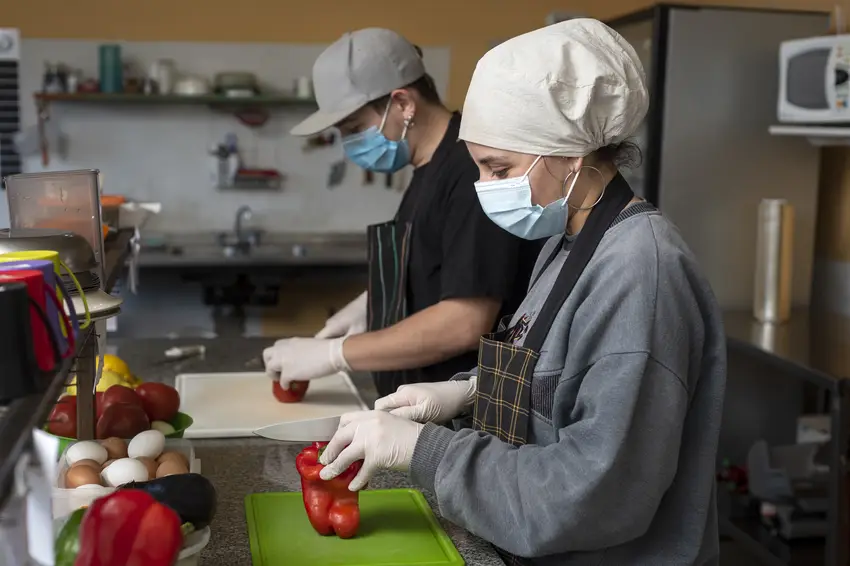
Did you know?
Must maintain strict adherence to FDA regulations and local health department standards, as violations can result in fines, closures, and legal liability.
At a Glance
Median Wage
$41,675.29 Avg/yr
Growth
Fast Growing
Top Skill
Learning Strategies
Key Responsibilities
- Assess nutritional needs of patients, plan special menus, supervise the assembly of regular and special diet trays, and oversee the delivery of food trolleys to hospital patients.
- Conduct meetings and collaborate with other personnel for menu planning, serving arrangements, and related details.
- Estimate ingredients and supplies required to prepare a recipe.
- Supervise and participate in kitchen and dining area cleaning activities.
- Specify food portions and courses, production and time sequences, and workstation and equipment arrangements.
- Evaluate new products for usefulness and suitability.
- Greet and seat guests, and present menus and wine lists.
- Resolve customer complaints regarding food service.
- Analyze operational problems, such as theft and wastage, and establish procedures to alleviate these problems.
- Assign duties, responsibilities, and work stations to employees in accordance with work requirements.
- Develop departmental objectives, budgets, policies, procedures, and strategies.
- Observe and evaluate workers and work procedures to ensure quality standards and service, and complete disciplinary write-ups.
- Control inventories of food, equipment, smallware, and liquor, and report shortages to designated personnel.
- Schedule parties and take reservations.
- Compile and balance cash receipts at the end of the day or shift.
- Perform various financial activities, such as cash handling, deposit preparation, and payroll.
- Perform personnel actions, such as hiring and firing staff, providing employee orientation and training, and conducting supervisory activities, such as creating work schedules or organizing employee time sheets.
- Record production, operational, and personnel data on specified forms.
- Inspect supplies, equipment, and work areas to ensure efficient service and conformance to standards.
- Present bills and accept payments.
- Perform food preparation and serving duties, such as carving meat, preparing flambe dishes, or serving wine and liquor.
- Develop equipment maintenance schedules and arrange for repairs.
- Purchase or requisition supplies and equipment needed to ensure quality and timely delivery of services.
- Forecast staff, equipment, and supply requirements, based on a master menu.
- Recommend measures for improving work procedures and worker performance to increase service quality and enhance job safety.
- Train workers in food preparation, and in service, sanitation, and safety procedures.
Career Considerations
Food Safety Compliance
Must maintain strict adherence to FDA regulations and local health department standards, as violations can result in fines, closures, and legal liability.
Staff Management and Retention
Need strong leadership skills to manage high employee turnover rates common in the American food service industry, requiring effective hiring, training, and motivation strategies.
Customer Service Excellence
Must ensure exceptional service quality to meet high American consumer expectations and maintain competitive advantage in a saturated market.