Forensic Science Technicians
Overview
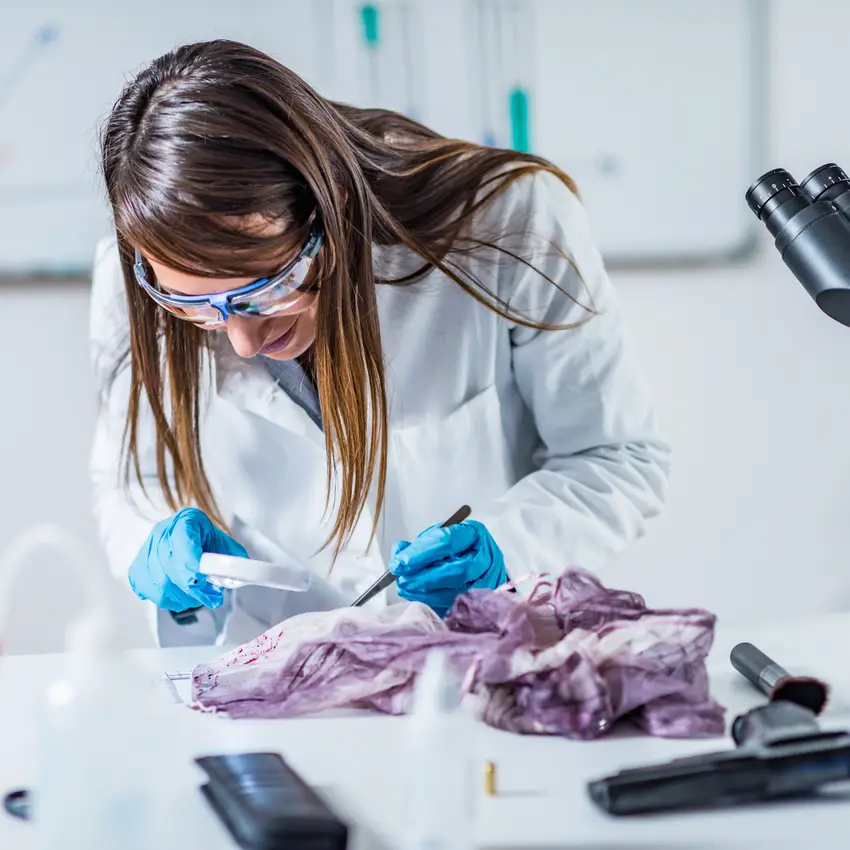
Forensic science technicians help solve crimes by collecting and analyzing evidence from crime scenes. They photograph evidence, make detailed sketches, collect fingerprints and DNA samples, and use advanced laboratory equipment and computer databases to catalog their findings. This job combines science, technology, and detective work, requiring strong attention to detail and often involving collaboration with police officers, detectives, and laboratory specialists. Most technicians need specialized training in forensic science or criminal justice, and the field offers opportunities to work both in the field at crime scenes and in high-tech laboratories.
Did you know?
Most positions require at least a bachelor's degree in natural sciences with additional specialized training in forensic techniques and potential state certification requirements.
At a Glance
Median Wage
$67,239.55 Avg/yr
Growth
Fast Growing
Top Skill
Active Learning
Key Responsibilities
- Analyze data from computers or other digital media sources for evidence related to criminal activity.
- Examine footwear, tire tracks, or other types of impressions.
- Visit morgues, examine scenes of crimes, or contact other sources to obtain evidence or information to be used in investigations.
- Collect evidence from crime scenes, storing it in conditions that preserve its integrity.
- Testify in court about investigative or analytical methods or findings.
- Review forensic analysts' reports for technical merit.
- Confer with ballistics, fingerprinting, handwriting, documents, electronics, medical, chemical, or metallurgical experts concerning evidence and its interpretation.
- Interpret laboratory findings or test results to identify and classify substances, materials, or other evidence collected at crime scenes.
- Examine firearms to determine mechanical condition and legal status, performing restoration work on damaged firearms to obtain information, such as serial numbers.
- Use chemicals or other substances to examine latent fingerprint evidence and compare developed prints to those of known persons in databases.
- Measure and sketch crime scenes to document evidence.
- Compare objects, such as tools, with impression marks to determine whether a specific object is responsible for a specific mark.
- Analyze gunshot residue and bullet paths to determine how shootings occurred.
- Train new technicians or other personnel on forensic science techniques.
- Examine physical evidence, such as hair, biological fluids, fiber, wood, or soil residues to obtain information about its source and composition.
- Keep records and prepare reports detailing findings, investigative methods, and laboratory techniques.
- Collect impressions of dust from surfaces to obtain and identify fingerprints.
- Examine and analyze blood stain patterns at crime scenes.
- Operate and maintain laboratory equipment and apparatus.
- Identify and quantify drugs or poisons found in biological fluids or tissues, in foods, or at crime scenes.
- Use photographic or video equipment to document evidence or crime scenes.
- Prepare solutions, reagents, or sample formulations needed for laboratory work.
- Reconstruct crime scenes to determine relationships among pieces of evidence.
- Determine types of bullets and specific weapons used in shootings.
Career Considerations
Educational Requirements and Specialization
Most positions require at least a bachelor's degree in natural sciences with additional specialized training in forensic techniques and potential state certification requirements.
Emotional and Psychological Demands
The role involves regular exposure to disturbing crime scene evidence and court testimony, requiring strong emotional resilience and professional objectivity.
Competitive Job Market
Employment opportunities are limited and highly competitive, with job security often dependent on government funding for crime laboratories and law enforcement agencies.