
General Maintenance and Repair Workers

Overview

General maintenance and repair workers are the problem-solvers who keep buildings and equipment running smoothly by fixing everything from electrical systems to plumbing and HVAC units. They use modern diagnostic tools and computerized systems to inspect, maintain, and repair machines and mechanical equipment in offices, schools, hospitals, and other facilities. These skilled professionals work with blueprints, meet with clients to estimate repair costs, and perform preventive maintenance to prevent breakdowns. Most workers enter the field through vocational training, apprenticeships, or on-the-job learning, developing strong technical and problem-solving skills while working both independently and as part of maintenance teams.
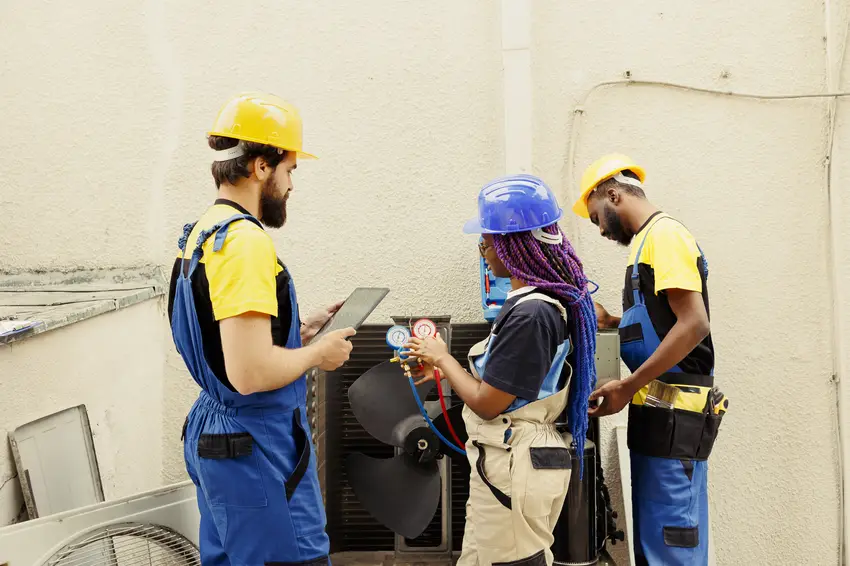
General Maintenance and Repair Workers

Did you know?

This occupation requires physical stamina and adherence to strict safety protocols, as workers often handle heavy equipment and work in potentially hazardous environments.

At a Glance

Median Wage

$49,159.22 Avg/yr

Growth

Fast Growing

Top Skill

Management of Material Resources

Key Responsibilities

  • Install equipment to improve the energy or operational efficiency of residential or commercial buildings.
  • Record type and cost of maintenance or repair work.
  • Perform routine maintenance on boilers, such as replacing burners or hoses, installing replacement parts, or reinforcing structural weaknesses to ensure optimal boiler efficiency.
  • Estimate costs to repair machinery, equipment, or building structures.
  • Order parts, supplies, or equipment from catalogs or suppliers.
  • Repair machines, equipment, or structures, using tools such as hammers, hoists, saws, drills, wrenches, or equipment such as precision measuring instruments or electrical or electronic testing devices.
  • Dismantle machines, equipment, or devices to access and remove defective parts, using hoists, cranes, hand tools, or power tools.
  • Paint or repair roofs, windows, doors, floors, woodwork, plaster, drywall, or other parts of building structures.
  • Set up and operate machine tools to repair or fabricate machine parts, jigs, fixtures, or tools.
  • Inspect, operate, or test machinery or equipment to diagnose machine malfunctions.
  • Perform routine maintenance, such as inspecting drives, motors, or belts, checking fluid levels, replacing filters, or doing other preventive maintenance actions.
  • Maintain or repair specialized equipment or machinery located in cafeterias, laundries, hospitals, stores, offices, or factories.
  • Adjust functional parts of devices or control instruments, using hand tools, levels, plumb bobs, or straightedges.
  • Align and balance new equipment after installation.
  • Position, attach, or blow insulating materials to prevent energy losses from buildings, pipes, or other structures or objects.
  • Inspect used parts to determine changes in dimensional requirements, using rules, calipers, micrometers, or other measuring instruments.
  • Assemble boilers at installation sites, using tools such as levels, plumb bobs, hammers, torches, or other hand tools.
  • Design new equipment to aid in the repair or maintenance of machines, mechanical equipment, or building structures.
  • Assemble, install, or repair wiring, electrical or electronic components, pipe systems, plumbing, machinery, or equipment.
  • Provide groundskeeping services, such as landscaping or snow removal.
  • Clean or lubricate shafts, bearings, gears, or other parts of machinery.
  • Plan and lay out repair work, using diagrams, drawings, blueprints, maintenance manuals, or schematic diagrams.
  • Diagnose mechanical problems and determine how to correct them, checking blueprints, repair manuals, or parts catalogs, as necessary.
  • Train or manage maintenance personnel or subcontractors.
  • Perform general cleaning of buildings or properties.
  • Operate cutting torches or welding equipment to cut or join metal parts.
  • Fabricate or repair counters, benches, partitions, or other wooden structures, such as sheds or outbuildings.

Career Considerations

Physical Demands and Safety Requirements

This occupation requires physical stamina and adherence to strict safety protocols, as workers often handle heavy equipment and work in potentially hazardous environments.

Continuous Skills Development

Workers must stay current with evolving technologies and may need industry-specific certifications to remain competitive in the American job market.

Stable Employment Opportunities

The field offers consistent job security due to ongoing maintenance needs across all industries, with growth expected as infrastructure ages.

Want to dig deeper?

Talk to blinky to learn more.

Start chatting
BETA
New York

25 Kent Ave, Suite 401
Brooklyn, NY
11249


North Carolina

204 N Person
Street. Raleigh, NC
27601

Australia

Level 4/80
Wentworth Ave,
Surry Hills,
Sydney, 2010