
Geneticist Researchers

Overview

Geneticist Researchers study how traits and diseases are passed down through DNA, from individual cells all the way up to entire populations. They design experiments, use tools like PCR machines, gel electrophoresis, and DNA sequencers, and build computer models to analyze genetic data and understand how genes are turned on or off. Many also lead research teams, develop new lab methods, and sometimes work directly with patients and families to diagnose or manage genetic conditions.
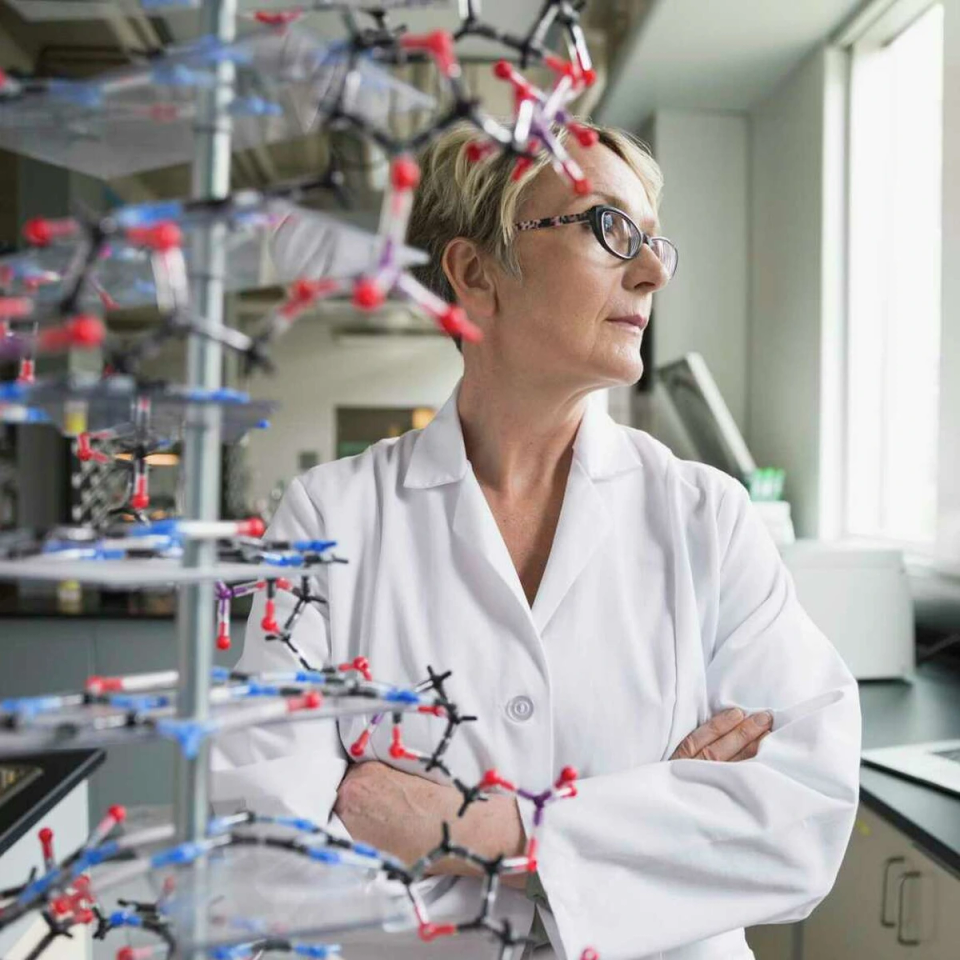
Geneticist Researchers

Did you know?

Geneticists typically need a PhD or MD degree, requiring 4-8 years of additional education beyond a bachelor's degree and significant financial investment.

At a Glance

Growth

Stable

Top Skill

Systems Evaluation

Key Responsibilities

  • Attend clinical and research conferences and read scientific literature to keep abreast of technological advances and current genetic research findings.
  • Collaborate with biologists and other professionals to conduct appropriate genetic and biochemical analyses.
  • Review, approve, or interpret genetic laboratory results.
  • Supervise or direct the work of other geneticists, biologists, technicians, or biometricians working on genetics research projects.
  • Evaluate, diagnose, or treat genetic diseases.
  • Extract deoxyribonucleic acid (DNA) or perform diagnostic tests involving processes such as gel electrophoresis, Southern blot analysis, and polymerase chain reaction analysis.
  • Maintain laboratory notebooks that record research methods, procedures, and results.
  • Confer with information technology specialists to develop computer applications for genetic data analysis.
  • Design sampling plans or coordinate the field collection of samples such as tissue specimens.
  • Create or use statistical models for the analysis of genetic data.
  • Plan or conduct basic genomic and biological research related to areas such as regulation of gene expression, protein interactions, metabolic networks, and nucleic acid or protein complexes.
  • Plan curatorial programs for species collections that include acquisition, distribution, maintenance, or regeneration.
  • Develop protocols to improve existing genetic techniques or to incorporate new diagnostic procedures.
  • Evaluate genetic data by performing appropriate mathematical or statistical calculations and analyses.
  • Verify that cytogenetic, molecular genetic, and related equipment and instrumentation is maintained in working condition to ensure accuracy and quality of experimental results.
  • Prepare results of experimental findings for presentation at professional conferences or in scientific journals.
  • Participate in the development of endangered species breeding programs or species survival plans.
  • Conduct family medical studies to evaluate the genetic basis for traits or diseases.
  • Write grants and papers or attend fundraising events to seek research funds.
  • Analyze determinants responsible for specific inherited traits, and devise methods for altering traits or producing new traits.
  • Design and maintain genetics computer databases.
  • Maintain laboratory safety programs and train personnel in laboratory safety techniques.
  • Instruct medical students, graduate students, or others in methods or procedures for diagnosis and management of genetic disorders.
  • Search scientific literature to select and modify methods and procedures most appropriate for genetic research goals.

Career Considerations

Advanced Education Requirements

Geneticists typically need a PhD or MD degree, requiring 4-8 years of additional education beyond a bachelor's degree and significant financial investment.

Research Funding Competition

Career success often depends on securing competitive federal grants from agencies like NIH and NSF, which can be challenging and unpredictable.

Ethical and Legal Considerations

Geneticists must navigate complex American regulations around genetic privacy, discrimination laws like GINA, and evolving ethical standards in genetic research.

Want to dig deeper?

Talk to blinky to learn more.

Start chatting
BETA
New York

25 Kent Ave, Suite 401
Brooklyn, NY
11249


North Carolina

204 N Person
Street. Raleigh, NC
27601

Australia

Level 4/80
Wentworth Ave,
Surry Hills,
Sydney, 2010