
Geoscientists

Overview

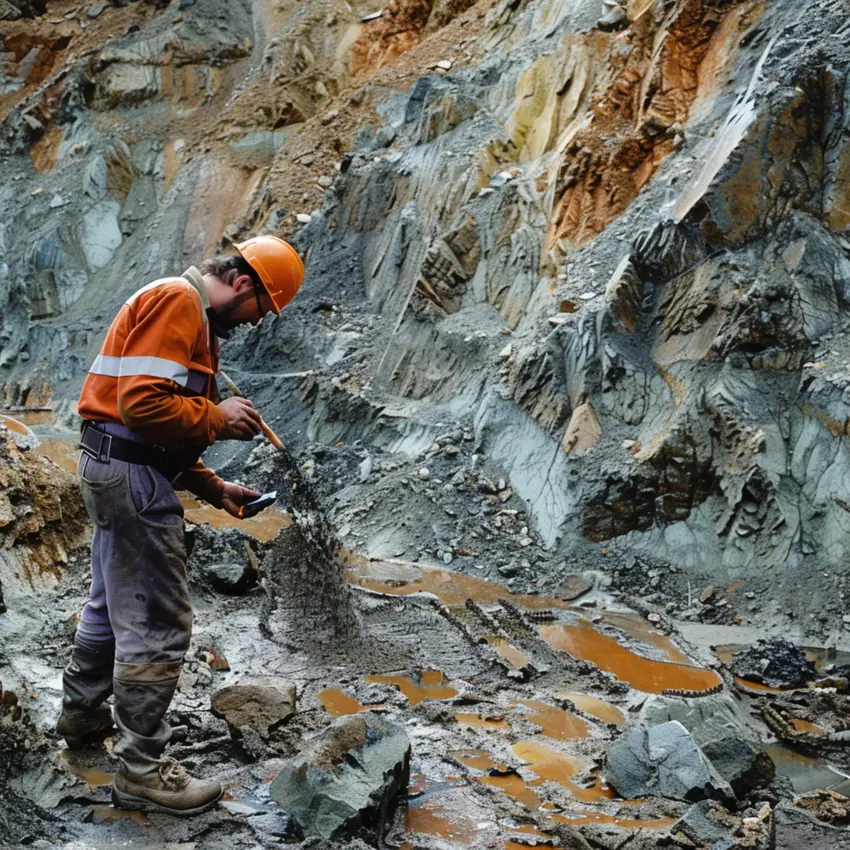
Geoscientists are like Earth detectives who study our planet's composition, structure, and processes to understand its history and predict future changes. They spend time outdoors collecting rock samples and conducting field surveys, then return to labs to analyze their findings using advanced equipment and computer modeling. These scientists create detailed maps and charts, write reports about their discoveries, and present their research to clients, government agencies, and fellow scientists. A career in geoscience typically requires a bachelor's degree in geology, earth science, or related fields, with many opportunities for fieldwork, lab research, and collaborative projects.
Geoscientists

Did you know?

Most positions require at least a master's degree in geology, earth science, or related field, with many research and senior roles requiring a Ph.D.

At a Glance

Median Wage

$89,120.80 Avg/yr

Growth

Stable

Top Skill

Operation and Control

Key Responsibilities

  • Provide advice on the safe siting of new nuclear reactor projects or methods of nuclear waste management.
  • Analyze and interpret geological data, using computer software.
  • Review environmental, historical, or technical reports and publications for accuracy.
  • Advise construction firms or government agencies on dam or road construction, foundation design, land use, or resource management.
  • Locate potential sources of geothermal energy.
  • Research geomechanical or geochemical processes to be used in carbon sequestration projects.
  • Review work plans to determine the effectiveness of activities for mitigating soil or groundwater contamination.
  • Develop strategies for more environmentally friendly resource extraction and reclamation.
  • Design geological mine maps, monitor mine structural integrity, or advise and monitor mining crews.
  • Locate and review research articles or environmental, historical, or technical reports.
  • Prepare geological maps, cross-sectional diagrams, charts, or reports concerning mineral extraction, land use, or resource management, using results of fieldwork or laboratory research.
  • Collaborate with medical or health researchers to address health problems related to geological materials or processes.
  • Measure characteristics of the Earth, such as gravity or magnetic fields, using equipment such as seismographs, gravimeters, torsion balances, or magnetometers.
  • Research ways to reduce the ecological footprint of increasingly prevalent megacities.
  • Identify deposits of construction materials suitable for use as concrete aggregates, road fill, or other applications.
  • Develop applied software for the analysis and interpretation of geological data.
  • Investigate the composition, structure, or history of the Earth's crust through the collection, examination, measurement, or classification of soils, minerals, rocks, or fossil remains.
  • Identify new sources of platinum group elements for industrial applications, such as automotive fuel cells or pollution abatement systems.
  • Identify risks for natural disasters, such as mudslides, earthquakes, or volcanic eruptions.
  • Determine methods to incorporate geomethane or methane hydrates into global energy production or evaluate the potential environmental impacts of such incorporation.
  • Test industrial diamonds or abrasives, soil, or rocks to determine their geological characteristics, using optical, x-ray, heat, acid, or precision instruments.
  • Plan or conduct geological, geochemical, or geophysical field studies or surveys, sample collection, or drilling and testing programs used to collect data for research or application.
  • Develop ways to capture or use gases burned off as waste during oil production processes.
  • Inspect construction projects to analyze engineering problems, using test equipment or drilling machinery.
  • Analyze and interpret geological, geochemical, or geophysical information from sources, such as survey data, well logs, bore holes, or aerial photos.
  • Identify possible sites for carbon sequestration projects.
  • Assess ground or surface water movement to provide advice on issues, such as waste management, route and site selection, or the restoration of contaminated sites.
  • Conduct geological or geophysical studies to provide information for use in regional development, site selection, or development of public works projects.
  • Determine ways to mitigate the negative consequences of mineral dust dispersion.
  • Communicate geological findings by writing research papers, participating in conferences, or teaching geological science at universities.
  • Study historical climate change indicators found in locations, such as ice sheets or rock formations to develop climate change models.
  • Locate and estimate probable natural gas, oil, or mineral ore deposits or underground water resources, using aerial photographs, charts, or research or survey results.

Career Considerations

Advanced Education Requirements

Most positions require at least a master's degree in geology, earth science, or related field, with many research and senior roles requiring a Ph.D.

Professional Licensing

Many states require Professional Geologist (PG) licensure for certain types of work, particularly in environmental consulting and regulatory compliance.

Industry Cyclicality

Employment opportunities are heavily influenced by commodity prices and economic cycles, particularly in oil, gas, and mining sectors which employ many geoscientists.

Want to dig deeper?

Talk to blinky to learn more.

Start chatting
BETA
New York

25 Kent Ave, Suite 401
Brooklyn, NY
11249


North Carolina

204 N Person
Street. Raleigh, NC
27601

Australia

Level 4/80
Wentworth Ave,
Surry Hills,
Sydney, 2010