Glass Blowers, Molders, Benders, and Finishers in Manufacturing
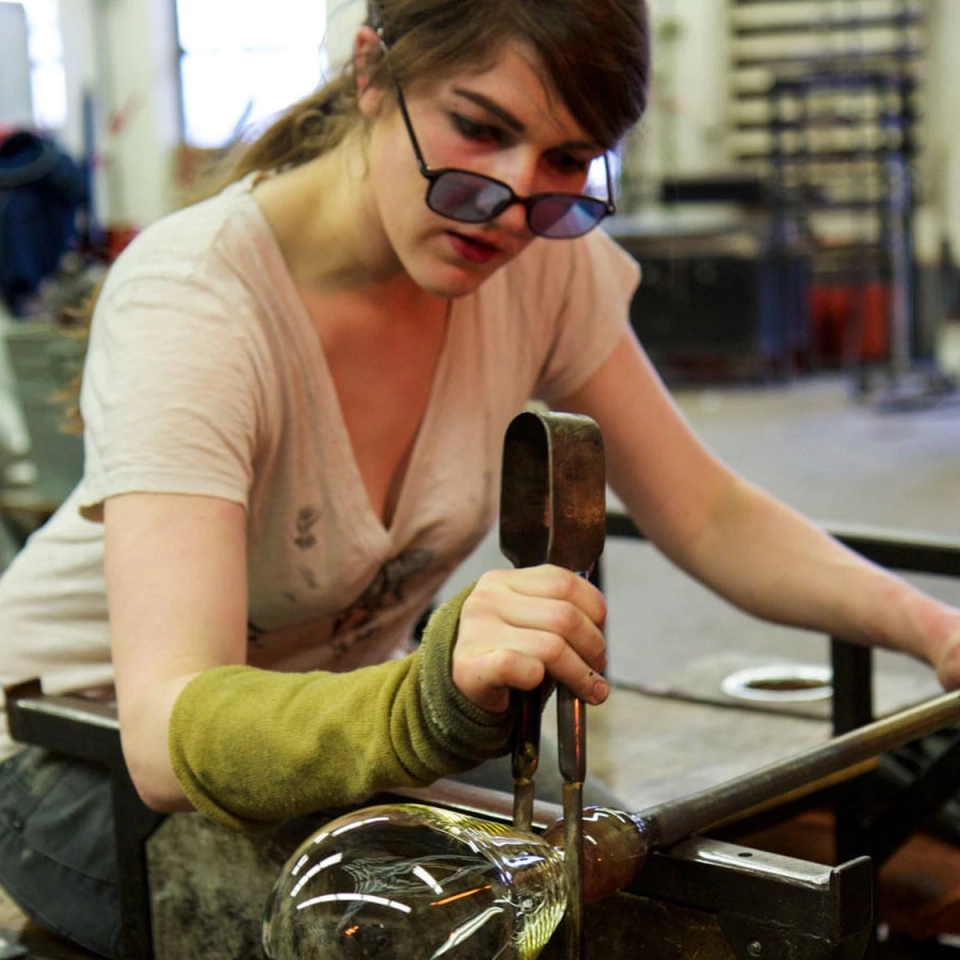
Glass blowers, molders, benders, and finishers in manufacturing heat solid glass until it becomes molten and flexible, then carefully shape it into tubes, lenses, containers, and art pieces. They use tools like blowpipes, gas torches, molds, cutting wheels, and polishing machines to bend, stretch, cut, and smooth glass so it matches precise blueprints and measurements. They also inspect each piece with tools such as calipers, micrometers, and magnifiers, adjusting temperatures, air pressure, and machine settings to make sure every product meets strict size, thickness, and quality standards.
Did you know?
This occupation requires working with extremely high temperatures and potentially hazardous materials, demanding strict adherence to safety protocols and physical stamina.
At a glance
Typical average pay
$45,500 Avg/yr
Growth
Fast growing
Top skill
Operation and Control
Things to consider
Specialized Skill Development
Success requires extensive hands-on training and apprenticeships to master the intricate techniques of glass manipulation, which can take years to develop.
Niche Market Employment
Job opportunities are limited but stable, primarily found in specialized glass manufacturing companies, art studios, and restoration workshops across the United States.
Key responsibilities
Place glass into dies or molds of presses and control presses to form products, such as glassware components or optical blanks.
Blow tubing into specified shapes to prevent glass from collapsing, using compressed air or own breath, or blow and rotate gathers in molds or on boards to obtain final shapes.
Record manufacturing information, such as quantities, sizes, or types of goods produced.
Determine types and quantities of glass required to fabricate products.
Place rubber hoses on ends of tubing and charge tubing with gas.