Histology Laboratory Technicians
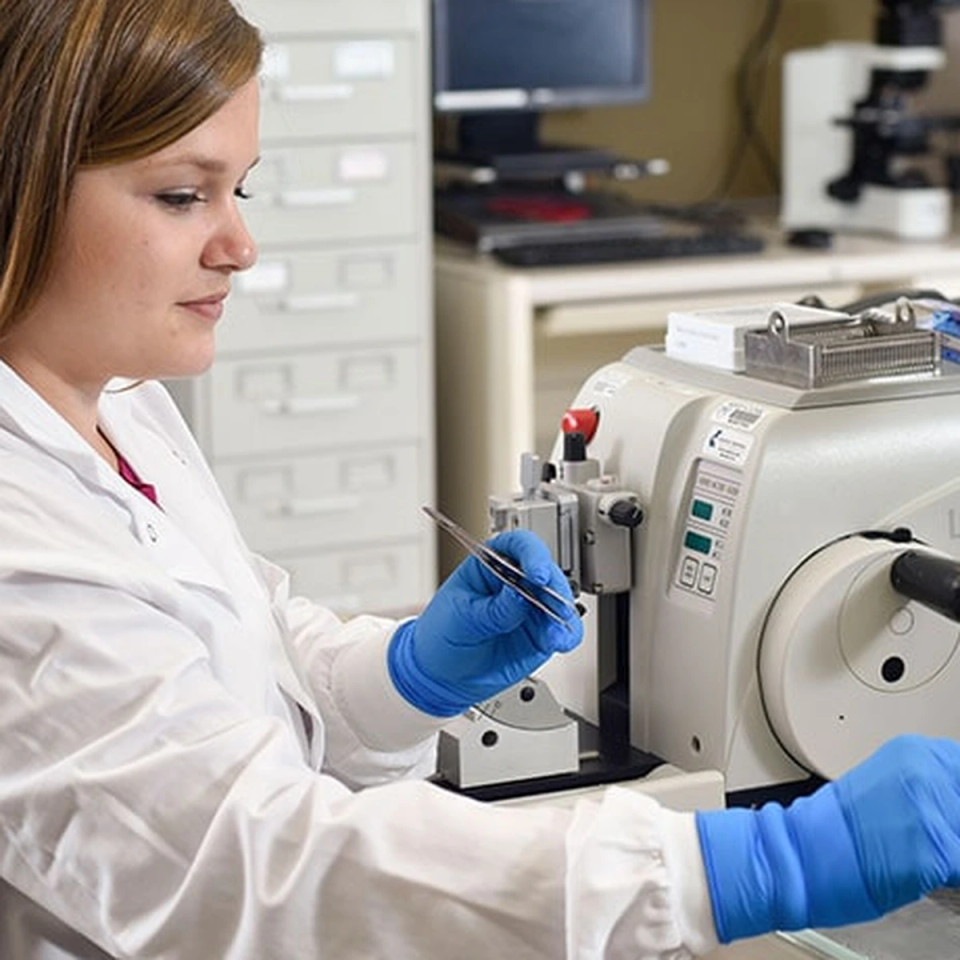
Histology Laboratory Technicians prepare ultra-thin slices of body tissue so doctors called pathologists can study them under a microscope to diagnose diseases like cancer. They use tools such as microtomes, tissue processors, embedding centers, and immunostainers to freeze, cut, wax-embed, stain, and mount samples onto glass slides with precise chemical dyes. They also carefully label and archive slides and tissue blocks so results can be tracked over time and used for patient care or medical research studies.
Did you know?
Most positions require completion of an accredited histotechnology program and certification through the American Society for Clinical Pathology (ASCP) or similar credentialing body.
At a glance
Growth
Stable
Top skill
Critical Thinking
Things to consider
Stable Healthcare Employment
The field offers steady employment opportunities in hospitals, diagnostic laboratories, and research facilities due to consistent demand for diagnostic services in American healthcare.
Technical Precision and Laboratory Environment
The role demands high attention to detail, steady hands for microscopic work, and comfort working with chemicals and laboratory equipment in a controlled environment.
Key responsibilities
Embed tissue specimens into paraffin wax blocks, or infiltrate tissue specimens with wax.
Cut sections of body tissues for microscopic examination, using microtomes.
Mount tissue specimens on glass slides.
Freeze tissue specimens.
Stain tissue specimens with dyes or other chemicals to make cell details visible under microscopes.