
Histotechnologists

Overview

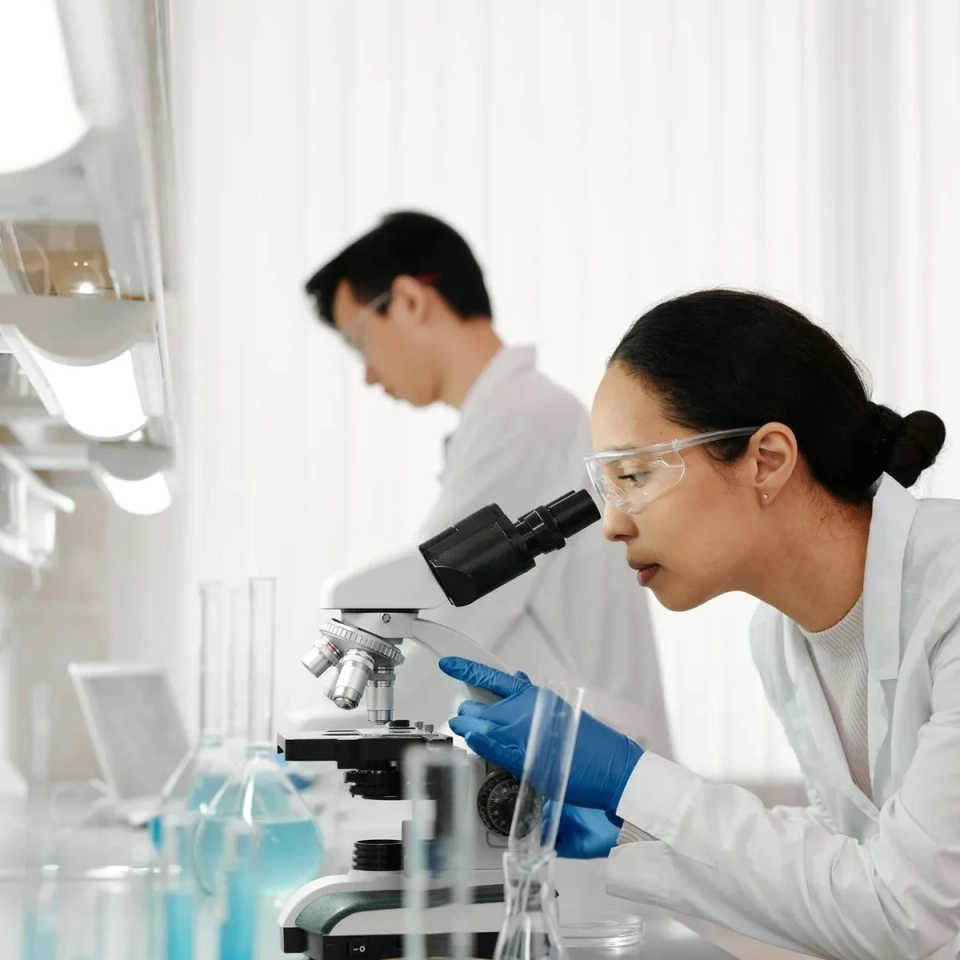
Histotechnologists prepare and analyze tiny slices of body tissue so doctors, especially pathologists, can diagnose diseases such as cancer. They use tools like microtomes to cut ultra-thin tissue sections, embed samples in paraffin wax, and apply special chemical stains so cell details stand out clearly under high-powered microscopes. In many labs they also supervise quality control, troubleshoot advanced instruments like immunostainers and mass spectrometers, and help test new lab techniques that make diagnoses faster and more accurate.
Histotechnologists

Did you know?

Histotechnologists must complete accredited programs and obtain certification through organizations like ASCP, with ongoing continuing education requirements to maintain credentials.

At a Glance

Growth

Stable

Top Skill

Time Management

Key Responsibilities

  • Cut sections of body tissues for microscopic examination, using microtomes.
  • Teach students or other staff.
  • Prepare substances, such as reagents and dilution, and stains for histological specimens according to protocols.
  • Supervise histology laboratory activities.
  • Identify tissue structures or cell components to be used in the diagnosis, prevention, or treatment of diseases.
  • Prepare or use prepared tissue specimens for teaching, research or diagnostic purposes.
  • Compile and maintain records of preventive maintenance and instrument performance checks according to schedule and regulations.
  • Compile materials for distribution to pathologists, such as surgical working drafts, requisitions, and slides.
  • Examine slides under microscopes to ensure tissue preparation meets laboratory requirements.
  • Perform electron microscopy or mass spectrometry to analyze specimens.
  • Stain tissue specimens with dyes or other chemicals to make cell details visible under microscopes.
  • Operate computerized laboratory equipment to dehydrate, decalcify, or microincinerate tissue samples.
  • Perform procedures associated with histochemistry to prepare specimens for immunofluorescence or microscopy.
  • Embed tissue specimens into paraffin wax blocks, or infiltrate tissue specimens with wax.
  • Resolve problems with laboratory equipment and instruments, such as microscopes, mass spectrometers, microtomes, immunostainers, tissue processors, embedding centers, and water baths.
  • Perform tests by following physician instructions.

Career Considerations

Specialized Education and Certification Requirements

Histotechnologists must complete accredited programs and obtain certification through organizations like ASCP, with ongoing continuing education requirements to maintain credentials.

Strong Job Market Growth in Healthcare

The profession offers excellent job security with projected growth due to an aging population and increased demand for medical diagnostics in the expanding U.S. healthcare sector.

Detail-Oriented Laboratory Environment

The role requires exceptional attention to detail and precision while working with potentially hazardous chemicals and biological specimens in clinical laboratory settings.

Want to dig deeper?

Talk to blinky to learn more.

Start chatting
BETA
New York

25 Kent Ave, Suite 401
Brooklyn, NY
11249


North Carolina

204 N Person
Street. Raleigh, NC
27601

Australia

Level 4/80
Wentworth Ave,
Surry Hills,
Sydney, 2010