Home Appliance Repairers
Overview
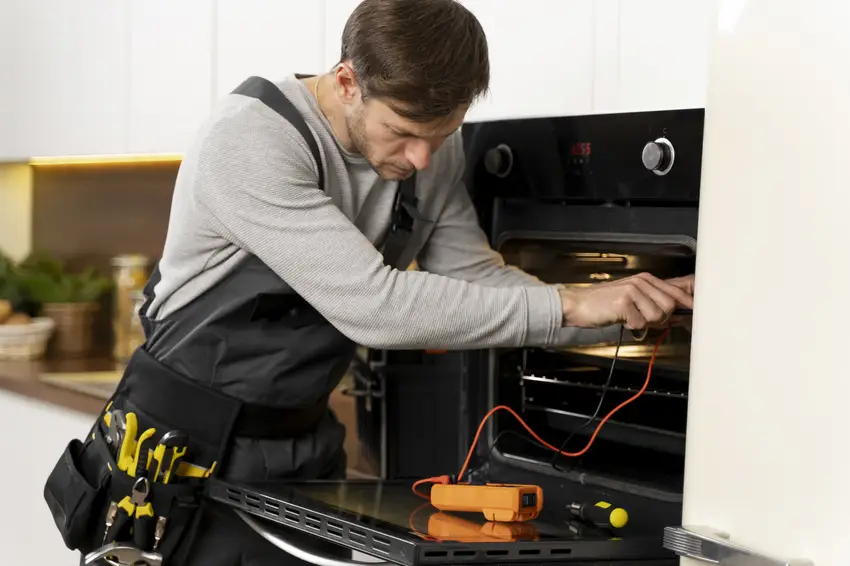
Home appliance repairers fix and maintain household appliances like refrigerators, washing machines, dryers, and ovens when they break down. They diagnose problems by taking appliances apart, replace faulty components like circuit boards and motors, and use digital diagnostic tools and circuit testers to troubleshoot electrical issues. This hands-on job involves traveling to customers' homes, providing excellent customer service, and staying updated on smart appliance technology. Many repairers learn through vocational training programs or apprenticeships, combining technical skills with problem-solving abilities.
Did you know?
Most states require appliance technicians to obtain EPA certification for refrigerant handling, and many manufacturers offer specialized training programs for their specific product lines.
At a Glance
Median Wage
$48,829.80 Avg/yr
Growth
Stable
Top Skill
Critical Thinking
Key Responsibilities
- Respond to emergency calls for problems such as gas leaks.
- Service and repair domestic electrical or gas appliances, such as clothes washers, refrigerators, stoves, and dryers.
- Test and examine gas pipelines and equipment to locate leaks and faulty connections, and to determine the pressure and flow of gas.
- Provide repair cost estimates, and recommend whether appliance repair or replacement is a better choice.
- Clean, lubricate, and touch up minor defects on newly installed or repaired appliances.
- Record maintenance and repair work performed on appliances.
- Refer to schematic drawings, product manuals, and troubleshooting guides to diagnose and repair problems.
- Level washing machines and connect hoses to water pipes, using hand tools.
- Take measurements to determine if appliances will fit in installation locations, performing minor carpentry work when necessary to ensure proper installation.
- Assemble new or reconditioned appliances.
- Install appliances such as refrigerators, washing machines, and stoves.
- Observe and examine appliances during operation to detect specific malfunctions such as loose parts or leaking fluid.
- Install gas pipes and water lines to connect appliances to existing gas lines or plumbing.
- Observe and test operation of appliances following installation, and make any initial installation adjustments that are necessary.
- Talk to customers or refer to work orders to establish the nature of appliance malfunctions.
- Reassemble units after repairs are made, making adjustments and cleaning and lubricating parts as needed.
- Instruct customers regarding operation and care of appliances, and provide information such as emergency service numbers.
- Disassemble appliances so that problems can be diagnosed and repairs can be made.
- Contact supervisors or offices to receive repair assignments.
- Conserve, recover, and recycle refrigerants used in cooling systems.
- Clean and reinstall parts.
- Set appliance thermostats, and check to ensure that they are functioning properly.
- Trace electrical circuits, following diagrams, and conduct tests with circuit testers and other equipment to locate shorts and grounds.
- Replace worn and defective parts such as switches, bearings, transmissions, belts, gears, circuit boards, or defective wiring.
- Maintain stocks of parts used in on-site installation, maintenance, and repair of appliances.
- Level refrigerators, adjust doors, and connect water lines to water pipes for ice makers and water dispensers, using hand tools.
- Measure, cut, and thread pipe, and connect it to feeder lines and equipment or appliances, using rules and hand tools.
- Bill customers for repair work, and collect payment.
- Light and adjust pilot lights on gas stoves, and examine valves and burners for gas leakage and specified flame.
Career Considerations
Certification and Training Requirements
Most states require appliance technicians to obtain EPA certification for refrigerant handling, and many manufacturers offer specialized training programs for their specific product lines.
Steady Job Market Demand
The profession offers strong job security as American households rely heavily on appliances, creating consistent demand for repair and maintenance services.
Physical Work Environment
The role involves significant physical demands including lifting heavy appliances, working in confined spaces, and potentially being on-call for emergency repairs.