
HVAC Technicians

Overview

HVAC technicians install, repair, and maintain heating, cooling, and ventilation systems that keep buildings comfortable year-round. You'll work with both your hands and high-tech diagnostic tools to troubleshoot problems, install new equipment, and help customers understand their systems. This career combines electrical work, mechanical skills, and customer service, with opportunities to specialize in areas like smart home technology or energy-efficient systems. Many technicians complete vocational training or apprenticeships and enjoy stable careers with good pay and the flexibility to work for companies or start their own businesses.
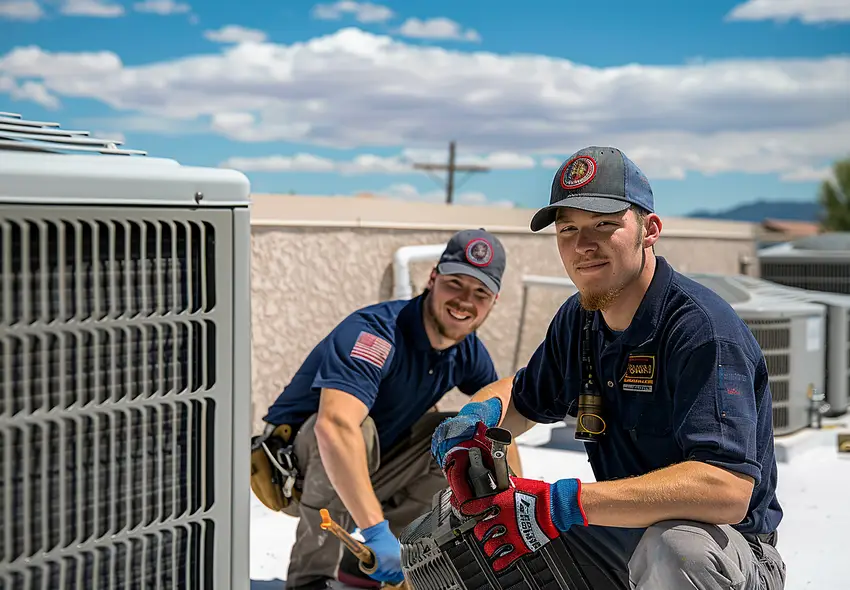
HVAC Technicians

Did you know?

HVAC technicians must be prepared for physically demanding work in challenging environments, including crawling through tight spaces, working in extreme temperatures, and lifting heavy equipment.

At a Glance

Median Wage

$60,498.82 Avg/yr

Growth

Fast Growing

Top Skill

Reading Comprehension

Key Responsibilities

  • Record and report time, materials, faults, deficiencies, or other unusual occurrences on work orders.
  • Perform mechanical overhauls and refrigerant reclaiming.
  • Install or repair air purification systems, such as specialized filters or ultraviolet (UV) light purification systems.
  • Repair or replace defective equipment, components, or wiring.
  • Keep records of repairs and replacements made and causes of malfunctions.
  • Recommend, develop, or perform preventive or general maintenance procedures, such as cleaning, power-washing, or vacuuming equipment, oiling parts, or changing filters.
  • Install, connect, or adjust thermostats, humidistats, or timers.
  • Repair or service heating, ventilating, and air conditioning (HVAC) systems to improve efficiency, such as by changing filters, cleaning ducts, and refilling non-toxic refrigerants.
  • Test pipes, lines, components, and connections for leaks.
  • Estimate, order, pick up, deliver, and install materials and supplies needed to maintain equipment in good working condition.
  • Lay out and connect electrical wiring between controls and equipment, according to wiring diagrams, using electrician's hand tools.
  • Discuss heating or cooling system malfunctions with users to isolate problems or to verify that repairs corrected malfunctions.
  • Connect heating or air conditioning equipment to fuel, water, or refrigerant source to form complete circuit.
  • Measure, cut, thread, or bend pipe or tubing, using pipe fitter's tools.
  • Mount compressor, condenser, and other components in specified locations on frames, using hand tools and acetylene welding equipment.
  • Adjust system controls to settings recommended by manufacturer to balance system.
  • Install dehumidifiers or related equipment for spaces that require cool, dry air to operate efficiently, such as computer rooms.
  • Test electrical circuits or components for continuity, using electrical test equipment.
  • Comply with all applicable standards, policies, or procedures, such as safety procedures or the maintenance of a clean work area.
  • Braze or solder parts to repair defective joints and leaks.
  • Inspect and test systems to verify system compliance with plans and specifications or to detect and locate malfunctions.
  • Supervise and instruct assistants.
  • Lift and align components into position, using hoist or block and tackle.
  • Install or repair self-contained ground source heat pumps or hybrid ground or air source heat pumps to minimize carbon-based energy consumption and reduce carbon emissions.
  • Study blueprints, design specifications, or manufacturers' recommendations to ascertain the configuration of heating or cooling equipment components and to ensure the proper installation of components.
  • Cut or drill holes in floors, walls, or roof to install equipment, using power saws or drills.
  • Install auxiliary components to heating or cooling equipment, such as expansion or discharge valves, air ducts, pipes, blowers, dampers, flues, or stokers.
  • Install expansion and control valves, using acetylene torches and wrenches.
  • Schedule work with customers and initiate work orders, house requisitions, and orders from stock.
  • Lay out reference points for installation of structural and functional components, using measuring instruments.

Career Considerations

Physical Demands and Working Conditions

HVAC technicians must be prepared for physically demanding work in challenging environments, including crawling through tight spaces, working in extreme temperatures, and lifting heavy equipment.

Licensing and Certification Requirements

Most states require HVAC technicians to obtain proper licensing and EPA certification for handling refrigerants, which involves completing training programs and passing examinations.

Strong Job Market Growth

The HVAC industry in America shows consistent growth due to new construction, aging infrastructure, and increasing focus on energy-efficient systems, providing excellent job security and advancement opportunities.

Want to dig deeper?

Talk to blinky to learn more.

Start chatting
BETA
New York

25 Kent Ave, Suite 401
Brooklyn, NY
11249


North Carolina

204 N Person
Street. Raleigh, NC
27601

Australia

Level 4/80
Wentworth Ave,
Surry Hills,
Sydney, 2010