
Industrial Engineering Technicians

Overview

Industrial engineering technicians work alongside engineers to make manufacturing processes more efficient and cost-effective. You'll create detailed plans for factory layouts, analyze production data using computer software, and suggest improvements to how products are made. This role involves interpreting technical drawings, collaborating with management teams, and using statistical tools to solve real-world manufacturing challenges. Many technicians start with an associate degree in engineering technology and often work in modern facilities that blend hands-on problem-solving with digital analysis tools.
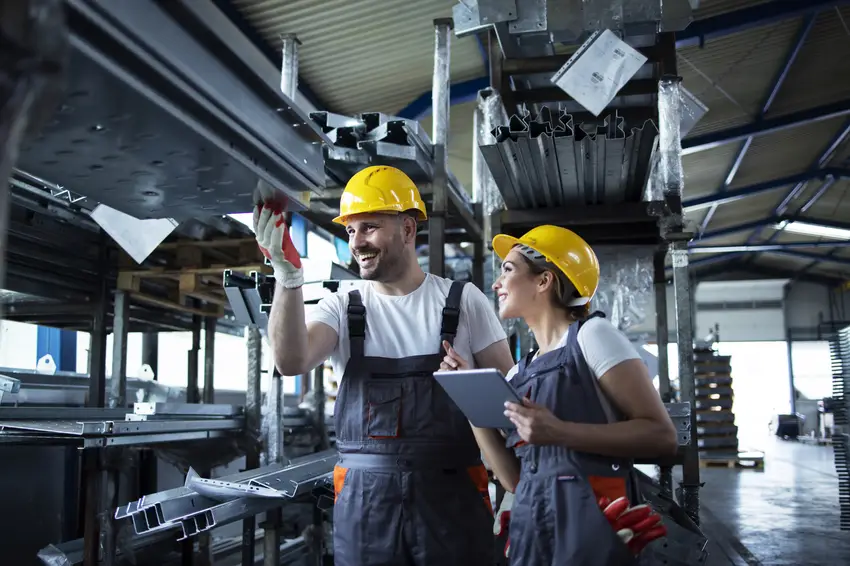
Industrial Engineering Technicians

Did you know?

Obtaining industry-recognized certifications in automation platforms like Allen-Bradley, Siemens, or Schneider Electric is essential for career advancement and competitiveness in the American job market.

At a Glance

Median Wage

$65,308.04 Avg/yr

Growth

Stable

Top Skill

Active Learning

Key Responsibilities

  • Assist engineers in developing, building, or testing prototypes or new products, processes, or procedures.
  • Verify that equipment is being operated and maintained according to quality assurance standards by observing worker performance.
  • Develop or implement programs to address problems related to production, materials, safety, or quality.
  • Evaluate industrial operations for compliance with permits or regulations related to the generation, storage, treatment, transportation, or disposal of hazardous materials or waste.
  • Compile and evaluate statistical data to determine and maintain quality and reliability of products.
  • Adhere to all applicable regulations, policies, and procedures for health, safety, and environmental compliance.
  • Study time, motion, methods, or speed involved in maintenance, production, or other operations to establish standard production rate or improve efficiency.
  • Test selected products at specified stages in the production process for performance characteristics or adherence to specifications.
  • Create or interpret engineering drawings, schematic diagrams, formulas, or blueprints for management or engineering staff.
  • Conduct statistical studies to analyze or compare production costs for sustainable and nonsustainable designs.
  • Oversee equipment start-up, characterization, qualification, or release.
  • Develop production, inventory, or quality assurance programs.
  • Prepare production documents, such as standard operating procedures, manufacturing batch records, inventory reports, or productivity reports.
  • Design plant layouts or production facilities.
  • Prepare layouts, drawings, or sketches of machinery or equipment, such as shop tooling, scale layouts, or new equipment design, using drafting equipment or computer-aided design (CAD) software.
  • Coordinate equipment purchases, installations, or transfers.
  • Monitor and adjust production processes or equipment for quality and productivity.
  • Read worker logs, product processing sheets, or specification sheets to verify that records adhere to quality assurance specifications.
  • Develop manufacturing infrastructure to integrate or deploy new manufacturing processes.
  • Analyze, estimate, or report production costs.
  • Develop sustainable manufacturing technologies to reduce greenhouse gas emissions, minimize raw material use, replace toxic materials with non-toxic materials, replace non-renewable materials with renewable materials, or reduce waste.
  • Set up and operate production equipment in accordance with current good manufacturing practices and standard operating procedures.
  • Identify opportunities for improvements in quality, cost, or efficiency of automation equipment.
  • Calibrate or adjust equipment to ensure quality production, using tools such as calipers, micrometers, height gauges, protractors, or ring gauges.
  • Recommend corrective or preventive actions to assure or improve product quality or reliability.
  • Aid in planning work assignments in accordance with worker performance, machine capacity, production schedules, or anticipated delays.
  • Oversee or inspect production processes.
  • Provide advice or training to other technicians.
  • Select material quantities or processing methods needed to achieve efficient production.
  • Select cleaning materials, tools, or equipment.

Career Considerations

Technical Certification Requirements

Obtaining industry-recognized certifications in automation platforms like Allen-Bradley, Siemens, or Schneider Electric is essential for career advancement and competitiveness in the American job market.

Regulatory Compliance Expertise

Deep knowledge of American safety and regulatory standards such as OSHA, FDA, and industry-specific regulations is crucial for ensuring compliant system designs and avoiding costly violations.

Industry Specialization Opportunities

Focusing on high-demand sectors like pharmaceuticals, food processing, or renewable energy can significantly enhance earning potential and job security in the diverse American industrial landscape.

Want to dig deeper?

Talk to blinky to learn more.

Start chatting
BETA
New York

25 Kent Ave, Suite 401
Brooklyn, NY
11249


North Carolina

204 N Person
Street. Raleigh, NC
27601

Australia

Level 4/80
Wentworth Ave,
Surry Hills,
Sydney, 2010