Journalists
Overview
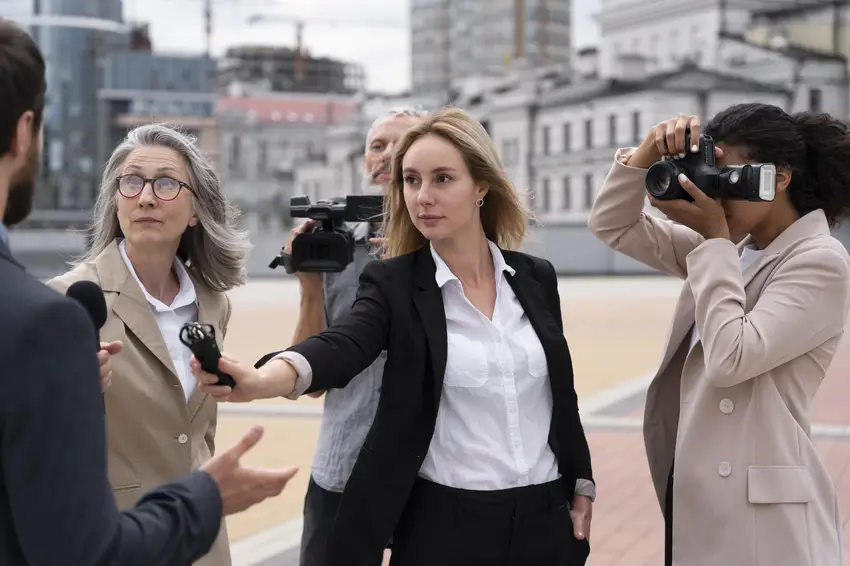
Journalists keep people informed by researching, investigating, and reporting on news and current events across multiple platforms including newspapers, websites, TV, and radio. They interview sources, build relationships with experts, and write compelling stories that help audiences understand complex topics. Modern journalists use digital tools, social media, and multimedia storytelling to reach diverse audiences, often working in collaborative newsroom environments or as remote correspondents. Strong writing skills, curiosity, and the ability to work under tight deadlines are essential for success in this field.
Did you know?
The American journalism industry faces significant competition with declining traditional media positions, requiring reporters to differentiate themselves through specialized skills and digital proficiency.
At a Glance
Median Wage
$52,717.80 Avg/yr
Growth
Stable
Top Skill
Management of Financial Resources
Key Responsibilities
- Take pictures or video, and process them for inclusion in a story.
- Select material most pertinent to presentation, and organize this material into appropriate formats.
- Conduct taped or filmed interviews or narratives.
- Report news stories for publication or broadcast, describing the background and details of events.
- Coordinate and serve as an anchor on news broadcast programs.
- Research a story's background information to provide complete and accurate information.
- Examine news items of local, national, and international significance to determine topics to address, or obtain assignments from editorial staff members.
- Analyze and interpret news and information received from various sources to broadcast the information.
- Establish and maintain relationships with individuals who are credible sources of information.
- Assign stories to other reporters or duties to production staff.
- Present live or recorded commentary via broadcast media.
- Write commentaries, columns, or scripts, using computers.
- Write columns, editorials, commentaries, or reviews that interpret events or offer opinions.
- Review written, audio, or video copy, and correct errors in content, grammar, or punctuation, following prescribed editorial style and formatting guidelines.
- Arrange interviews with people who can provide information about a story.
- Receive assignments or evaluate leads or tips to develop story ideas.
- Check reference materials, such as books, news files, or public records, to obtain relevant facts.
- Communicate with readers, viewers, advertisers, or the general public via mail, email, or telephone.
- Investigate breaking news developments, such as disasters, crimes, or human-interest stories.
- Revise work to meet editorial approval or to fit time or space requirements.
- Photograph or videotape news events.
- Report on specialized fields such as medicine, green technology, environmental issues, science, politics, sports, arts, consumer affairs, business, religion, crime, or education.
- Gather information and develop perspectives about news subjects through research, interviews, observation, and experience.
- Determine a published or broadcasted story's emphasis, length, and format, organizing material accordingly.
- Review and evaluate notes taken about news events to isolate pertinent facts and details.
- Transmit news stories or reporting information from remote locations, using equipment such as satellite phones, telephones, fax machines, or modems.
- Discuss issues with editors to establish priorities or positions.
- Develop ideas or material for columns or commentaries by analyzing and interpreting news, current issues, or personal experiences.
- Write online blog entries that address news developments or offer additional information, opinions, or commentary on news events.
- Present news stories, and introduce in-depth videotaped segments or live transmissions from on-the-scene reporters.
Career Considerations
Competitive Job Market
The American journalism industry faces significant competition with declining traditional media positions, requiring reporters to differentiate themselves through specialized skills and digital proficiency.
Educational Requirements
Most news reporting positions in the US require a bachelor's degree in journalism, communications, or a related field, along with strong writing and multimedia storytelling abilities.
Irregular Work Schedule
News reporters often work non-traditional hours including evenings, weekends, and holidays to cover breaking news and meet tight publication deadlines.