
Kindergarten Special Education Teachers

Overview

Kindergarten Special Education Teachers design and adapt lessons so young children with disabilities can learn academic, social, and everyday life skills in ways that work best for them. They use tools like picture schedules, Braille materials, sign language, tactile objects, and interactive apps to support students who may be blind, deaf, or have learning or intellectual disabilities. They also lead teams of parents, specialists, and other teachers to create and update Individualized Education Programs (IEPs), track progress with detailed records and tests, and make decisions about strategies that keep each child safe, included, and actively learning.
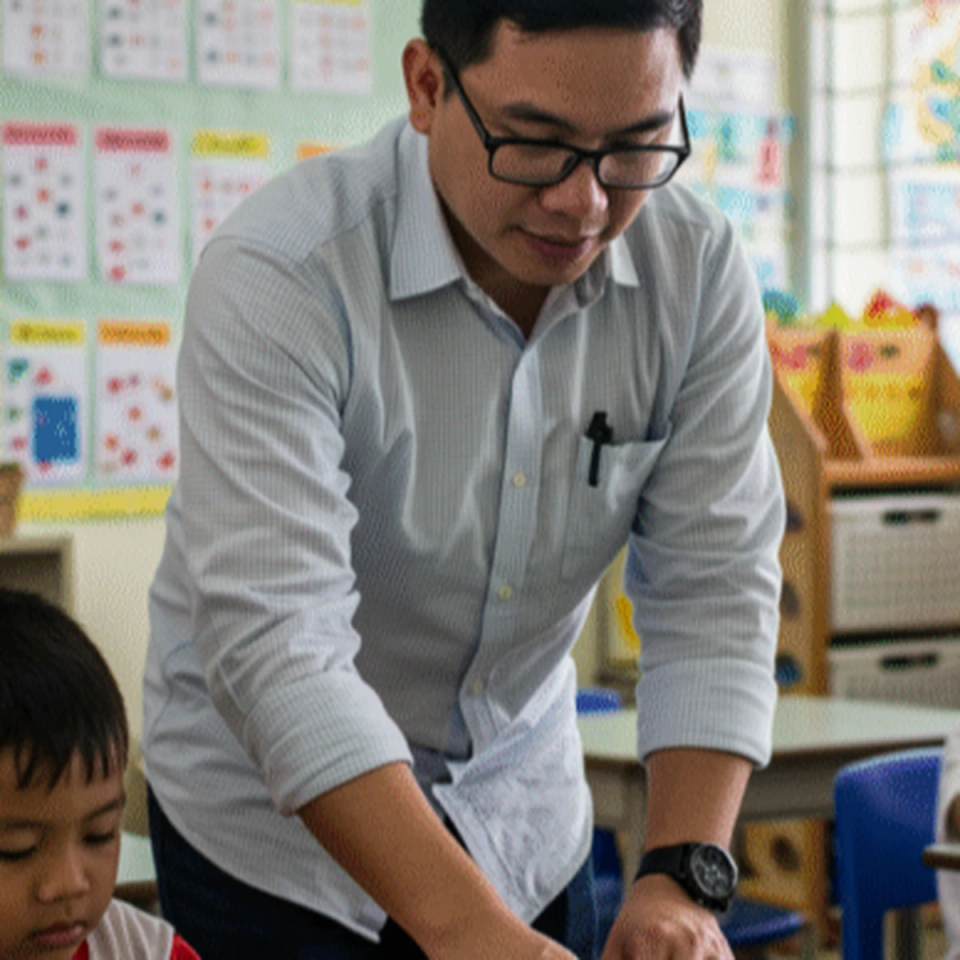
Kindergarten Special Education Teachers

Did you know?

Most states require dual certification in both early childhood education and special education, along with ongoing professional development to maintain licensure.

At a Glance

Growth

Stable

Key Responsibilities

  • Prepare assignments for teacher assistants or volunteers.
  • Modify the general kindergarten education curriculum for students with disabilities.
  • Plan or supervise experiential learning activities, such as class projects, field trips, demonstrations, or visits by guest speakers.
  • Interpret or transcribe classroom materials into Braille or sign language.
  • Organize and display students' work in a manner appropriate for their perceptual skills.
  • Present information in audio-visual or interactive formats, using computers, televisions, audio-visual aids, or other equipment, materials, or technologies.
  • Monitor teachers or teacher assistants to ensure adherence to special education program requirements.
  • Administer standardized ability and achievement tests to kindergarten students with special needs.
  • Visit schools to tutor students with sensory impairments or to consult with teachers regarding students' special needs.
  • Establish and enforce rules for behavior and procedures for maintaining order among students.
  • Collaborate with other teachers or administrators to develop, evaluate, or revise kindergarten programs.
  • Instruct students with disabilities in academic subjects, using a variety of techniques, such as phonetics, multisensory learning, or repetition to reinforce learning and meet students' varying needs.
  • Meet with parents or guardians to discuss their children's progress, advise them on using community resources, or teach skills for dealing with students' impairments.
  • Organize and supervise games or other recreational activities to promote physical, mental, or social development.
  • Provide assistive devices, supportive technology, or assistance accessing facilities, such as restrooms.
  • Teach socially acceptable behavior, employing techniques such as behavior modification or positive reinforcement.
  • Prepare classrooms with a variety of materials or resources for children to explore, manipulate, or use in learning activities or imaginative play.
  • Observe and evaluate students' performance, behavior, social development, and physical health.
  • Attend professional meetings, educational conferences, or teacher training workshops to maintain or improve professional competence.
  • Confer with parents, guardians, teachers, counselors, or administrators to resolve students' behavioral or academic problems.
  • Perform administrative duties, such as school library assistance, hall and cafeteria monitoring, and bus loading and unloading.
  • Instruct and monitor students in the use and care of equipment or materials to prevent injuries and damage.
  • Develop or implement strategies to meet the needs of students with a variety of disabilities.
  • Maintain accurate and complete student records as required by laws, district policies, or administrative regulations.
  • Employ special educational strategies or techniques during instruction to improve the development of sensory- and perceptual-motor skills, language, cognition, or memory.
  • Confer with parents, administrators, testing specialists, social workers, or other professionals to develop individual educational plans (IEPs) for students' educational, physical, or social development.
  • Prepare objectives, outlines, or other materials for courses of study, following curriculum guidelines or school or state requirements.
  • Prepare, administer, or grade assignments to evaluate students' progress.
  • Confer with other staff members to plan, schedule, or conduct activities for a balanced program of instruction, demonstration, and work time that provides students with opportunities to observe, question, and investigate.
  • Control the inventory or distribution of classroom equipment, materials, or supplies.

Career Considerations

Specialized Certification Requirements

Most states require dual certification in both early childhood education and special education, along with ongoing professional development to maintain licensure.

High Emotional and Physical Demands

Working with kindergarten-aged children with disabilities requires exceptional patience, energy, and emotional resilience due to challenging behaviors and intensive individualized support needs.

Legal Compliance and Documentation

Teachers must navigate complex federal laws like IDEA and maintain detailed IEP documentation while collaborating extensively with parents, therapists, and administrators.

Want to dig deeper?

Talk to blinky to learn more.

Start chatting
BETA
New York

25 Kent Ave, Suite 401
Brooklyn, NY
11249


North Carolina

204 N Person
Street. Raleigh, NC
27601

Australia

Level 4/80
Wentworth Ave,
Surry Hills,
Sydney, 2010