Mechatronics Technicians
Overview
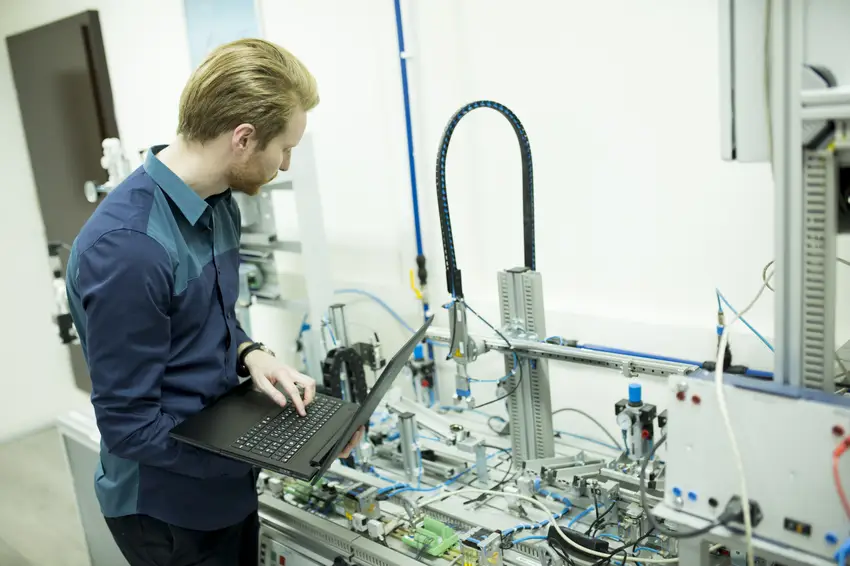
Mechatronics technicians work with cool robotic and automated systems by combining mechanical engineering with electronics. They read blueprints and use precision tools to build, test, and repair everything from factory robots to automated equipment. Using soldering tools, measuring instruments, and computer software, they troubleshoot problems and make sure complex machines run smoothly. Many work in collaborative teams across industries like manufacturing, aerospace, and automotive, often in modern facilities with cutting-edge technology.
Did you know?
Most positions require an associate degree in mechatronics, electronics, or related field, with many employers preferring industry certifications from organizations like NIMS or SME.
At a Glance
Median Wage
$70,702.31 Avg/yr
Growth
Stable
Top Skill
Complex Problem Solving
Key Responsibilities
- Modify, maintain, or repair electrical, electronic, or mechanical components, equipment, or systems to ensure proper functioning.
- Align, fit, or assemble component parts, using hand or power tools, fixtures, templates, or microscopes.
- Produce electrical, electronic, or mechanical drawings or other related documents or graphics necessary for electromechanical design, using computer-aided design (CAD) software.
- Translate electromechanical drawings into design specifications, applying principles of engineering, thermal or fluid sciences, mathematics, or statistics.
- Consult with machinists to ensure that electromechanical equipment or systems meet design specifications.
- Inspect parts for surface defects.
- Select and use laboratory, operational, or diagnostic techniques or test equipment to assess electromechanical circuits, equipment, processes, systems, or subsystems.
- Read blueprints, schematics, diagrams, or technical orders to determine methods and sequences of assembly.
- Fabricate or assemble mechanical, electrical, or electronic components or assemblies.
- Install electrical or electronic parts and hardware in housings or assemblies, using soldering equipment and hand tools.
- Verify part dimensions or clearances to ensure conformance to specifications, using precision measuring instruments.
- Assist engineers to implement electromechanical designs in industrial or other settings.
- Develop, test, or program new robots.
- Identify energy-conserving production or fabrication methods, such as by bending metal rather than cutting and welding or casting metal.
- Select electromechanical equipment, materials, components, or systems to meet functional specifications.
- Test performance of electromechanical assemblies, using test instruments such as oscilloscopes, electronic voltmeters, or bridges.
- Operate metalworking machines to fabricate housings, jigs, fittings, or fixtures.
- Install or program computer hardware or machine or instrumentation software in microprocessor-based systems.
- Repair, rework, or calibrate hydraulic or pneumatic assemblies or systems to meet operational specifications or tolerances.
- Conduct statistical studies to analyze or compare production costs for sustainable and nonsustainable designs.
- Operate, test, or maintain robotic equipment used for green production applications, such as waste-to-energy conversion systems, minimization of material waste, or replacement of human operators in dangerous work environments.
- Determine whether selected electromechanical components comply with environmental standards and regulations.
- Train others to install, use, or maintain robots.
- Analyze engineering designs of logic or digital circuitry, motor controls, instrumentation, or data acquisition for implementation into new or existing automated, servomechanical, or other electromechanical systems.
- Establish and maintain inventory, records, or documentation systems.
- Prepare written documentation of electromechanical test results.
- Specify, coordinate, or conduct quality-control or quality-assurance programs and procedures.
- Develop or implement programs related to the environmental impact of engineering activities.
Career Considerations
Educational Requirements
Most positions require an associate degree in mechatronics, electronics, or related field, with many employers preferring industry certifications from organizations like NIMS or SME.
Strong Job Growth Prospects
The Bureau of Labor Statistics projects faster-than-average growth for this field due to increasing automation in American manufacturing and the push for Industry 4.0 technologies.
Geographic Location Impact
Job opportunities are concentrated in manufacturing hubs like the Midwest, Southeast, and parts of Texas, with higher salaries typically found in areas with advanced manufacturing facilities.