
Metal and Plastic Machine Operators

Overview

Metal and plastic machine operators run specialized equipment that cuts, shapes, and forms metal and plastic materials into precise parts and products. They set up machines, load materials, and use precision measuring tools like micrometers and calipers to ensure every piece meets exact specifications. This hands-on role combines technical skills with problem-solving as you monitor machine operations, adjust settings, and inspect finished products for quality.
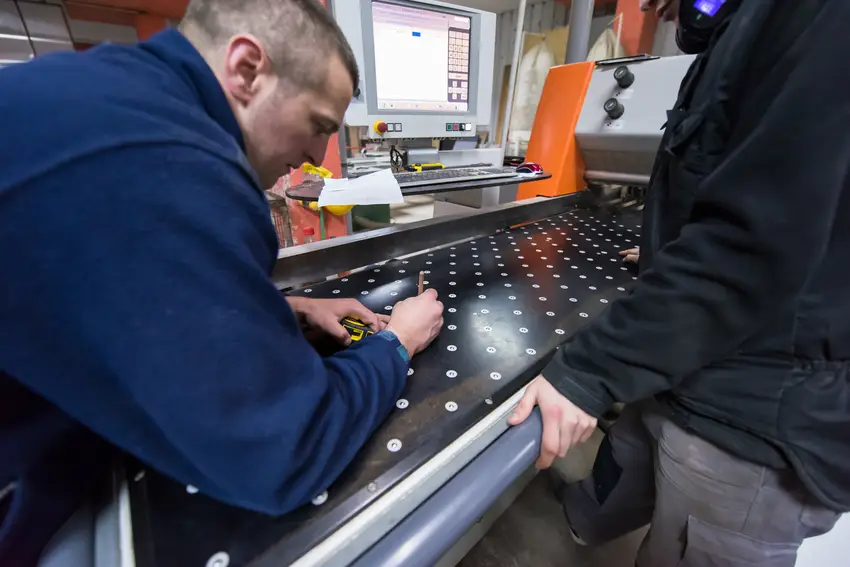
Metal and Plastic Machine Operators

Did you know?

Workers must complete extensive safety training and follow strict OSHA regulations due to the hazardous nature of operating heavy machinery in American manufacturing facilities.

At a Glance

Median Wage

$45,430.41 Avg/yr

Growth

Stable

Top Skill

Troubleshooting

Key Responsibilities

  • Place workpieces on cutting tables, manually or using hoists, cranes, or sledges.
  • Plan sequences of operations, applying knowledge of physical properties of workpiece materials.
  • Install, align, and lock specified punches, dies, cutting blades, or other fixtures in rams or beds of machines, using gauges, templates, feelers, shims, and hand tools.
  • Read work orders or production schedules to determine specifications, such as materials to be used, locations of cutting lines, or dimensions and tolerances.
  • Measure completed workpieces to verify conformance to specifications, using micrometers, gauges, calipers, templates, or rulers.
  • Mark identifying data on workpieces.
  • Use equipment designed to join sheet metal, such as spot welders.
  • Clean and lubricate machines.
  • Remove housings, feed tubes, tool holders, or other accessories to replace worn or broken parts, such as springs or bushings.
  • Scribe reference lines on workpieces as guides for cutting operations, according to blueprints, templates, sample parts, or specifications.
  • Clean work area.
  • Hone cutters with oilstones to remove nicks.
  • Adjust ram strokes of presses to specified lengths, using hand tools.
  • Turn controls to set cutting speeds, feed rates, or table angles for specified operations.
  • Operate forklifts to deliver materials.
  • Position, align, and secure workpieces against fixtures or stops on machine beds or on dies.
  • Lubricate workpieces with oil.
  • Position guides, stops, holding blocks, or other fixtures to secure and direct workpieces, using hand tools and measuring devices.
  • Set stops on machine beds, change dies, and adjust components, such as rams or power presses, when making multiple or successive passes.
  • Examine completed workpieces for defects, such as chipped edges or marred surfaces and sort defective pieces according to types of flaws.
  • Turn valves to start flow of coolant against cutting areas or to start airflow that blows cuttings away from kerfs.
  • Start machines, monitor their operations, and record operational data.
  • Set blade tensions, heights, and angles to perform prescribed cuts, using wrenches.
  • Preheat workpieces, using heating furnaces or hand torches.
  • Select, clean, and install spacers, rubber sleeves, or cutters on arbors.
  • Replace defective blades or wheels, using hand tools.
  • Set up, operate, or tend machines to saw, cut, shear, slit, punch, crimp, notch, bend, or straighten metal or plastic material.
  • Load workpieces, plastic material, or chemical solutions into machines.
  • Sharpen dulled blades, using bench grinders, abrasive wheels, or lathes.
  • Test and adjust machine speeds or actions, according to product specifications, using gauges and hand tools.
  • Grind out burrs or sharp edges, using portable grinders, speed lathes, or polishing jacks.

Career Considerations

Safety Training and OSHA Compliance

Workers must complete extensive safety training and follow strict OSHA regulations due to the hazardous nature of operating heavy machinery in American manufacturing facilities.

Automation and Technology Adaptation

The increasing automation in US manufacturing requires workers to continuously update their skills with computer-controlled machinery and may impact long-term job availability.

Physical Demands and Work Environment

This occupation typically involves standing for extended periods, working in noisy industrial settings, and handling heavy materials, which may not be suitable for all individuals.

Want to dig deeper?

Talk to blinky to learn more.

Start chatting
BETA
New York

25 Kent Ave, Suite 401
Brooklyn, NY
11249


North Carolina

204 N Person
Street. Raleigh, NC
27601

Australia

Level 4/80
Wentworth Ave,
Surry Hills,
Sydney, 2010