Microbiologists
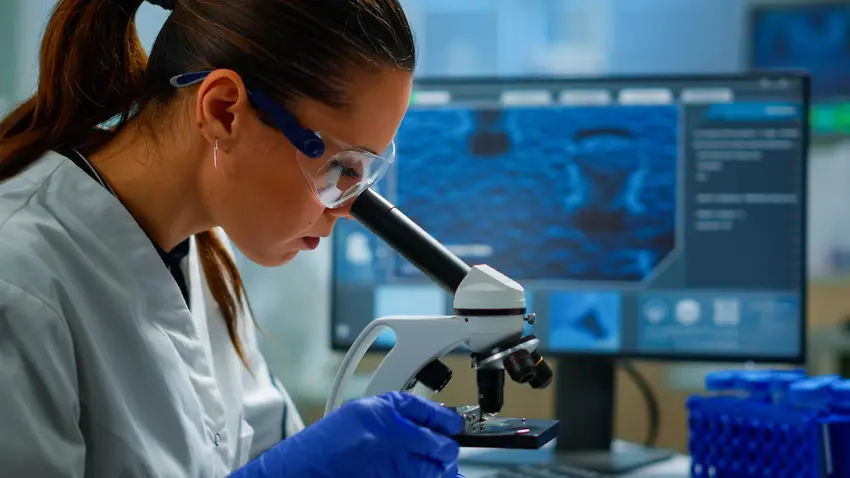
Microbiologists are scientists who study tiny organisms like bacteria, viruses, and fungi that you can't see without a microscope. They conduct research projects in modern laboratories using advanced equipment to develop new medicines, improve sterilization methods, and understand how microorganisms affect our health and environment. These scientists work in teams, supervising lab technicians, publishing their discoveries in scientific journals, and presenting their findings to other researchers and the public. A career in microbiology typically requires a bachelor's degree in biology or a related field, with many positions requiring advanced degrees for research roles.
Did you know?
Most competitive positions in American laboratories and research institutions require a master's or doctoral degree, making advanced education essential for career advancement.
At a glance
Typical average pay
$77,100 Avg/yr
Growth
Fast growing
Top skill
Science
Things to consider
Diverse Employment Sectors
American microbiologists can work across various industries including pharmaceuticals, biotechnology, government agencies like the CDC, and academic research institutions, offering multiple career pathways.
Continuous Learning and Specialization
The rapidly evolving field requires staying current with new technologies, techniques, and research developments to remain competitive in the American job market.
Key responsibilities
Monitor and perform tests on water, food, and the environment to detect harmful microorganisms or to obtain information about sources of pollution, contamination, or infection.
Investigate the relationship between organisms and disease, including the control of epidemics and the effects of antibiotics on microorganisms.
Study growth, structure, development, and general characteristics of bacteria and other microorganisms to understand their relationship to human, plant, and animal health.
Use a variety of specialized equipment, such as electron microscopes, gas and high-pressure liquid chromatographs, electrophoresis units, thermocyclers, fluorescence-activated cell sorters, and phosphorimagers.
Examine physiological, morphological, and cultural characteristics, using microscope, to identify and classify microorganisms in human, water, and food specimens.