Ophthalmic Medical Technicians
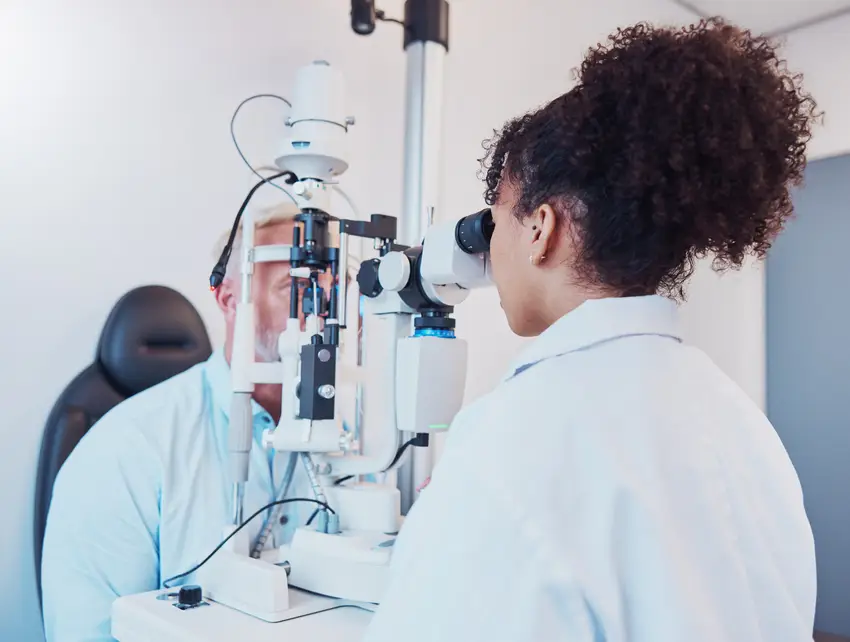
Ophthalmic Medical Technicians work alongside eye doctors to help patients maintain healthy vision through specialized testing and care. They operate high-tech equipment like autorefractors and tomographs to measure eye pressure, test visual fields, and assess corneal curvature to detect conditions like glaucoma and astigmatism. These professionals also administer eye medications, teach patients how to use contact lenses or eye drops, and maintain detailed medical records using digital systems. This career combines healthcare, technology, and patient interaction, often in modern medical facilities that emphasize teamwork and continuing education.
Did you know?
Eye health specialists in the US must complete rigorous doctoral programs (OD or MD) and obtain state licensure, requiring significant time and financial investment.
At a glance
Typical average pay
$43,000 Avg/yr
Growth
Fast growing
Top skill
Active Listening
Things to consider
Rapid Technological Advancement
The field requires continuous learning to stay current with evolving diagnostic equipment, surgical techniques, and digital health technologies.
Insurance and Healthcare Navigation
Practitioners must navigate complex insurance systems, understand coverage limitations, and manage both medical and vision insurance requirements.
Key responsibilities
Conduct visual field tests to measure field of vision.
Conduct ocular motility tests to measure function of eye muscles.
Measure visual acuity, including near, distance, pinhole, or dynamic visual acuity, using appropriate tests.
Assist patients to insert or remove contact lenses.
Conduct tonometry or tonography tests to measure intraocular pressure.