
Ophthalmic Medical Technologists in Eye Care

Overview

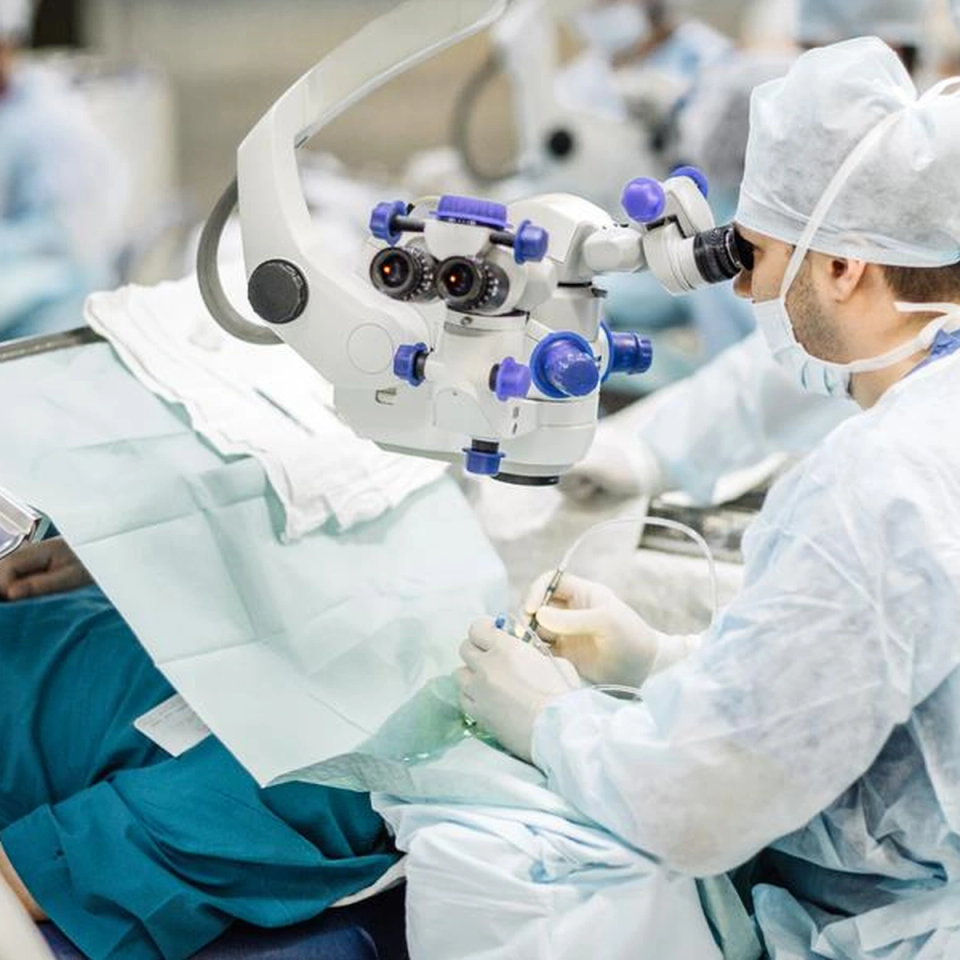
Ophthalmic Medical Technologists in Eye Care work closely with eye doctors (ophthalmologists) to run advanced eye tests, capture detailed photos and 3D images of the eye, and prepare patients and tools for minor eye surgeries. They use specialized equipment—like slit lamps to examine the front of the eye, lensometers to measure glasses strength, keratometers and pachymeters to measure the shape and thickness of the cornea, and ultrasound scanners to map the inside of the eye—then record and explain the results. Many also supervise and train other eye care staff, help decide which tests are needed first in busy clinics, and teach patients how to use eye medications and contact lenses safely.
Ophthalmic Medical Technologists in Eye Care

Did you know?

Most employers in the US prefer or require certification through JCAHPO (Joint Commission on Allied Health Personnel in Ophthalmology), which involves passing standardized exams and meeting experience requirements.

At a Glance

Growth

Stable

Top Skill

Operation and Control

Key Responsibilities

  • Perform fluorescein angiography of the eye.
  • Photograph patients' eye areas, using clinical photography techniques, to document retinal or corneal defects.
  • Take and document patients' medical histories.
  • Conduct ocular motility tests to measure function of eye muscles.
  • Conduct visual field tests to measure field of vision.
  • Measure and record lens power, using lensometers.
  • Maintain ophthalmic instruments or equipment.
  • Supervise or instruct ophthalmic staff.
  • Perform slit lamp biomicroscopy procedures to diagnose disorders of the eye, such as retinitis, presbyopia, cataracts, or retinal detachment.
  • Conduct binocular disparity tests to assess depth perception.
  • Measure corneal curvature with keratometers or ophthalmometers to aid in the diagnosis of conditions, such as astigmatism.
  • Assess abnormalities of color vision, such as amblyopia.
  • Take anatomical or functional ocular measurements, such as axial length measurements, of the eye or surrounding tissue.
  • Create three-dimensional images of the eye, using computed tomography (CT).
  • Assist physicians in performing ophthalmic procedures, including surgery.
  • Educate patients on ophthalmic medical procedures, conditions of the eye, and appropriate use of medications.
  • Measure the thickness of the retinal nerve, using scanning laser polarimetry techniques to aid in diagnosis of glaucoma.
  • Clean or sterilize ophthalmic or surgical instruments.
  • Assess refractive condition of eyes, using retinoscope.
  • Perform ophthalmic triage, in the office or by phone, to assess severity of patients' conditions.
  • Measure corneal thickness, using pachymeter or contact ultrasound methods.
  • Calculate corrections for refractive errors.
  • Conduct low vision blindness tests.
  • Measure visual acuity, including near, distance, pinhole, or dynamic visual acuity, using appropriate tests.
  • Perform advanced ophthalmic procedures, including electrophysiological, electrophysical, or microbial procedures.
  • Instruct patients in the care and use of contact lenses.
  • Call patients to inquire about their post-operative status or recovery.
  • Conduct tonometry or tonography tests to measure intraocular pressure.
  • Administer topical ophthalmic or oral medications.
  • Conduct tests, such as the Amsler Grid test, to measure central visual field used in the early diagnosis of macular degeneration, glaucoma, or diseases of the eye.
  • Collect ophthalmic measurements or other diagnostic information, using ultrasound equipment, such as A-scan ultrasound biometry or B-scan ultrasonography equipment.

Career Considerations

Certification Requirements

Most employers in the US prefer or require certification through JCAHPO (Joint Commission on Allied Health Personnel in Ophthalmology), which involves passing standardized exams and meeting experience requirements.

Growing Job Market

The aging American population is driving increased demand for eye care services, creating favorable job prospects for ophthalmic medical technologists nationwide.

Educational Pathways

Entry into this field typically requires completion of an accredited ophthalmic medical technologist program or extensive on-the-job training under licensed ophthalmologists.

Want to dig deeper?

Talk to blinky to learn more.

Start chatting
BETA
New York

25 Kent Ave, Suite 401
Brooklyn, NY
11249


North Carolina

204 N Person
Street. Raleigh, NC
27601

Australia

Level 4/80
Wentworth Ave,
Surry Hills,
Sydney, 2010