
Orderlies

Overview

Orderlies are responsible for assisting with the non-medical care of patients in hospitals and healthcare settings, such as cleaning patient areas, preparing equipment, and helping nurses with basic tasks like moving patients and maintaining a safe environment.
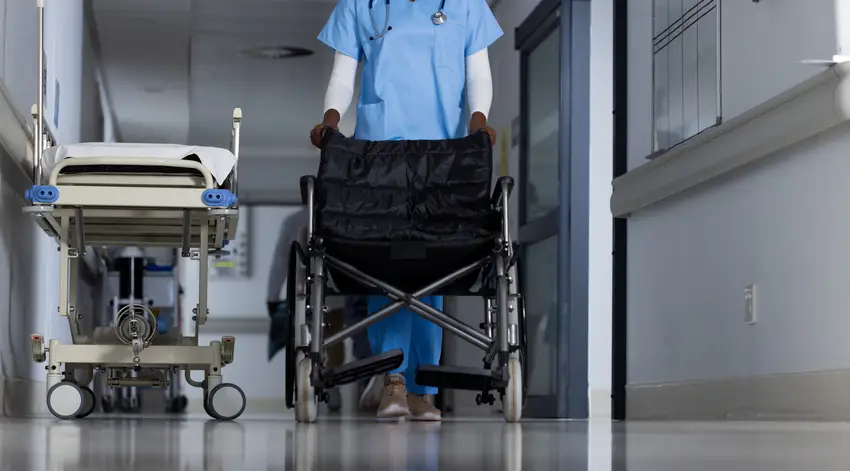
Orderlies

Did you know?

Orderlies face significant physical demands including lifting patients and standing for long periods, requiring attention to workplace safety protocols and potential for work-related injuries.

At a Glance

Median Wage

$37,723.19 Avg/yr

Growth

Stable

Top Skill

Systems Analysis

Key Responsibilities

  • Serve or collect food trays.
  • Transport patients to treatment units, testing units, operating rooms, or other areas, using wheelchairs, stretchers, or moveable beds.
  • Change soiled linens, such as bed linens, drapes, or cubicle curtains.
  • Clean equipment, such as wheelchairs, hospital beds, or portable medical equipment, documenting needed repairs or maintenance.
  • Transport bodies to the morgue.
  • Position or hold patients in position for surgical preparation.
  • Disinfect or sterilize equipment or supplies, using germicides or sterilizing equipment.
  • Carry messages or documents between departments.
  • Provide physical support to patients to assist them to perform daily living activities, such as getting out of bed, bathing, dressing, using the toilet, standing, walking, or exercising.
  • Transport specimens, laboratory items, or pharmacy items, ensuring proper documentation and delivery to authorized personnel.
  • Lift or assist others to lift patients to move them on or off beds, examination tables, surgical tables, or stretchers.
  • Collect soiled linen or trash.
  • Stock or issue medical supplies, such as dressing packs or treatment trays.
  • Separate collected materials for disposal, recycling, or reuse, in accordance with environmental policies.
  • Respond to emergency situations, such as emergency medical calls, security calls, or fire alarms.
  • Clean and sanitize patient rooms, bathrooms, examination rooms, or other patient areas.
  • Stock utility rooms, nonmedical storage rooms, or cleaning carts with supplies.
  • Collect and transport infectious or hazardous waste in closed containers for sterilization or disposal, in accordance with applicable law, standards, or policies.
  • Answer patient call signals, signal lights, bells, or intercom systems to determine patients' needs.
  • Transport portable medical equipment or medical supplies between rooms or departments.
  • Restrain patients to prevent violence or injury or to assist physicians or nurses to administer treatments.
  • Turn or reposition bedridden patients, alone or with assistance, to prevent bedsores.

Career Considerations

Physical Demands and Safety

Orderlies face significant physical demands including lifting patients and standing for long periods, requiring attention to workplace safety protocols and potential for work-related injuries.

Career Advancement Opportunities

While entry-level positions typically require minimal formal education, orderlies can advance to certified nursing assistant roles or pursue further healthcare education with employer support programs.

Job Market Stability

The aging American population and expanding healthcare sector provide strong job security and growth prospects for orderlies across various healthcare settings.

Want to dig deeper?

Talk to blinky to learn more.

Start chatting
BETA
New York

25 Kent Ave, Suite 401
Brooklyn, NY
11249


North Carolina

204 N Person
Street. Raleigh, NC
27601

Australia

Level 4/80
Wentworth Ave,
Surry Hills,
Sydney, 2010