
Phlebotomists

Overview

Phlebotomists are healthcare professionals who specialize in drawing blood from patients for medical tests, research, or blood donations. They work closely with patients to ease anxiety during procedures, verify identities, and carefully label samples using digital database systems. These professionals use sterile medical equipment and follow strict safety protocols while collaborating with doctors, nurses, and lab technicians. Most phlebotomists complete certification programs or associate degrees and develop strong communication skills to help patients feel comfortable during blood draws.
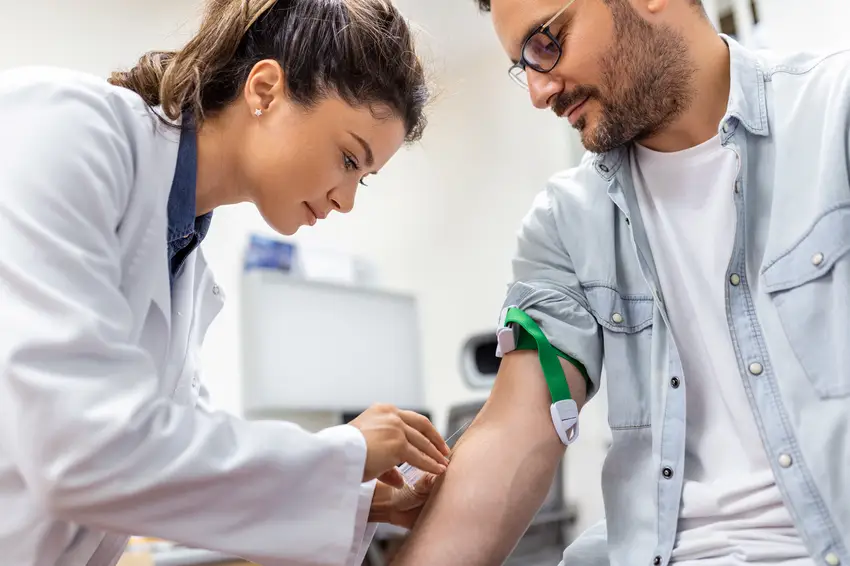
Phlebotomists

Did you know?

Most employers require certification from organizations like ASCP (American Society for Clinical Pathology) or equivalent, which involves passing a national examination after completing an accredited program.

At a Glance

Median Wage

$42,159.61 Avg/yr

Growth

Fast Growing

Top Skill

Installation

Key Responsibilities

  • Transport specimens or fluid samples from collection sites to laboratories.
  • Monitor blood or plasma donors during and after procedures to ensure health, safety, and comfort.
  • Administer subcutaneous or intramuscular injects, in accordance with licensing restrictions.
  • Process blood or other fluid samples for further analysis by other medical professionals.
  • Document route of specimens from collection to laboratory analysis and diagnosis.
  • Organize or clean blood-drawing trays, ensuring that all instruments are sterile and all needles, syringes, or related items are of first-time use.
  • Conduct hemoglobin tests to ensure donor iron levels are normal.
  • Explain fluid or tissue collection procedures to patients.
  • Provide sample analysis results to physicians to assist diagnosis.
  • Dispose of blood or other biohazard fluids or tissue, in accordance with applicable laws, standards, or policies.
  • Draw blood from veins by vacuum tube, syringe, or butterfly venipuncture methods.
  • Draw blood from capillaries by dermal puncture, such as heel or finger stick methods.
  • Train other medical personnel in phlebotomy or laboratory techniques.
  • Draw blood from arteries, using arterial collection techniques.
  • Match laboratory requisition forms to specimen tubes.
  • Collect fluid or tissue samples, using appropriate collection procedures.
  • Serve refreshments to donors to ensure absorption of sugar into their systems.
  • Calibrate or maintain machines, such as those used for plasma collection.
  • Determine donor suitability, according to interview results, vital signs, and medical history.
  • Collect specimens at specific time intervals for tests, such as those assessing therapeutic drug levels.
  • Enter patient, specimen, insurance, or billing information into computer.
  • Conduct standards tests, such as blood alcohol, blood culture, oral glucose tolerance, glucose screening, blood smears, or peak and trough drug levels tests.
  • Dispose of contaminated sharps, in accordance with applicable laws, standards, and policies.

Career Considerations

Certification Requirements

Most employers require certification from organizations like ASCP (American Society for Clinical Pathology) or equivalent, which involves passing a national examination after completing an accredited program.

Strong Job Market Growth

The Bureau of Labor Statistics projects 7% job growth for medical laboratory technologists from 2022-2032, faster than average due to an aging population requiring more medical testing.

Educational Prerequisites

Entry typically requires a bachelor's degree in medical laboratory science, life sciences, or related field from a program accredited by the National Accrediting Agency for Clinical Laboratory Sciences (NAACLS).

Want to dig deeper?

Talk to blinky to learn more.

Start chatting
BETA
New York

25 Kent Ave, Suite 401
Brooklyn, NY
11249


North Carolina

204 N Person
Street. Raleigh, NC
27601

Australia

Level 4/80
Wentworth Ave,
Surry Hills,
Sydney, 2010