
Photo Lab Technicians

Overview

Photo lab technicians develop and process photographs from both traditional film and digital cameras, transforming raw images into high-quality prints. They operate specialized processing machines, edit photos using computer software, and ensure each print meets customer specifications and quality standards. This role combines technical skills with attention to detail, as technicians must carefully handle chemicals, maintain processing equipment, and inspect finished products for defects. Many technicians work in commercial photo labs, retail stores, or specialty printing facilities, often collaborating with photographers and customers to achieve the perfect final product.
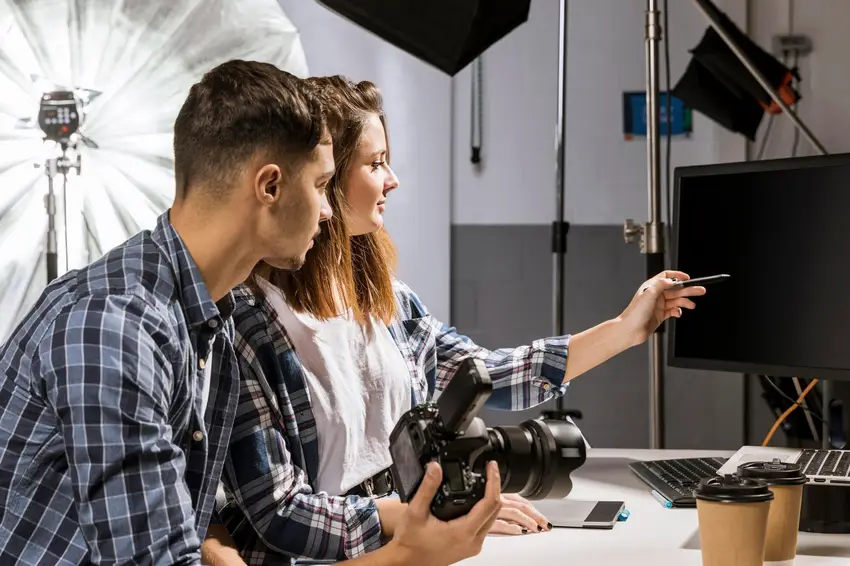
Photo Lab Technicians

Did you know?

Success requires mastery of industry-standard software like Adobe Photoshop and Lightroom, as American employers expect high technical competency in digital photo editing tools.

At a Glance

Median Wage

$39,206.79 Avg/yr

Growth

Stable

Top Skill

Active Learning

Key Responsibilities

  • Maintain records, such as quantities or types of processing completed, materials used, or customer charges.
  • Examine quality of film fades or dissolves for potential color corrections, using color analyzers.
  • Measure and mix chemicals to prepare solutions for processing, according to formulas.
  • Insert processed negatives and prints into envelopes for delivery to customers.
  • Thread filmstrips through densitometers or sensitometers and expose film to light to determine density of film, necessary color corrections, or light sensitivity.
  • Review computer-processed digital images for quality.
  • Place sensitized paper in frames of projection printers, photostats, or other reproduction machines.
  • Load circuit boards, racks or rolls of film, negatives, or printing paper into processing or printing machines.
  • Splice broken or separated film and mount film on reels.
  • Fill tanks of processing machines with solutions such as developer, dyes, stop-baths, fixers, bleaches, or washes.
  • Load digital images onto computers directly from cameras or from storage devices, such as flash memory cards or universal serial bus (USB) devices.
  • Examine drawings, negatives, or photographic prints to determine coloring, shading, accenting, or other changes required for retouching or restoration.
  • Select digital images for printing, specify number of images to be printed, and direct to printer, using computer software.
  • Retouch photographic negatives or original prints to correct defects.
  • Examine developed prints for defects, such as broken lines, spots, or blurs.
  • Read work orders to determine required processes, techniques, materials, or equipment.
  • Operate scanners or related computer equipment to digitize negatives, photographic prints, or other images.
  • Reprint originals for enlargement or in sections to be pieced together.
  • Monitor equipment operation to detect malfunctions.
  • Operate special equipment to perform tasks such as transferring film to videotape or producing photographic enlargements.
  • Set or adjust machine controls, according to specifications, type of operation, or material requirements.
  • Upload digital images onto Web sites for customers.
  • Clean or maintain photoprocessing or darkroom equipment, using ultrasonic equipment or cleaning and rinsing solutions.
  • Produce color or black-and-white photographs, negatives, or slides, applying standard photographic reproduction techniques and procedures.
  • Immerse film, negatives, paper, or prints in developing solutions, fixing solutions, and water to complete photographic development processes.
  • Produce timed prints with separate densities or color settings for each scene of a production.
  • Create prints according to customer specifications and laboratory protocols.

Career Considerations

Advanced Software Proficiency Required

Success requires mastery of industry-standard software like Adobe Photoshop and Lightroom, as American employers expect high technical competency in digital photo editing tools.

Highly Competitive Market

The American market is saturated with freelance photographers and editing services, making it essential to develop a specialized niche or exceptional portfolio to stand out.

Shift Toward Digital-First Workflows

Traditional film processing has largely been replaced by digital workflows in the US, requiring professionals to adapt to cloud-based collaboration and rapid turnaround expectations.

Want to dig deeper?

Talk to blinky to learn more.

Start chatting
BETA
New York

25 Kent Ave, Suite 401
Brooklyn, NY
11249


North Carolina

204 N Person
Street. Raleigh, NC
27601

Australia

Level 4/80
Wentworth Ave,
Surry Hills,
Sydney, 2010