
Postsecondary Physics Teachers

Overview

Physics teachers at colleges and universities help students explore everything from quantum mechanics to astrophysics through lectures, labs, and hands-on experiments. They create course materials, grade assignments, advise students on academic paths, and often conduct their own research on topics like particle physics or renewable energy. Many use cutting-edge technology like virtual reality simulations and online platforms to make complex concepts more accessible. This career requires strong communication skills, a deep understanding of physics, and typically a doctoral degree in physics or a related field.
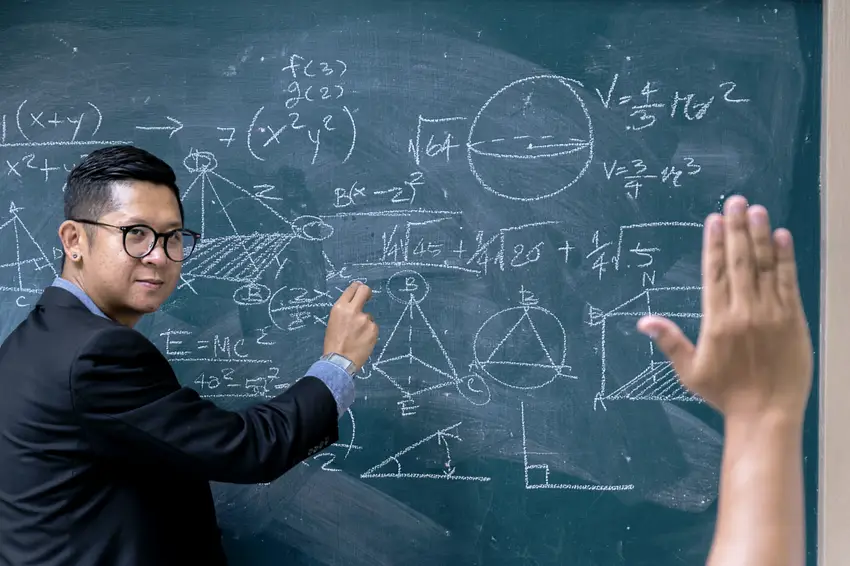
Postsecondary Physics Teachers

Did you know?

The academic job market for physics faculty positions is extremely competitive, with many qualified candidates competing for limited tenure-track positions at American universities.

At a Glance

Median Wage

$90,734.22 Avg/yr

Growth

Stable

Top Skill

Operations Analysis

Key Responsibilities

  • Serve on academic or administrative committees that deal with institutional policies, departmental matters, and academic issues.
  • Supervise undergraduate or graduate teaching, internship, and research work.
  • Conduct research in a particular field of knowledge and publish findings in professional journals, books, or electronic media.
  • Maintain student attendance records, grades, and other required records.
  • Maintain and repair laboratory equipment.
  • Evaluate and grade students' class work, laboratory work, assignments, and papers.
  • Initiate, facilitate, and moderate classroom discussions.
  • Act as advisers to student organizations.
  • Prepare course materials, such as syllabi, homework assignments, and handouts.
  • Provide professional consulting services to government or industry.
  • Perform administrative duties, such as serving as department head.
  • Plan, evaluate, and revise curricula, course content, course materials, and methods of instruction.
  • Compile bibliographies of specialized materials for outside reading assignments.
  • Advise students on academic and vocational curricula and on career issues.
  • Participate in student recruitment, registration, and placement activities.
  • Maintain regularly scheduled office hours to advise and assist students.
  • Collaborate with colleagues to address teaching and research issues.
  • Select and obtain materials and supplies, such as textbooks and laboratory equipment.
  • Compile, administer, and grade examinations, or assign this work to others.
  • Participate in campus and community events.
  • Write grant proposals to procure external research funding.
  • Keep abreast of developments in the field by reading current literature, talking with colleagues, and participating in professional conferences.
  • Supervise students' laboratory work.
  • Prepare and deliver lectures to undergraduate or graduate students on topics such as quantum mechanics, particle physics, and optics.

Career Considerations

Highly Competitive Job Market

The academic job market for physics faculty positions is extremely competitive, with many qualified candidates competing for limited tenure-track positions at American universities.

Research Funding Pressure

Success in this field typically requires securing competitive federal grants from agencies like NSF or DOE to support research activities and graduate students.

Tenure Timeline Stress

The American tenure system creates significant pressure to publish high-impact research and demonstrate teaching excellence within a 6-7 year probationary period.

Want to dig deeper?

Talk to blinky to learn more.

Start chatting
BETA
New York

25 Kent Ave, Suite 401
Brooklyn, NY
11249


North Carolina

204 N Person
Street. Raleigh, NC
27601

Australia

Level 4/80
Wentworth Ave,
Surry Hills,
Sydney, 2010