Preschool Special Education Teachers
Overview
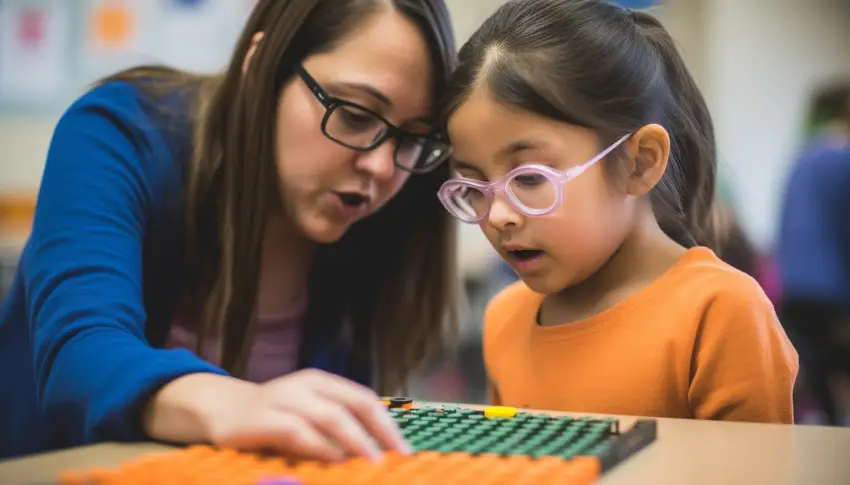
Preschool Special Education Teachers help young children with learning, physical, or emotional challenges reach their full potential through personalized teaching methods. They create custom learning plans called IEPs for each student, adapt regular lessons to meet individual needs, and use creative activities and modern educational technology to make learning accessible and fun. These teachers work closely with families, other educators, and support staff to track each child's progress and celebrate their achievements. It's a rewarding career that combines creativity, patience, and problem-solving skills while making a lasting difference in children's lives.
Did you know?
Most states require specific special education teaching credentials and early childhood education certification, often involving additional coursework and supervised practice beyond a standard teaching degree.
At a Glance
Median Wage
$62,135.50 Avg/yr
Growth
Stable
Top Skill
Operations Analysis
Key Responsibilities
- Teach basic skills, such as color, shape, number and letter recognition, personal hygiene, or social skills, to preschool students with special needs.
- Encourage students to explore learning opportunities or persevere with challenging tasks to prepare them for later grades.
- Attend to children's basic needs by feeding them, dressing them, or changing their diapers.
- Establish and enforce rules for behavior and procedures for maintaining order among students.
- Arrange indoor or outdoor space to facilitate creative play, motor-skill activities, or safety.
- Confer with parents, guardians, teachers, counselors, or administrators to resolve students' behavioral or academic problems.
- Prepare objectives, outlines, or other materials for courses of study, following curriculum guidelines or requirements.
- Read books to entire classes or to small groups.
- Meet with parents or guardians to discuss their children's progress, advise them on using community resources, or teach skills for dealing with students' impairments.
- Develop individual educational plans (IEPs) designed to promote students' educational, physical, or social development.
- Observe and evaluate students' performance, behavior, social development, and physical health.
- Prepare assignments for teacher assistants or volunteers.
- Develop or implement strategies to meet the needs of students with a variety of disabilities.
- Control the inventory or distribution of classroom equipment, materials, or supplies.
- Employ special educational strategies or techniques during instruction to improve the development of sensory- and perceptual-motor skills, language, cognition, or memory.
- Coordinate placement of students with special needs into mainstream classes.
- Attend professional meetings, educational conferences, or teacher training workshops to maintain or improve professional competence.
- Teach students personal development skills, such as goal setting, independence, or self-advocacy.
- Present information in audio-visual or interactive formats, using computers, television, audio-visual aids, or other equipment, materials, or technologies.
- Plan and supervise experiential learning activities, such as class projects, field trips, or demonstrations.
- Organize and supervise games or other recreational activities to promote physical, mental, or social development.
- Modify the general preschool curriculum for students with disabilities.
- Communicate nonverbally with children to provide them with comfort, encouragement, or positive reinforcement.
- Administer tests to help determine children's developmental levels, needs, or potential.
- Monitor teachers or teacher assistants to ensure adherence to special education program requirements.
- Serve meals or snacks in accordance with nutritional guidelines.
- Prepare classrooms with a variety of materials or resources for children to explore, manipulate, or use in learning activities or imaginative play.
- Establish and communicate clear objectives for all lessons, units, and projects to students, parents, or guardians.
- Maintain accurate and complete student records as required by laws, district policies, or administrative regulations.
- Prepare reports on students and activities as required by administration.
- Teach socially acceptable behavior, employing techniques such as behavior modification or positive reinforcement.
- Instruct and monitor students in the use and care of equipment or materials to prevent injuries and damage.
- Collaborate with other teachers or administrators to develop, evaluate, or revise preschool programs.
- Confer with parents, administrators, testing specialists, social workers, or other professionals to develop individual education plans (IEPs).
- Provide assistive devices, supportive technology, or assistance accessing facilities, such as restrooms.
- Organize and display students' work in a manner appropriate for their perceptual skills.
Career Considerations
Specialized Certification Requirements
Most states require specific special education teaching credentials and early childhood education certification, often involving additional coursework and supervised practice beyond a standard teaching degree.
High Emotional and Physical Demands
The role involves working with children who have diverse developmental challenges and requires significant patience, physical stamina, and emotional resilience while collaborating closely with families and therapists.
Strong Job Security and Growth Potential
There is consistently high demand for qualified special education teachers in the US, with above-average job growth projected and competitive benefits in most school districts.